Miracles & Testimonies
Even hostile sources didn’t deny He did them — they only argued about how
The cumulative case below converges from three independent directions. First, the Gospels — recording miracle events across Multiple Attestation in Mark, Matthew, Luke, and John — preserve healings, nature signs, exorcisms, and three resurrection events tied to named witnesses and named locations. Second, Jewish sources written by those who rejected Jesus — the Babylonian Talmud (Sanhedrin 43a) and Josephus (Antiquities 18.3.3, c. AD 93) — both preserve His reputation as a wonder-worker, the Talmud by labeling Him a “sorcerer,” Josephus by calling Him a doer of startling deeds. Third, Greco-Roman pagans like Celsus (c. AD 178) attacked the miracles as Egyptian magic rather than denying them — an admission, not a refutation.
The collection of subcats below gathers the four broad classes of miracle that the Synoptic and Johannine traditions preserve: Healings (blindness, leprosy, paralysis, the withered hand, the bleeding woman — framed against Isaiah 35’s messianic signs), Nature Miracles (water-to-wine at Cana, the cursed fig tree, the storm calmed with a word), Exorcisms (the Gadarene demoniac, the boy with seizures), and Resurrections — Jairus’ daughter, the widow of Nain’s son, and Lazarus of Bethany after four days in a sealed tomb. The four-day body in John 11 alone rules out the apparent-death theories critics propose for the resurrection itself.
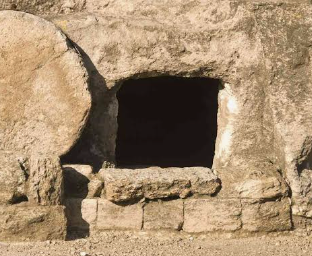
The ultimate miracle claim — the resurrection of Jesus — has its own dedicated anchor page with Historical Evidence, the Empty Tomb, the Appearances, and the Cumulative Case subcats. This page treats the broader signs ministry that authenticated His messianic claim in the Jewish world before Passover week.
Major scholars & sources cited across this page: Geza Vermes, Jesus the Jew (1973) & The Religion of Jesus the Jew (1993) — Galilean Hasidic framework; Raymond E. Brown, The Gospel According to John, Anchor Bible (1966–70) — Lazarus analysis; Joachim Jeremias, New Testament Theology (1971) & The Parables of Jesus (1972) — multiple attestation; John P. Meier, A Marginal Jew, vol. 2 (1994) — criterion-based case for the healings; E. P. Sanders, Jesus and Judaism (1985) & The Historical Figure of Jesus (1993); Jacob Neusner, A Rabbi Talks with Jesus (1993); Craig S. Keener, Miracles: The Credibility of the New Testament Accounts (2011); Pinchas Lapide, The Resurrection of Jesus: A Jewish Perspective (1983); Josephus, Antiquities 18.3.3 (Testimonium Flavianum); Babylonian Talmud, Sanhedrin 43a.Healings & Restorations
Blindness, leprosy, paralysis, the withered hand, the bleeding woman — restorations framed against Isaiah 35’s promise that “the eyes of the blind shall be opened.”
Nature Miracles
Water-to-wine at Cana, the cursed fig tree, the miraculous draught of fishes — authority over creation itself, framed for a Jewish audience familiar with Exodus-wonders.
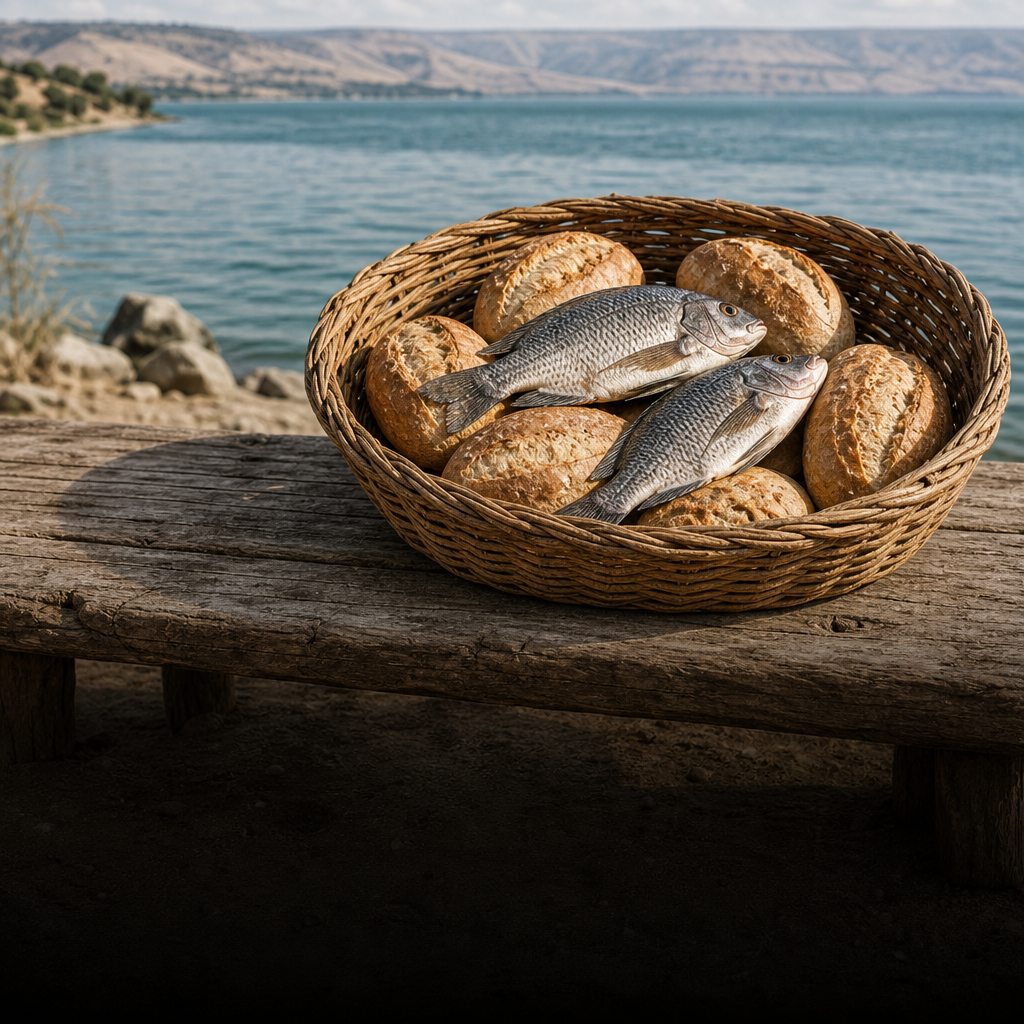
Feeding of the Five Thousand
The only miracle besides the resurrection recorded in all four Gospels independently — through Jesus’ own disciples’ hands, with twelve baskets of leftovers collected.
Storm & Sea Miracles
Calming the wind with a word; walking on the Sea of Galilee. Echoes of Psalm 107’s YHWH who “maketh the storm a calm.”
Exorcisms
The Gadarene demoniac, the mute spirit, the convulsing boy. Jesus frames exorcisms as anticipations of the kingdom’s arrival striking “Satan’s” realm.
Raising of Lazarus
John 11: a four-day body, a named Bethany family, hostile witnesses among the attendees who reported the event to the Pharisees — closing off apparent-death theories here.
Other Resurrections
Jairus’ daughter (a synagogue ruler’s child), the widow of Nain’s son (carried on a bier). Three Gospel raise-from-dead events occurring before Lazarus.
Hostile Sources & “Sorcery” Charges
The Talmud (Sanhedrin 43a) calls Jesus a “sorcerer”; Celsus (c. 178) explains His miracles as Egyptian magic. Admissions that even enemies couldn’t deny the effects.
Eyewitnesses & Testimonies
Named witnesses (Mary Magdalene, Joanna, Bartimaeus, Jairus) at named locations (Capernaum, Bethany, Nain) — specificity that dislodges the “invented legend” hypothesis.
Signs of the Messiah
Jesus’ answer to John the Baptist (Mt 11:5) quotes Isaiah 35: the blind see, the lame walk. His miracles are framed as messianic credentials, not spectacles.
Criteria of Authenticity
Multiple attestation (forms & sources), criterion of embarrassment (women witnesses, hostile sources), dissimilarity, and Semitisms applied to the miracle narratives.
Reference: The Resurrection
The ultimate miracle claim has its own anchor page covering Historical Evidence, the Empty Tomb, Appearances, and the Cumulative Case.