For many Christian scholars, the evidence for the life and ministry, crucifixion and resurrection of Jesus Christ from non-Christian sources confirms the accounts of the New Testament.
adds even more historical evidence for everal non‑Christian and later Christian sources outside the New Testament mention Jesus and provide indirect or contextual information about his life; however, very few give a narrative of his birth comparable to the Nativity accounts in Matthew and Luke. Below is a concise survey of the most relevant extra‑biblical sources that touch on Jesus’ birth or the circumstances around it, grouped by type, with what they actually say and how historians treat their value.
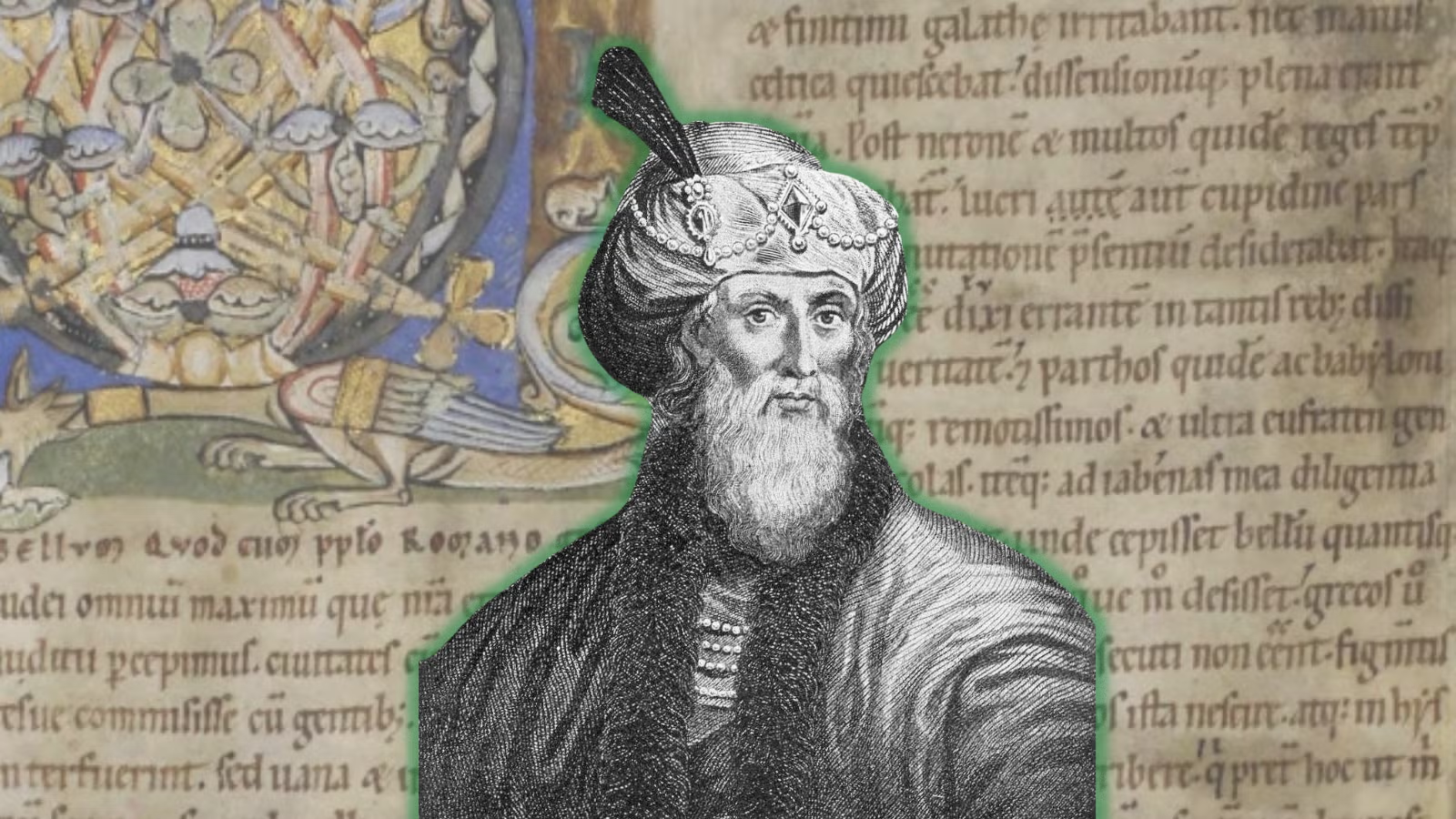
- Josephus (Jewish historian, late 1st century CE)
- Works: Antiquities of the Jews (c. 93–94 CE).
- What’s in it: Two passages refer to Jesus. The longer passage (the Testimonium Flavianum, Antiquities 18.3.3) mentions Jesus’ life and resurrection; scholars widely judge most of that passage as at least partially Christian interpolation, though many accept that Josephus wrote a shorter original core referring to Jesus. A shorter passage (Antiquities 20.200) mentions “James, the brother of Jesus, who was called Christ.”
- About the birth: Josephus does not preserve a Nativity narrative (no mention of virgin birth, no manger story). His references are useful for confirming that Jesus was a known historical figure by the end of the 1st century, but they do not narrate his birth.
- Tacitus (Roman historian, early 2nd century CE)
- Work: Annals (c. 116 CE).
- What’s in it: Tacitus mentions “Christus” who suffered under Pontius Pilate during the reign of Tiberius (Annals 15.44) while explaining the reason Nero blamed Christians for the Great Fire. This places Jesus historically but contains no birth account or details about Bethlehem.
- Suetonius (Roman biographer, early 2nd century CE)
- Works: Lives of the Caesars.
- What’s in it: He refers to disturbances caused by “Chrestus” among the Jews in Rome (Claudius 25), often taken as a garbled reference to conflict related to Christ. No birth narrative or details.
- Pliny the Younger (Roman governor, early 2nd century CE)
- Work: Letters (Epistles).
- What’s in it: Pliny describes early Christian worship practices (calls Christ as a figure worshiped) but gives no historical details about Jesus’ birth.
- The Talmud (Jewish rabbinic literature, compiled centuries later)
- Works: Babylonian and Jerusalem Talmuds (final redaction c. 3rd–6th centuries CE) and other rabbinic texts.
- What’s in it: A few rabbinic passages possibly refer to Jesus (often called Yeshu or ben Stada/ben Pandera), frequently hostile and brief. These do not provide a birth narrative; they reflect reception and polemic, not historical biography.
- Later Christian writers and apocrypha (2nd century onward)
- Examples: Proto‑Gospel of James (also called the Infancy Gospel of James), Gospel of Thomas (contains no birth story), Gospel of the Infancy of Jesus Christ, Protevangelium of James.
- What’s in it: The Protevangelium of James (mid‑2nd century) and other infancy gospels supply detailed birth narratives and background about Mary, Joseph, and the nativity (census, midwives, maiden birth). These texts are Christian, non‑canonical, and late; they reflect theological and devotional developments rather than independent historical reporting. Historians treat them as valuable for understanding later Christian belief and tradition about Jesus’ birth, not as primary historical evidence.
- Early Christian apologetic and theological writers (2nd–4th centuries)
- Examples: Justin Martyr, Irenaeus, Origen, Tertullian, Lactantius.
- What’s in it: These authors quote or allude to Gospel material (e.g., fulfillment of prophecy) and sometimes elaborate theological interpretations of the Nativity, but they rely on the Gospel narratives rather than reporting independent birth traditions.
- Non‑literary evidence: inscriptions and archaeology
- What’s in it: Archaeology (inscriptions, ossuaries, local topography) helps contextualize the world of Jesus — Roman rule, census practices, Bethlehem and Nazareth as settlements — but it does not narrate or directly testify to the Nativity. There is no archaeological evidence that corroborates the specific birth scenes (manger, shepherds, star) described in the Gospels.
- Direct non‑Christian historical sources outside the New Testament do not provide an independent Nativity narrative. The strongest external attestations (Josephus, Tacitus, Suetonius, Pliny) confirm that Jesus existed, had an impact, and that a movement formed around him, but they are silent on miraculous birth claims and Gospel‑style birth details.
- The earliest detailed accounts of Jesus’ birth beyond Matthew and Luke are the apocryphal infancy gospels (e.g., Protevangelium of James), which date to the 2nd century or later and reflect theological development in early Christian communities rather than independent contemporary reporting.
- For scholars, reconstructing the historical facts of Jesus’ birth relies primarily on the canonical Gospels (especially Matthew and Luke) interpreted with attention to genre, sources (Q, Mark, Lukan/ Matthean special material), and historical-critical methods; outside sources provide context and confirm key historical points about Jesus’ existence and crucifixion but not the Nativity story itself.
- Provide excerpts and translations of the Josephus and Tacitus passages with scholarly notes.
- Summarize the Protevangelium of James’s Nativity account and highlight where it expands or diverges from Matthew/Luke.
- Walk through how historians evaluate the historicity of specific Nativity elements (e.g., census of Quirinius, Bethlehem vs. Nazareth, star, shepherds). Which would you like next?