Roman Law & Procedure
This page examines the dual legal world of first-century Judaea: the Jewish Sanhedrin’s capital-trial practice and the Roman governor’s provincial execution procedure (ius gladii). Each subcategory below links to slide clusters containing primary-source quotations, Mishnaic / Talmudic rules, Roman legal texts, and secular corroboration — from the night trial before Caiaphas, through Pilate’s formal sentencing, the titulus charge board above the cross, the crurifragium leg-breaking order, and the Roman burial-law discretion that allowed Joseph of Arimathea to claim the body.
Sanhedrin
Mishnaic capital-trial rules, two-witness requirement, narrow blasphemy definition, Caiaphas’ rending of garments, Joseph of Arimathea dissenting.
Pilate
Pilate’s verified title praefectus, ius gladii capital jurisdiction, jurisdictional transfer to Herod Antipas, hand-washing ritual, formal sentencing.
Roman Procedure
Standard scourging-cross-bearing-suspension protocol, Roman-citizen crucifixion prohibition (Cicero), slow-death deterrence design, extramural execution site.
Titulus
Roman charge-board procedure (Suetonius, Plutarch), trilingual Hebrew/Greek/Latin inscription, laesa maiestas wording, Pilate’s “What I have written, I have written.”
Crurifragium
Leg-breaking to expedite asphyxiation death, Passover-eve order (John 19:31), JAMA medical-mechanism analysis, Exodus 12:46 / Psalm 34:20 fulfillment.
Roman Burial Law
Discretionary release of executed bodies, Philo & Josephus on festival-clemency burial, Joseph of Arimathea’s formal request, Augustus’ harsher alternative.
Roman Soldiers
Cohort execution detail under the centurion, lot-casting for the seamless garment (Ps 22:18), posca sour wine on hyssop, centurion’s “Son of God” confession.
Trial Geography
Caiaphas’ courtyard, the Praetorium (Herod’s Palace), Gabbatha / Lithostratos pavement, Herod Antipas’ palace, Golgotha and the adjacent garden tomb.
Passover Clemency
Prisoner-release custom (Mark 15:6/Jn 18:39), “Jesus Barabbas” manuscript variant (Origen), Roman festival indulgentia precedent (Philo).
Manuscript Evidence
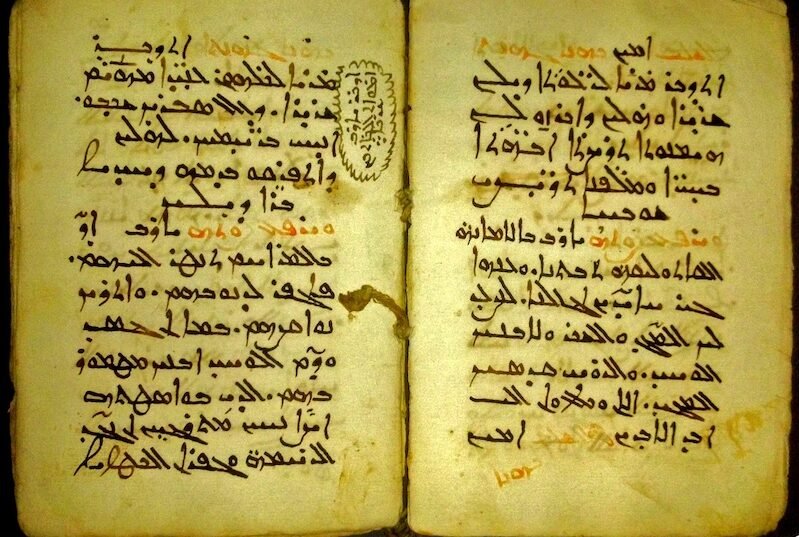
Codex Bezae variant in Luke 23, textual witnesses for “Father forgive them” and Pilate-related passages, scribal transmission of trial narratives.
Archaeological Corroboration
1961 Caesarea Pilate Stone, 1990 Caiaphas ossuary, 1968 Yehohanan crucified-heel bone, Nazareth Inscription on grave-robbing, Lithostratos pavement.
Patristic Archives
Justin Martyr & Tertullian’s appeal to Pilate’s acta, Athenagoras, Theophilus, Minucius Felix — early Christian claims that Roman archives recorded Jesus’ trial.
Sanhedrin
The Composition & Authority of the Great Sanhedrin
Mishnah Sanhedrin 1:6; Josephus, Antiquities 20.200; Acts 22:30, KJV“But the high priest Ananias… assembled the Sanhedrin of judges, and brought before them the brother of Jesus, who was called Christ, whose name was James.”The Great Sanhedrin (Sanhedrin) of first-century Jerusalem was a 71-member high council presided over by the sitting High Priest — a body whose competence covered capital cases, religious charges, and inter-Jewish political questions in the late Second Temple era. Flavius Josephus (c. AD 37–100) attests its de facto authority when he describes Ananus convening “the Sanhedrin of judges” to condemn James the brother of Jesus in AD 62 — exactly the same body John 18 and Mark 14 describe acting against Jesus. The Sanhedrin’s authority before AD 70 is independently established. Citation: Mishnah Sanhedrin 1:6; Josephus, Antiquities 20.9.1 (200); Acts 22:30, KJV.File Under: Jesus Christ > Arrest & Crucifixion > Roman Law & Procedure > SanhedrinCross-References: Trial Geography & Legal Sites | Secular Corroboration
Mishnaic Capital-Trial Restrictions & the Embarrassing Night Trial
Mishnah Sanhedrin 4:1 and 5:5; Mark 14:53–65, KJV“Cases involving capital law are judged [if acquitting] the same day, but if convicting, [judged and sentenced] the next day.” — Mishnah Sanhedrin 4:1 (paraphrased); the Mishnah further prohibited capital trials at night and on the eve of a festival.The Mishnah’s Pereq Chelek codifies the procedure Second Temple-era rabbinic courts were supposed to follow in capital cases: trials held in daylight, no same-day conviction, no trials on the eve of a Sabbath or festival. The Gospel account of the night trial before Caiaphas (Mark 14:53–65, KJV) clearly violates these norms. The Gospel’s honesty in recording a procedurally irregular trial is part of the criterion of embarrassment — a fabricated messiah-story would have tidied up the procedural embarrassment. The fact that the early church preserved it confirms the event’s fixity in living memory. Citation: Mishnah Sanhedrin 4:1; 5:5; Mark 14:53–65, KJV.File Under: Jesus Christ > Arrest & Crucifixion > Roman Law & Procedure > SanhedrinCross-References: Multiple Attestation | Why It Happened
The Two-Witness Rule & the False-Witnesses Episode

The Mishnaic Definition of Blasphemy & Jesus’ “I Am”
Mishnah Sanhedrin 7:5 (Sefaria); Mark 14:61–64, KJV“The blasphemer is not liable until he mentions the Name.” — Mishnah Sanhedrin 7:5. Rabbi Joshua ben Korḥa added that witnesses were examined with the euphemism “Yosé” substituted for the divine Name, and that the judges would render their garments irreparably only once the senior witness himself pronounced the actual Ineffable Name.The Mishnah’s narrow definition of blasphemy punishable by death was specifically the act of pronouncing the Tetragrammaton in a curse formula — not the kind of broad theological claim Jesus made in Mark 14:62, KJV: “I am: and ye shall see the Son of man sitting on the right hand of power, and coming in the clouds of heaven.” Mark 14:63–64, KJV records that Caiaphas immediately “rent his clothes” — the precise procedural response Mishnah Sanhedrin 7:5 prescribes when witnesses uttered the divine Name — suggesting the Sadducean high-priestly court operated under a broader pre-Mishnaic definition of blasphemy, applying the rending-protocol to a Messianic-divine claim rather than to a literal noḳeb shem Yhwh utterance. The Gospel procedural detail happens to preserve pre-Mishnaic Sadducean practice. Citation: Mishnah Sanhedrin 7:5 (Sefaria); Mark 14:61–64, KJV.File Under: Jesus Christ > Arrest & Crucifixion > Roman Law & Procedure > SanhedrinCross-References: Old Testament | Secular Corroboration
The High Priest’s Rent Garments — Mark’s Procedural Detail
Mark 14:63–64, KJV; Mishnah Sanhedrin 7:5“Then the high priest rent his clothes, and saith, What need we any further witnesses? Ye have heard the blasphemy: what think ye? And they all condemned him to be guilty of death.” — Mark 14:63–64, KJV.The Mishnah’s prescribed procedural response to a blasphemy declaration included the judges rending their garments irreparably once the witnesses spoke the Ineffable Name (Mishnah Sanhedrin 7:5; b. Sanhedrin 60a). Mark’s Gospel independently records the high priest rending his clothes the moment Jesus’ “I am” declaration is heard. The procedural synchrony with Mishnaic halakhah is unmistakable, even if the technical definition of the triggering act was different. Whatever one makes of the Sadducean vs. Pharisaic interpretation of blasphemy, the early Christian tradition preserved a procedural detail of Jewish capital trial practice that fits the legal world of first-century Jerusalem precisely — exactly what one expects of a tradition rooted in courtroom memory rather than theological invention. Citation: Mark 14:63–64, KJV; Mishnah Sanhedrin 7:5 (Sefaria).File Under: Jesus Christ > Arrest & Crucifixion > Roman Law & Procedure > SanhedrinCross-References: Sanhedrin | Why It Happened
Joseph of Arimathea — A Dissenting Council Member
Pilate
Pilate’s Official Title — Praefectus Iudaeae (Verified by the Caesarea Stone)
Pilate Stone, Caesarea Maritima theater, AD 26–36; Tacitus, Annals 15.44“Tiberieum / [Pon]tius Pilatus / [Praef]ectus Iuda[e]ae” — Latin inscription on a re-used limestone block discovered June 1961 in excavations at the Caesarea Maritima theater by the Italian archaeologist Antonio Frova.The so-called Pilate Stone (Pilate Stone), excavated at Caesarea Maritima in 1961, confirms that Pontius Pilate (Pontius Pilate) held the official title praefectus Iudaeae — the very Roman administrative role that gave him capital jurisdiction in the trial of Jesus. The Gospel’s relative vagueness about Pilate’s exact title is consistent with non-official usage: popular writers of the first century commonly wrote “governor” (ἡγεμών, hegemōn) or “procurator” for prefects, even though the technical title was praefectus until the reforms of Claudius in AD 44. Citation: Antonio Frova, “L’iscrizione di Ponzio Pilato a Cesarea,” Atti della Accademia Romantica di Archeologia III, 33–34 (1961–1962); Tacitus, Annals 15.44.File Under: Jesus Christ > Arrest & Crucifixion > Roman Law & Procedure > PilateCross-References: Secular Corroboration | Trial Geography & Legal Sites
The Ius Gladii — Provincial Governor’s Capital Jurisdiction
Roman provincial law; A. N. Sherwin-White, Roman Society and Roman Law in the New Testament (1963)“The governor of an imperial province… held the ius gladii, the right of the sword — that is, plenary capital jurisdiction over non-citizens in his province.” — A. N. Sherwin-White, summarizing the Roman doctrine that structured provincial trial procedure.Under the Roman system, a praefectus in an imperial province such as Judaea held the ius gladii, the discretionary capital jurisdiction over non-citizens. A. N. Sherwin-White (Sherwin-White) of Oxford documented at length in Roman Society and Roman Law in the New Testament (1963) that the Gospel accounts of Pilate’s interrogation, the formal sentence, and the discretionary release of the body reflect standard Roman provincial capital procedure — exactly the procedure a praefectus Iudaeae would have followed in the 20s–30s AD. Every procedural movement in the Gospel trial narrative matches Roman law of the period. Citation: A. N. Sherwin-White, Roman Society and Roman Law in the New Testament (Oxford, 1963); Martin Hengel, Crucifixion in the Ancient World (1977).File Under: Jesus Christ > Arrest & Crucifixion > Roman Law & Procedure > PilateCross-References: Roman Procedure | Secular Corroboration
Pilate’s Jurisdictional Transfer of Jesus to Herod Antipas
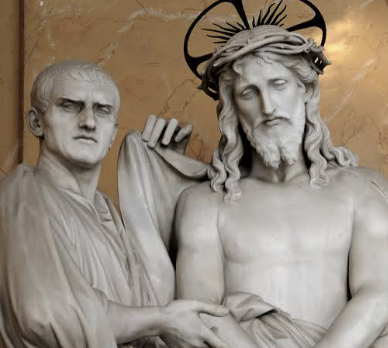
Pilate’s Hand-Washing — Roman-Jewish Symbolic Legal Act
Matthew 27:24, KJV; Deut 21:6–7, KJV; Psalm 26:6, KJV“When Pilate saw that he could prevail nothing, but that rather a tumult was made, he took water, and washed his hands before the multitude, saying, I am innocent of the blood of this just person: see ye to it.” — Matthew 27:24, KJV.Pilate‘s hand-washing gesture in Matthew‘s Gospel absorbs the Jewish ritual form of Deut 21:6–7, KJV (the elders washing their hands over the heifer whose neck was broken in an unsolved murder case, declaring “Our hands have not shed this blood, neither have our eyes seen it”) — a public legal declaration of declining responsibility. The Roman magistrate absorbs the Jewish ritual form on Jewish soil, making the public declaration intelligible to the Jerusalem crowd. The scene fits a Roman governor’s pragmatic manipulation of local ritual in the court of public opinion, not a fabricated dramatic flourish. Citation: Matt 27:24, KJV; Deut 21:1–9, KJV; Psalm 26:6, KJV.File Under: Jesus Christ > Arrest & Crucifixion > Roman Law & Procedure > PilateCross-References: Old Testament | Why It Happened
The Formal Roman Sentence — John 19:16, KJV
John 19:13–16, KJV; Sherwin-White (1963)“Then delivered he him therefore unto them to be crucified. And they took Jesus, and led him away.” — John 19:16, KJV.John 19:13–16, KJV stages the formal sentencing in a visually structured Roman way: Pilate “sat down in the judgment seat” (the bema) at the place called the Pavement, but in the Hebrew, Gabbatha. The sitting on the bema is precisely the formal pose of Roman capital procedure — the magistrate’s plenary sentence is rendered from the tribunal. The Gospel records the formal Roman pose of judgment, not an informal exchange. Sherwin-White treats the entire scene in John 19:13–16 as a recognizable Roman cognitio extra ordinem, the discretionary criminal jurisdiction exercised by a provincial governor. Citation: John 19:13–16, KJV; Sherwin-White (1963), pp. 27–45.File Under: Jesus Christ > Arrest & Crucifixion > Roman Law & Procedure > PilateCross-References: Trial Geography & Legal Sites | Roman Procedure
The Roman Death-Certification Interview (Mark 15:44–45)
Roman Procedure
The Standard Crucifixion Protocol — Scourging, Cross-Bearing, Suspension
Mark 15:15–22, KJV; Hengel (1977); Seneca the Younger“And so Pilate, willing to content the people, released Barabbas unto them, and delivered Jesus, when he had scourged him, to be crucified. And the soldiers led him away into the hall, called Praetorium… And they compel one Simon a Cyrenian… to bear his cross.” — Mark 15:15–16, 21, KJV.Martin Hengel (Martin Hengel) and Seneca the Younger establish the standard Roman capital crucifixion protocol: (i) verberatio, the preparatory scourging; (ii) the condemned carrying the patibulum (crossbar) to the site; (iii) nailing or tying to the stipes (vertical post); (iv) public display until death. Every step in the Mark 15 narrative matches standard Roman capital procedure as independently known from Seneca, Epistle 101, and Hengel’s compendium. The Gospel is not a fabricated story with imaginary execution details; it records standard Roman capital punishment practice exactly. Citation: Mark 15:15–22, KJV; Seneca, Epistle 101; Hengel, Crucifixion in the Ancient World (1977).File Under: Jesus Christ > Arrest & Crucifixion > Roman Law & Procedure > Roman ProcedureCross-References: Roman Soldiers at the Cross | Medical Evidence
The Roman-Citizen Prohibition on Crucifixion — Cicero
Cicero, In Verrem 2.5.165, c. 70 BC; Acts 22:25–29, KJV“The very word ‘cross’ should be far removed not only from the person of a Roman citizen but from his thoughts, his eyes, and his ears… the mere mention of such a thing is unworthy of a Roman citizen and a free man.” — Cicero, Against Verres 2.5.66·165.Cicero (Cicero) establishes the Roman legal doctrine that crucifixion — the supplicium servile — was reserved for slaves, foreign captives, and non-citizen provincials; Roman citizens were exempt and faced the more honorable capital sanctions of decapitation or enforced suicide. This is precisely why Jesus, a non-citizen provincial, was subjected to crucifixion while later Christian tradition records Paul the Apostle — a Roman citizen — being beheaded under Nero. The legal distinction is independently Roman, attested in Cicero’s Verrine Orations, and corroborates the Gospel’s procedural consistency with Roman law. Citation: Cicero, In Verrem 2.5.66·165; Acts 22:25–29, KJV.File Under: Jesus Christ > Arrest & Crucifixion > Roman Law & Procedure > Roman ProcedureCross-References: The Gospels | The 12 Apostles
The Slow-Death Design of Crucifixion — Roman Legal Deterrence
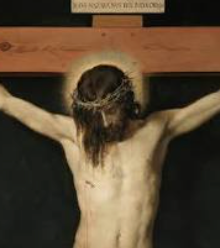
Public Execution Outside the City Wall — The Deterrent Site
Hebrews 13:12, KJV; Mark 15:22, KJV; John 19:20, KJV“Wherefore Jesus also, that he might sanctify the people with his own blood, suffered without the gate.” — Hebrews 13:12, KJV. “And they bring him unto the place Golgotha, which is, being interpreted, The place of a skull.” — Mark 15:22, KJV. “This title then read many of the Jews: for the place where Jesus was crucified was nigh to the city.” — John 19:20, KJV.Roman execution-site selection deliberately placed public crucifixions on major roads just outside a city’s gate, where the spectacle would maximize deterrent effect on arriving travelers. The Gospel’s location of Golgotha beside a north-Jerusalem roadway just outside the city wall — nigh to the city yet outside it — is exactly the placement Roman law preferred. Archaeological surveys by Dan Bahat and Shimon Gibson confirm the Holy Sepulchre site sits in a pre-AD 70 necropolis zone outside the Herodian Second Wall. The Roman selection of an execution site outside the gate fits standard Roman penal practice. Citation: Hebrews 13:12, KJV; Mark 15:22, KJV; John 19:20, KJV; cf. Secular Corroboration Slide 43 on the NW Jerusalem necropolis survey.File Under: Jesus Christ > Arrest & Crucifixion > Roman Law & Procedure > Roman ProcedureCross-References: Trial Geography & Legal Sites | Secular Corroboration
Titulus
The Roman Titulus Inscription Practice — Plural Legal Procedural Requirement
Suetonius, Caligula 32; Plutarch, Life of Alexander 72; John 19:19, KJV“He [Caligula] decreed that the names of the condemned men should be inscribed on a tablet (titulus) and carried before them on poles through the streets.” — Suetonius, Caligula 32.Roman capital practice routinely attached a titulus — a small wooden tablet inscribed with the charge — to the condemned person or affixed to the cross itself, so that the public could read the criminal’s offense. Suetonius (Suetonius) attests the practice directly in Caligula 32 and Nero 16; Plutarch attests it in Life of Alexander 72. The Gospel of John’s notice that “Pilate wrote a title, and put it on the cross” (John 19:19, KJV) is not invented Roman color; it is standard Roman capital procedure as known from independent Roman literary sources. Citation: Suetonius, Caligula 32; Plutarch, Alexander 72; John 19:19, KJV.File Under: Jesus Christ > Arrest & Crucifixion > Roman Law & Procedure > TitulusCross-References: Secular Corroboration | Crucifixion Physical Evidence
The Trilingual Inscription — Hebrew, Greek, Latin (John 19:19–20)
John 19:19–20, KJV“And Pilate wrote a title, and put it on the cross. And the writing was, JESUS OF NAZARETH THE KING OF THE JEWS. This title then read many of the Jews: for the place where Jesus was crucified was nigh to the city: and it was written in Hebrew, and Greek, and Latin.” — John 19:19–20, KJV.The trilingual nature of Jesus’ titulus — Hebrew/Aramaic (the local Jewish vernacular), Greek (the lingua franca of the eastern Mediterranean), and Latin (the official Roman administrative language) — is procedurally exact for a Roman provincial execution in Judaea in the AD 30s. The three languages match the trilingual inscriptional profile of Roman-era Palestine, where administrative, commercial, and popular written texts circulated in all three. Inscriptions like the Caesarea Pouzzoles tablet, the Capernaum synagogue inscriptions, and the Paneas/Banias inscriptions independently confirm this trilingual Roman-provincial usage that John’s Gospel so matter-of-factly embeds. Citation: John 19:19–20, KJV; Saul Lieberman, Greek in Jewish Palestine (1942); cf. the Titulus Crucis relic tradition.File Under: Jesus Christ > Arrest & Crucifixion > Roman Law & Procedure > TitulusCross-References: Crucifixion Physical Evidence | Fulfilled Prophecies
“Jesus of Nazareth, King of the Jews” — Laesa Maiestas Charge
Pilate’s Refusal to Amend the Titulus — “What I Have Written, I Have Written”
John 19:21–22, KJV; Sherwin-White (1963)“Then said the chief priests of the Jews to Pilate, Write not, The King of the Jews; but that he said, I am King of the Jews. Pilate answered, What I have written, I have written.” — John 19:21–22, KJV.The chief priests tried to soften the wording of the official titulus from “King of the Jews” (a Roman maiestas charge framed as if Jesus had actually claimed kingship) to “He said, I am King of the Jews” (a circumstantial report of a claim). Pilate’s refusal — “What I have written, I have written” — is structurally significant: once a Roman governor had rendered his sentence and posted the official titulus, the legal act was complete. To amend it would have been to formally reopen the case. The brief exchange is procedurally intelligible as Roman administrative finality — not a fabricated aside by the evangelist. Citation: John 19:21–22, KJV; Sherwin-White (1963); cf. Codex Justinianus 9.41 on Roman capital finality.File Under: Jesus Christ > Arrest & Crucifixion > Roman Law & Procedure > TitulusCross-References: Pilate | The Gospels
Crurifragium
The Roman Procedure of Crurifragium — Expedite Death by Asphyxiation
Edwards, Gabel & Hosmer, JAMA 255 (1986); Hengel (1977)“Crucifracture [crurifragium] would cause death by asphyxiation, since the victim could no longer push up to exhale, leading to respiratory failure.” — Edwards, Gabel & Hosmer, “On the Physical Death of Jesus Christ,” JAMA 255 (1986): 1455–1463.The Roman technique of crurifragium — shattering the tibiae and fibulae of a crucified victim with a heavy iron or wooden mallet — was an officially recognized expedient for hastening death, deployed when Roman administrators wished to remove bodies before nightfall (cf. the Passover-eve order of John 19:31). The procedural technique had a clear medical-mechanical purpose: victims hanging on the cross rely on pushing up with their legs to exhale, so breaking the legs removes their ability to breathe and brings rapid asphyxiation death. Citation: Edwards, Gabel & Hosmer, JAMA 255 (1986) 1455–1463; Hengel, Crucifixion in the Ancient World (1977); cf. Medical Evidence.File Under: Jesus Christ > Arrest & Crucifixion > Roman Law & Procedure > CrurifragiumCross-References: Medical Evidence | Roman Soldiers at the Cross
The Passover-Eve Order — John 19:31–33, KJV
The Medical Mechanism — Hengel & JAMA Analysis
Edwards, Gabel & Hosmer, JAMA (1986); Ball (1989)“The weight of the body, with arms extended and fixed to the crossbar, would force the chest muscles into the inhalation position; the victim could exhale only by pushing up with the legs to relieve the tension.” — paraphrased summary of the medical mechanism from Edwards, Gabel & Hosmer, “On the Physical Death of Jesus Christ,” JAMA 255 (1986): 1455–1463.Once the legs are broken in crurifragium, the victim can no longer push up to exhale, leading to progressive asphyxia. The 1986 JAMA study demonstrated that crucifixion-death is primarily respiratory in mechanism, with hypovolemic shock from the prior scourging and cardiac rupture as secondary complications. The Gospel procedural detail of leg-breaking is medically intelligible — its survival in a first-century narrative long before scientific respiratory physiology is striking. The 1968 Yehohanan heel-bone find (cf. Secular Corroboration Slide) independently confirms first-century Roman-crucifixion-with-nailing practice in Jerusalem. Citation: Edwards, Gabel & Hosmer, JAMA 255 (1986) 1455–1463; D. T. Ball, “The Crucifixion and Death of a Man Called Jesus,” J Mississippi State Med Assoc 30 (1989): 65–73.File Under: Jesus Christ > Arrest & Crucifixion > Roman Law & Procedure > CrurifragiumCross-References: Medical Evidence | Secular Corroboration
Jesus’ Unbroken Legs Fulfill Exodus 12:46 & Psalm 34:20
John 19:36, KJV; Exodus 12:46, KJV; Psalm 34:20, KJV“For these things were done, that the scripture should be fulfilled, A bone of him shall not be broken.” — John 19:36, KJV, citing Exodus 12:46, KJV (“neither break ye one bone thereof” — the Passover lamb) and Psalm 34:20, KJV (“He keepeth all his bones: not one of them is broken”).The procedural skipping of crurifragium for Jesus — because the soldiers found Him already dead (John 19:33) — is woven by the evangelist into the Passover-lamb typology of Exodus 12:46. Paul already articulated the same typology in 1 Corinthians 5:7, KJV: “Christ our passover is sacrificed for us.” The procedural detail of unbroken legs happens to fit the typological pattern established centuries earlier, chronologically before Roman capital procedure existed in Judaea. The convergence of Roman procedural fact and long-precedent typological prediction is one of the strongest evidences that the events of the crucifixion were framed within a providential pattern rather than reconstructed after the fact to fit it. Citation: John 19:36, KJV; Exodus 12:46, KJV; Numbers 9:12, KJV; Psalm 34:20, KJV; 1 Corinthians 5:7, KJV.File Under: Jesus Christ > Arrest & Crucifixion > Roman Law & Procedure > CrurifragiumCross-References: Fulfilled Prophecies | Old Testament
Roman Burial Law
Roman Law on the Body of the Crucified — Discretionary Release

Augustus’s Harsh Alternative — Suetonius on Refusal of Burial
Suetonius, Life of Augustus 13.2; Plutarch, Life of Crassus“When one of these humbly asked for the right of decent burial, he got the cold answer: ‘The birds will soon settle that question.'” — Suetonius, Life of Augustus 13.2, recounting Octavian’s treatment of captured enemies after the fall of Perusia (41 BC).The well-known harsher Roman alternative — denial of burial — is vividly illustrated by Suetonius’s account of Augustus refusing the plea of a captured Perusian officer with the contemptuous reply that carrion birds would resolve the question. Augustus’s harshness was the exception, not the standard peacetime practice: the very notoriety of his reply demonstrates that Romans of the imperial era recognized refusal of burial as morally repugnant. Pilate’s grant of the body to Joseph of Arimathea fits the standard discretionary-release pattern of peacetime provincial administration, not the war-time exposure pattern. Citation: Suetonius, Augustus 13.2; cf. Plutarch, Life of Crassus on the 6000 Spartacans exposed on the Via Appia.File Under: Jesus Christ > Arrest & Crucifixion > Roman Law & Procedure > Roman Burial LawCross-References: Pilate | Secular Corroboration
Joseph of Arimathea’s Formal Request — Mark 15:42–46
Mark 15:42–46, KJV; Deut 21:22–23, KJV“And now when the even was come, because it was the preparation, that is, the day before the sabbath, Joseph of Arimathea, an honourable counsellor, which also waited for the kingdom of God, came, and went in boldly unto Pilate, and craved the body of Jesus.” — Mark 15:42–43, KJV.Joseph of Arimathea performed the formal Roman procedure by which a notable person requested the body of a crucified victim — a discretionary grant by the governor on the prompting of a petitioner of standing. `Craved the body` is the technical request-act of Roman discretionary burial release, and Joseph’s standing as a distinguished council member gave him the procedural standing to make the request in person, “went in boldly unto Pilate” (Mark 15:43, KJV). Citation: Mark 15:42–46, KJV; Sherwin-White (1963); Mark Smith (2018) on Roman capital thanatology.File Under: Jesus Christ > Arrest & Crucifixion > Roman Law & Procedure > Roman Burial LawCross-References: Sanhedrin | Pilate
Jewish Custom Override in Judaea — Philo & Josephus on Roman Accommodation
Roman Soldiers at the Cross
The Roman Cohort and the Centurion — The Execution Command
Mark 15:16, 39, KJV; John 18:3, 12, KJV“And the soldiers led him away into the hall, called Praetorium; and they call together the whole band.” — Mark 15:16, KJV. “And when the centurion, which stood over against him, saw that he so cried out, and gave up the ghost, he said, Truly this man was the Son of God.” — Mark 15:39, KJV.Roman crucifixions were conducted by an execution detail drawn from the governor’s auxiliary cohort under the command of a centurion — exactly the chain of command Mark records (the “whole band” = the cohort’s maniple detail; the named centurion = the officer in charge). The Gospel’s structural detail of the cohort-and-centurion command matches Roman military legal procedure: under Roman law a centurion was personally responsible for carrying out capital sentences and certifying death (cf. Mark 15:44–45, KJV — Pilate’s certification interview with this very centurion). Citation: Mark 15:16, 16–20, 39, 44–45, KJV; John 18:3, 12, KJV (the cohort comes out to arrest Jesus in Gethsemane); Hengel (1977).File Under: Jesus Christ > Arrest & Crucifixion > Roman Law & Procedure > Roman Soldiers at the CrossCross-References: Trial Geography & Legal Sites | Medical Evidence
The Lot-Casting for the Seamless Garment — Psalm 22:18 Fulfilled
John 19:23–24, KJV; Psalm 22:18, KJV“Then the soldiers, when they had crucified Jesus, took his garments, and made four parts, to every soldier a part; and also his coat: now the coat was without seam, woven from the top throughout. They said therefore among themselves, Let us not rend it, but cast lots for it, whose it shall be: that the scripture might be fulfilled, which saith, They parted my garments among them, and for my vesture they did cast lots.” — John 19:23–24, KJV.Roman crucifixion squads customarily divided the meager possessions of the condemned — a custom attested in Postilla and other Roman legal-historical literature. John the Apostle (John the Apostle) records the procedural split of Jesus’ outer garments four ways among the four-member execution team, plus the soldiers’ decision to cast lots rather than rend the seamless tunic. The procedural detail of lot-casting happened — by the soldiers’ own unmotivated choice — to fulfill Psalm 22:18, KJV: “They part my garments among them, and cast lots upon my vesture.” The soldierly choice of lot-casting was a Roman military procedural convention, not a Christian theological invention, and its alignment with a long-precedent prophecy is the kind of convergent detail that signals providential pattern rather than retrofitted theology. Citation: John 19:23–24, KJV; Psalm 22:18, KJV.File Under: Jesus Christ > Arrest & Crucifixion > Roman Law & Procedure > Roman Soldiers at the CrossCross-References: Fulfilled Prophecies | Old Testament
Sour Wine on Hyssop — Roman Soldier Custom Meets Passover
The Centurion’s Confession — Official Eyewitness to Jesus’ Death
Mark 15:39, KJV; Matthew 27:54, KJV; Luke 23:47, KJV“And when the centurion, which stood over against him, saw that he so cried out, and gave up the ghost, he said, Truly this man was the Son of God.” — Mark 15:39, KJV. “Now when the centurion saw what was done, he glorified God, saying, Certainly this was a righteous man.” — Luke 23:47, KJV.The Roman officer in charge of the execution is the procedural eyewitness par excellence — the named, ranked official responsible by Roman military law for certifying that execution had been carried out. Mark, Matthew (Matt 27:54, KJV — “they that were with him, watching Jesus”), and Luke independently attest the centurion’s response at the moment of death — multiple attestation. The Roman official’s confession is structurally significant: the same officer who later receives Pilate’s death-certification interview (Mark 15:44–45, KJV) is the named eyewitness whose observation the Roman state would rely on. Citation: Mark 15:39, KJV; Matt 27:54, KJV; Luke 23:47, KJV.File Under: Jesus Christ > Arrest & Crucifixion > Roman Law & Procedure > Roman Soldiers at the CrossCross-References: Eyewitness Accounts | Medical Evidence
Trial Geography & Legal Sites
Caiaphas’s Palace Courtyard — The Night Trial Site
Mark 14:53–54, KJV; John 18:12–13, KJV; cf. Secular Corroboration (Caiaphas Ossuary)“And they led Jesus away to the high priest: and with him were assembled all the chief priests and the elders and the scribes. And Peter followed him afar off, even into the palace of the high priest, and he sat with the servants, and warmed himself at the fire.” — Mark 14:53–54, KJV.The night trial before the Sanhedrin took place in the courtyard of the high priest’s palace — most likely the Jerusalem residence of Caiaphas (Caiaphas) himself, with Annas’s adjoining courtyard (cf. John 18:13, KJV). The 1990 discovery of the Caiaphas ossuary in the south-Jerusalem Forest of Peace park confirmed the high-priestly family’s burial in that southern zone, consistent with their residence area. The survival of Peter-warming-at-the-fire detail confirms the fixed courtroom-geography of the early tradition — the very placement of the fire where Peter would deny Jesus is preserved as a real spatial memory across multiple Gospels (Mark 14:54, 66–72, KJV; John 18:18, 25–27, KJV). Citation: Mark 14:53–72, KJV; John 18:12–27, KJV; cf. Secular Corroboration Slide on the 1990 Caiaphas ossuary.File Under: Jesus Christ > Arrest & Crucifixion > Roman Law & Procedure > Trial Geography & Legal SitesCross-References: Sanhedrin | Secular Corroboration
The Roman Praetorium — Pilate’s Judgment Hall
Gabbatha — The Lithostratos Stone Pavement
John 19:13, KJV; Sisters of Zion convent excavations since 1857“When Pilate therefore heard that saying, he brought Jesus forth, and sat down in the judgment seat in a place that is called the Pavement, but in the Hebrew, Gabbatha.” — John 19:13, KJV.John the Apostle uniquely preserves the Hebrew-Aramaic name Gabbatha (“elevated place”) for the Lithostrotos, the stone pavement before Pilate’s tribunal. Excavations beneath the Sisters of Zion convent in the Old City, beginning in the mid-19th century, uncovered a Roman-era paved-stone surface traditionally identified with the Gabbatha — the surviving flagstones dating variously to the Herodian-Aelian period, with the Strouthion pool adjacent (attested by Josephus, JW 5.166). The Gospel’s preservation of the trilingual toponym `Gabbatha` indicates courtroom-memory retention; the name would have been jestingly irrelevant to a fabricated Greek audience but precisely the procedural word a Jerusalem eyewitness would have heard. Citation: John 19:13, KJV; Charles Coüasnon, The Church of the Holy Sepulchre in Jerusalem (1974); cf. Secular Corroboration page.File Under: Jesus Christ > Arrest & Crucifixion > Roman Law & Procedure > Trial Geography & Legal SitesCross-References: Pilate | Titulus
Herod Antipas’s Jerusalem Palace — Jurisdictional Transfer Site
Luke 23:7–12, KJV; Ehud Netzer (2008)“And as soon as he knew that he belonged unto Herod’s jurisdiction, he sent him to Herod, who himself also was at Jerusalem at that time. And when Herod saw Jesus, he was exceeding glad.” — Luke 23:7–8, KJV.The jurisdictional transfer of Jesus from Pilate to Herod Antipas required Antipas to be resident in Jerusalem for Passover, most likely in the Hasmonean Palace complex on the eastern hill (as distinguished from the Herodian Palace on the western hill where Pilate would have resided). Ehud Netzer (Ehud Netzer) of Hebrew University, in The Palaces of the Hasmoneans and Herodian Dynasty (2008), documents the dual palace-map of Herodian Jerusalem that the Lukan procedural transfer presupposes. The Lukan notice of Antipas’s Passover Jerusalem residence is consistent with Hasmonean palace usage. Citation: Luke 23:7–12, KJV; Ehud Netzer, The Palaces of the Hasmoneans and Herodian Dynasty (2008); Shimon Gibson, The Final Days of Jesus (2008).File Under: Jesus Christ > Arrest & Crucifixion > Roman Law & Procedure > Trial Geography & Legal SitesCross-References: Pilate | Why It Happened
Golgotha — The “Place of a Skull” Outside the City Wall
The Adjacent Garden Tomb — John 19:41–42
John 19:41–42, KJV; Mark 15:46, KJV; cf. Mishnah Sanhedrin 6:5“Now in the place where he was crucified there was a garden; and in the garden a new sepulchre, wherein was never man yet laid. There laid they Jesus therefore because of the Jews’ preparation day; for the sepulchre was nigh at hand.” — John 19:41–42, KJV.The Gospel specifies that the burial tomb of Joseph of Arimathea was a “new sepulchre, wherein was never man yet laid” — neither a family-tomb nor an ancestral plot. This matches the Jewish legal category for criminal-burial tombs preserved in Mishnah Sanhedrin 6:5–6 (cf. Secular Corroboration Slide 50 on the two-burial-grounds rule), even though the tomb in this case was generously donated rather than assigned from the criminal cemetery. The site’s adjacent location to Golgotha — “the sepulchre was nigh at hand” — fits the urgent procedural constraint of the impending Sabbath-eve sunset. The procedural necessity of a nearby tomb for a quick burial before sundown explains the spontaneity of Joseph’s request. Citation: John 19:41–42, KJV; Mark 15:46, KJV; Mishnah Sanhedrin 6:5–6 (Sefaria).File Under: Jesus Christ > Arrest & Crucifixion > Roman Law & Procedure > Trial Geography & Legal SitesCross-References: Roman Burial Law | Eyewitness Accounts
Passover Clemency Custom
The Passover Prisoner-Release Custom — Mark 15:6 & John 18:39
Mark 15:6, KJV; Matthew 27:15, KJV; John 18:39, KJV“Now at that feast he released unto them one prisoner, whomsoever they desired.” — Mark 15:6, KJV. “But ye have a custom, that I should release unto you one at the passover: will ye therefore that I release unto you the King of the Jews?” — John 18:39, KJV.Three of the four Gospels independently attest (Mark, Matthew, and John) a Passover prisoner-release custom by which the Roman prefect would release a prisoner of the crowd’s choosing at the festival. Long dismissed by some critical scholars as a fabricated “paschal pardon,” the custom is now defended by Sherwin-White (1963) and others as a plausible provincial exercise of Roman discretionary clemency in a Jewish context, fitting a recognized Roman legal category: indulgentia / festival-public amnesty. Multiple attestation across independent Gospel sources increases the historical probability of the custom’s existence. Citation: Mark 15:6, KJV; Matt 27:15, KJV; John 18:39, KJV; Sherwin-White, Roman Society and Roman Law in the New Testament (1963).File Under: Jesus Christ > Arrest & Crucifixion > Roman Law & Procedure > Passover Clemency CustomCross-References: Multiple Attestation | Why It Happened
“Jesus Barabbas” — Origen’s Textual Tradition (Matt 27:16–17)
Matthew 27:16–17 (longer reading); Origen, Commentary on Matthew; Metzger, UBS Textual Commentary“And they had then a notable prisoner, called Jesus Barabbas. Therefore when they were gathered together, Pilate said unto them, Whom will ye that I release unto you? Jesus Barabbas, or Jesus which is called Christ?” — Matthew 27:16–17, KJV (longer textual reading preserved in some Caesarean-family manuscripts and noted by Origen).Barabbas (Barabbas) is an Aramaic name meaning “son of the father” — and the longer textual reading preserved in some manuscripts of Matt 27:16–17, attested by Origen (Origen) in his Commentary on Matthew, names the prisoner “Jesus Barabbas.” The procedural juxtaposition — Jesus Barabbas (“son of the father”) released while Jesus Christ (the actual Son of the Father) is condemned — captures a striking typo-theological irony acknowledged by modern textual critics. Bruce M. Metzger explains the omission in most manuscripts as a scribe’s discomfort with the doubled name; even the textual-variation history reveals early awareness of the legal IR-no-substitution pattern. Citation: Matt 27:16–17, KJV (longer reading); Origen, Comm. Matt. 121; Metzger, A Textual Commentary on the Greek New Testament (UBS, 2nd ed.).File Under: Jesus Christ > Arrest & Crucifixion > Roman Law & Procedure > Passover Clemency CustomCross-References: Fulfilled Prophecies | Why It Happened
The Roman Festival-Clemency Precedent — Philo on Burial at Emperor Birthdays
The Passover-Lamb Substitution Pattern — Barabbas Released, Christ Condemned
Mark 15:11–15, KJV; 1 Corinthians 5:7, KJV“But the chief priests moved the people, that he should rather release Barabbas unto them. And Pilate answered and said again unto them, What will ye then that I shall do unto him whom ye call the King of the Jews? And they cried out again, Crucify him.” — Mark 15:11–13, KJV. “Purge out therefore the old leaven, that ye may be a new lump, as ye are unleavened. For even Christ our passover is sacrificed for us.” — 1 Corinthians 5:7, KJV.The Barabbas episode structurally mirrors the Passover-lamb substitution theology: Barabbas (“son of the father”) goes free while Jesus of Nazareth (the actual Son sent by the Father) is condemned in his place. Paul the Apostle (Paul the Apostle) in 1 Cor 5:7 articulates the same typology explicitly: “Christ our passover is sacrificed for us.” The Roman-procedural detail of the Passover clemency release happens to deliver precisely the substitution-pattern theology of the festival, even though the Roman governor’s intent was purely administrative. The convergence of Roman clemency procedure, Jewish Passover timing, and the substitutional theology of the new Christian movement is the kind of unexpected resonance that signals providential pattern rather than contrived myth. Citation: Mark 15:6–15, KJV; Matt 27:15–26, KJV; John 18:38–40, KJV; 1 Corinthians 5:7, KJV.File Under: Jesus Christ > Arrest & Crucifixion > Roman Law & Procedure > Passover Clemency CustomCross-References: Fulfilled Prophecies | Why It Happened