[su_row][su_column class=”col-n”]
TRANSCENDENCE
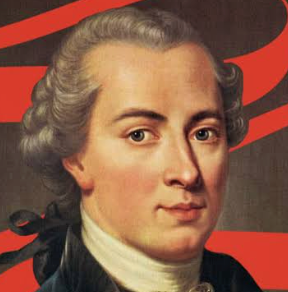
Immanuel Kant, philosopher & central figure of modern metaphysics
“God is the supreme cause of nature… a Being who by understanding and will is the cause of nature, i.e. its Author, distinct from nature itself.”From ‘Critique of Practical Reason’ (1788), defining divine transcendence as an absolute ontological distinction between Creator and created nature.
TRANSCENDENCE
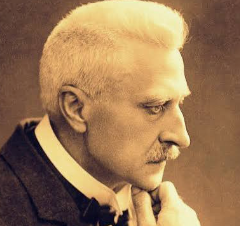
Rudolf Otto, theologian, philosopher & scholar of comparative religion
“The numinous is experienced as the ‘wholly other’—that which is strictly beyond our comprehension and completely transcends the realm of ordinary human experience.”From ‘The Idea of the Holy’ (1917), establishing the psychological and philosophical dimension of divine transcendence.
TRANSCENDENCE
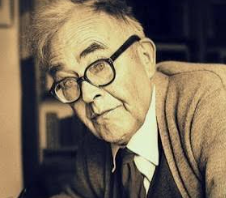
Karl Barth, influential 20th-century theologian
“God is the Wholly Other; between the Creator and the creature there is an infinite qualitative distinction. He cannot be identified with human culture, nature, or reason.”From ‘The Epistle to the Romans’ (1922), emphasizing divine transcendence over pantheistic or naturalistic confusions.
TRANSCENDENCE
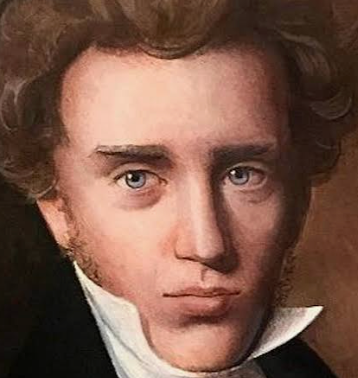
Søren Kierkegaard, philosopher & father of Christian existentialism
“Between God and man there is an infinite qualitative difference. To forget this is the fundamental error that destroys both the majesty of God and the true dignity of humanity.”From ‘Training in Christianity’ (1850), warning against reducing a transcendent Creator to human category limitations.
TRANSCENDENCE
Francis Schaeffer, philosopher, theologian & author
“God is not a impersonal force wrapped inside the machine of the universe. He is the infinite-personal God who created the universe from the outside, remaining entirely distinct from it.”From ‘He Is There and He Is Not Silent’ (1972), contrasting biblical transcendence with pantheism and secular naturalism.
TRANSCENDENCE
Étienne Gilson, philosopher & historian of medieval philosophy
“God is Subsistent Being Itself (Ipsum Esse Subsistens). He does not receive existence from anywhere else; He transcends every finite category of essence and physical reality.”From ‘The Christian Philosophy of St. Thomas Aquinas’ (1956), detailing the metaphysical grounding of divine transcendence.
TRANSCENDENCE
Alvin Plantinga, philosopher & former president of the APA
“God is a necessary being, existing in all possible worlds, whose presence transcends space and time. The physical universe is contingent and depends continuously upon His transcendent power for its existence.”From ‘The Nature of Necessity’ (1974), analyzing divine transcendence through modal logic and ontology.
TRANSCENDENCE
Sir Roger Scruton, philosopher & writer
“The experience of the sacred is the experience of a transcendent presence—a reality that impinges upon our world from beyond it, giving objective meaning to human existence.”From ‘The Soul of the World’ (2014), defending the reality of the transcendent against reductionist materialist accounts.
[/su_column]
[su_column class=”col-m”]
TRANSCENDENCE
Dallas Willard, professor of philosophy at the University of Southern California
“God is an uncreated, infinite, non-physical Spirit who is not constrained by space, time, or energy. To understand God requires recognizing that reality extends far beyond the physical realm.”From ‘The Divine Conspiracy’ (1998), articulating the philosophical structure of uncreated divine transcendence.
TRANSCENDENCE
William Lane Craig, analytic philosopher & theologian
“The cause of the origin of the universe must be a personal, uncaused, timeless, spaceless, and enormously powerful Being. Such a cause transcends physical space, time, and matter altogether.”From ‘The Kalam Cosmological Argument’ (1979), deducing divine transcendence directly from cosmological boundaries.
LOGIC & REASON
Gottfried Wilhelm Leibniz, mathematician & philosopher
“No fact can be real or existent, no statement true, unless there be a sufficient reason why it is so and not otherwise. The ultimate reason for things must lie in a necessary substance… and this is what we call God.”From ‘The Monadology’ (1714), establishing the logical Principle of Sufficient Reason to demonstrate that contingent reality requires an uncaused necessary explanation.
LOGIC & REASON
Alvin Plantinga, philosopher & former president of the APA
“If it is even possible that a maximally great being exists, then under the rules of modal logic, a maximally great being exists in every possible world—including the actual world.”From ‘The Nature of Necessity’ (1974), applying modern S5 modal logic to demonstrate the logical coherence and necessity of a supreme being.
LOGIC & REASON
Kurt Gödel, mathematician & pioneer of mathematical logic
“If a entity possesses all positive properties, necessary existence is itself a positive property. Therefore, the non-existence of such a entity is logically impossible.”From his formal ontological proof (1970/1987), using higher-order modal logic to formulate a mathematically rigorous proof for the existence of God.
LOGIC & REASON
William Lane Craig, analytic philosopher & theologian
“An actual infinite cannot exist in physical reality. A chronological regress of events in time is an actual infinite; therefore, time and the universe must have had a beginning, and a first uncaused cause.”From ‘The Kalam Cosmological Argument’ (1979), using formal deductive logic to prove the logical impossibility of an infinite temporal past.
LOGIC & REASON
Thomas Aquinas, philosopher & theologian
“Nothing can be transformed from potentiality to actuality except by something already in a state of actuality… It is logically impossible to regress to infinity in efficient causes. Therefore, it is necessary to admit a first unmoved mover.”From ‘Summa Theologiae’ (1274), applying Aristotelian logic regarding potentiality and actuality to establish the First Cause.
[/su_column][/su_row]