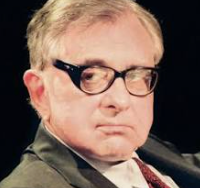
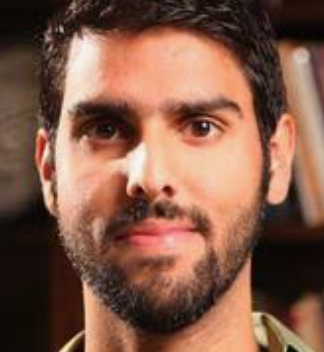
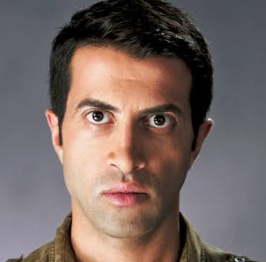
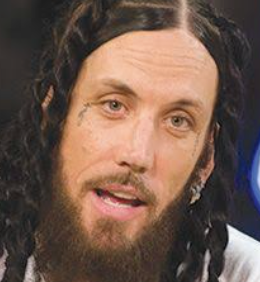
THE RELUCTANT CONVERT YIELDS
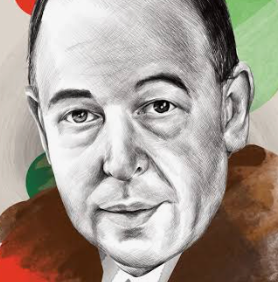
C.S. Lewis, Oxford scholar, literary critic & author
“In the Trinity Term of 1929 I gave in, and admitted that God was God, and knelt and prayed: perhaps, that night, the most dejected and reluctant convert in all England.” Lewis described his conversion as the end of a long intellectual and personal resistance to the reality of God. Evidence: A sustained movement from atheism through theism to Christian faith. Ontology: Human Experience > Conversions
AN ATHEIST WHO TRIED TO REMAIN AN ATHEIST
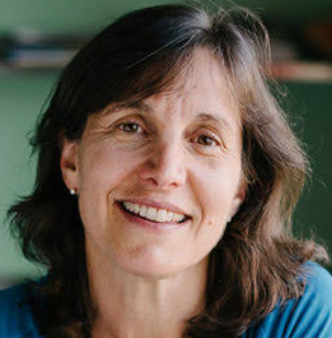
Jennifer Fulwiler, writer, broadcaster & former atheist
“I became Catholic because I was trying to be an atheist.” Fulwiler’s investigation began as an attempt to build a coherent atheist worldview but led her to conclude that Christianity better explained reason, morality, love, consciousness, and meaning. Evidence: Cumulative intellectual and personal conversion journey. Ontology: Human Experience > Conversions
THE PUBLIC ATHEIST WHO CAME BACK
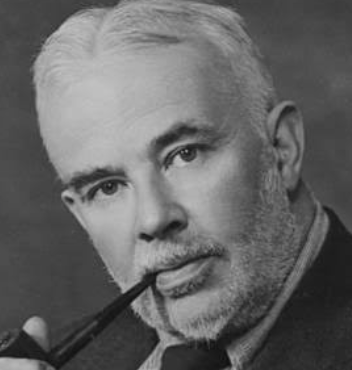
C.E.M. Joad, British philosopher, broadcaster & former atheist
“I have come back to Christianity.” Joad was once one of Britain’s best-known advocates of atheism. In his later years, he concluded that Christianity gave a more adequate account of morality, personality, reason, and human longing than materialism. Evidence: Public reversal following philosophical reflection and personal reconsideration. Ontology: Human Experience > Conversions
THE ATHEIST’S EXPERIMENTAL PRAYER
John C. Wright, science-fiction author & former atheist
“Dear God, I know that you do not exist. Nonetheless, as a scholar, I am forced to entertain the hypothetical possibility that I am mistaken.” Wright recounts beginning with a deliberately skeptical prayer, then describing a profound change that eventually led him into Christian faith. Evidence: Personal prayer, philosophical openness, and reported transformative experience. Ontology: Human Experience > Conversions
THE SKEPTIC WHO ASKED FOR HELP
Devin Rose, author & former atheist
“God, you know I do not believe in you, but I am in trouble and need help. If you are real, help me.” Rose describes moving from atheism toward Christianity through prayer, Scripture reading, questions, and a gradual growth of faith. Evidence: Existential crisis followed by personal religious practice and sustained conversion. Ontology: Human Experience > Conversions
WHEN THE ARGUMENTS BECAME TRUE
Dr. Edward Feser, philosopher & former atheist
“Eventually it hit me: ‘Oh my goodness, these arguments are right after all!'” Feser recounts reconsidering classical arguments for God after first dismissing them, then gradually becoming convinced that they were philosophically sound. Evidence: Re-examination of cosmological and classical theistic arguments. Ontology: Human Experience > Conversions
THE SCIENTIST WHO FOUND FAITH AND REASON TOGETHER
Dr. Kevin Vost, psychologist, author & former atheist
“He showed me how true Christian faith complements and perfects reason; it doesn’t contradict or belittle it.” Vost describes recovering Christian belief through the philosophical writings of Thomas Aquinas after years of atheism. Evidence: Integration of philosophical reasoning, scientific training, and Christian theology. Ontology: Human Experience > Conversions
THE ATHEIST WHO MET INTELLECTUAL CHRISTIANS
Leah Libresco, writer & former atheist blogger
“When I went to college, I met smart Christians for the first time, and it was a real shock.” Libresco’s move from atheism to Christianity involved serious engagement with Christian friends whose moral, philosophical, and aesthetic arguments challenged her assumptions. Evidence: Intellectual community, moral reasoning, and worldview comparison. Ontology: Human Experience > Conversions
THE ATHEIST ACADEMIC DISARMED BY CHRISTIAN LITERATURE
Dr. Holly Ordway, literary scholar & former atheist
“I found that my favorite authors were men and women of deep Christian faith.” Ordway describes how great Christian literature unsettled her atheist assumptions and helped begin her path toward faith. Evidence: Literary encounter, intellectual honesty, and personal conversion. Ontology: Human Experience > Conversions
THE PHILOSOPHER WHO FOLLOWED THE EVIDENCE
Antony Flew, philosopher & former atheist leader
“The difference between life and non-life, it became apparent to me, was ontological and not chemical.” Flew’s rejection of atheism followed decades of philosophical work and reflection on the origin, order, and complexity of life. Evidence: Biological complexity and philosophical inference to an intelligent source. Ontology: Human Experience > Conversions
WHEN ATHEISM COULD NOT EXPLAIN REALITY
Jonathan Noyes, Christian apologist & former atheist
“I’m a Christian because it’s the true story of reality.” Noyes describes leaving atheism after concluding it could not adequately account for the beginning of the universe, objective morality, the soul, human value, or forgiveness. Evidence: A cumulative worldview case grounded in lived moral and existential experience. Ontology: Human Experience > Conversions
Oxford Atheist’s Famous Conversion
Clive Staples Lewis (1898–1963) — Former atheist; Oxford & Cambridge
“A young man who wishes to remain a sound Atheist cannot be too careful of his reading. God is, if I may say it, very unscrupulous.”Lewis was a committed atheist throughout his teens and twenties. Through intellectual exchanges with J.R.R. Tolkien and reading G.K. Chesterton, he gradually found atheism untenable. He described his conversion as being “the most reluctant convert in all England.”Evidence: Philosophical/Autobiographical (Lewis, Surprised by Joy, 1955, p. 191). File Under: Evidence for God › Former Atheists › Philosophers/Literary Scholars
THE SIMPLE PRAYER THAT CHANGED A LIFE
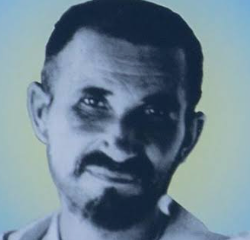
Charles de Foucauld, French explorer, soldier & Christian hermit
“My God, if You exist, let me come to know You.” Foucauld’s honest prayer emerged after years of agnosticism and spiritual indifference, beginning a conversion that reshaped his life around prayer, service, and humility. Evidence: Existential searching, prayer, and lasting moral transformation. Ontology: Human Experience > Conversions
THE HEART STRANGELY WARMED
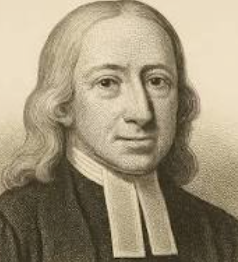
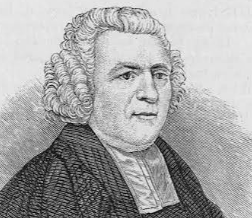
John Wesley, Anglican priest, evangelist & founder of Methodism
“I felt my heart strangely warmed. I felt I did trust in Christ, Christ alone for salvation.” Wesley experienced a decisive conversion after years of religious activity and intellectual uncertainty. Evidence: Personal assurance of faith and a life subsequently devoted to preaching and renewal. Ontology: Human Experience > Conversions
THE RESTLESS HEART FINDS ITS HOME
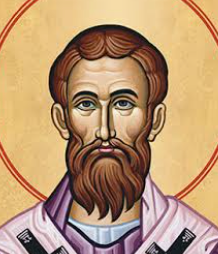
Saint Augustine of Hippo, theologian, philosopher & bishop
“You have made us for yourself, O Lord, and our heart is restless until it rests in you.” Augustine’s journey through skepticism, Manichaeism, ambition, and moral struggle culminated in a Christian conversion that shaped Western theology and philosophy for centuries. Evidence: Existential longing, philosophical inquiry, Scripture, and moral transformation. Ontology: Human Experience > Conversions
THE ACTIVIST WHO FOUND A CHRISTIAN FOUNDATION FOR JUSTICE
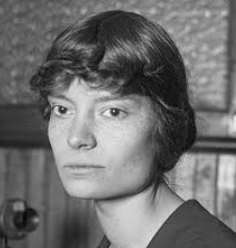
Dorothy Day, journalist, social activist & co-founder of the Catholic Worker Movement
“I really believed that God did not exist. I was an atheist.” Day’s conversion moved her from atheism and radical political activism into a Christian life of hospitality, nonviolence, service to the poor, and advocacy for human dignity. Evidence: Moral confrontation with suffering, prayer, and Christian witness. Ontology: Human Experience > Conversions
SEARCH FOR A NEW RELIGION LED TO ORTHODOXY
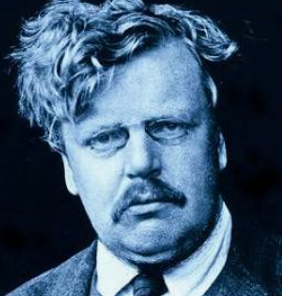
G.K. Chesterton, writer, philosopher & Christian apologist
“I tried to build a heresy of my own; and when I had put the last touches to it, I discovered that it was Orthodoxy.” Chesterton’s journey from skepticism and spiritual experimentation to Christian belief became central to his influential defense of Christian orthodoxy. Evidence: Personal intellectual journey and recognition of Christianity’s explanatory coherence. Ontology: Human Experience > Conversions
AMAZING GRACE FOR A FORMER INFIDEL
John Newton, former slave-ship captain, clergyman & hymnwriter
“Amazing grace! How sweet the sound, that saved a wretch like me! I once was lost, but now am found; was blind, but now I see.” Newton’s conversion began amid a violent sea storm and eventually produced enduring repentance, Christian ministry, and abolitionist advocacy. Evidence: Crisis experience followed by long-term moral and vocational transformation. Ontology: Human Experience > Conversions
FIRE AND CERTAINTY
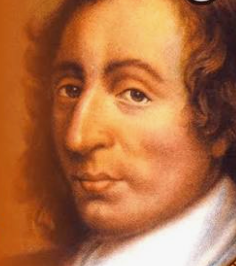
Blaise Pascal, mathematician, physicist & Christian philosopher
“FIRE. God of Abraham, God of Isaac, God of Jacob, not of the philosophers and scholars. Certainty. Certainty. Feeling. Joy. Peace.” Pascal recorded a decisive encounter with God that deepened and redirected his Christian commitment, leading to the unfinished apologetic work known as Pensées. Evidence: Personal religious experience joined to rigorous intellectual reflection. Ontology: Human Experience > Conversions
THE RESEARCH PROJECT THAT BECAME A CONVERSION
Dr. Rosaria Butterfield, author & former professor of English
“The Word of God came alive to me.” Butterfield began reading Scripture in the context of researching and criticizing conservative Christianity, but her encounter with the biblical text and Christian community became the catalyst for conversion. Evidence: Scriptural engagement, friendship, hospitality, and a transformed worldview. Ontology: Human Experience > Conversions
THE GENETICIST WHO FOLLOWED THE MORAL LAW
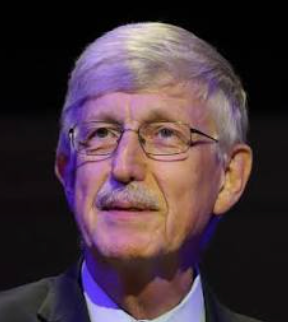
Dr. Francis Collins, physician-geneticist & former director of the NIH
“I had started this journey of intellectual exploration to confirm my atheism. That now lay in ruins.” Collins recounts losing his atheism after reflecting on the moral law, the intelligibility of nature, and the claims of Christianity. Evidence: Scientific inquiry, moral experience, and personal conversion. Ontology: Human Experience > Conversions
THE ATHEIST JOURNALIST WHO COULDN’T DISPROVE IT
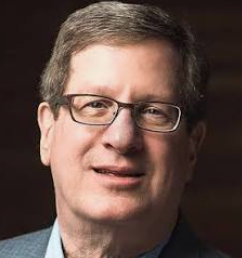
Lee Strobel, legal editor at the Chicago Tribune & former atheist
“I had the same bias against God as every atheist I’d ever met. After two years of research, all that collapsed. The evidence of history and science convinced me that Jesus really did rise from the dead.” A legal editor at the Chicago Tribune and committed atheist, Strobel launched a systematic journalistic investigation of Christianity after his wife’s conversion — intending to disprove it. He interviewed leading historians, scientists, archaeologists, and philosophers over nearly two years, applying the same legal standards of evidence he used covering courts. His findings reversed his atheism entirely and led him into Christian faith. The Case for Christ (Zondervan, 1998).Ontology: Human Experience > Conversions
NIXON’S HATCHET MAN BREAKS DOWN IN A DRIVEWAY
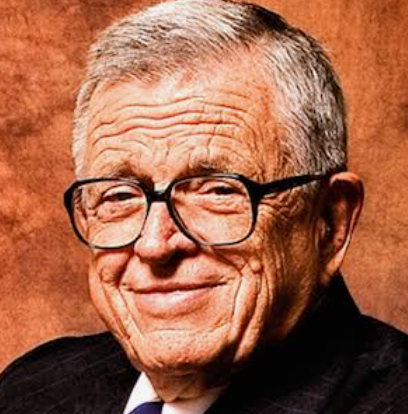
Chuck Colson, Special Counsel to President Nixon & founder of Prison Fellowship
“I prayed for the first time in my life with a reality and urgency I had never known: ‘God, I don’t know how to find You, but I’m going to try. I’m not sure what I believe. But I can say this: I want to commit my life to You.'” Known as Nixon’s “hatchet man” and the most feared political operative in Washington, Colson sat in his car in a friend’s driveway and wept for the first time in his adult life after reading C.S. Lewis’s Mere Christianity — a book pressed on him by a business associate. He converted to Christian faith before his Watergate indictment and sentencing, and later founded Prison Fellowship, one of the world’s largest prison ministry organizations. Born Again (Chosen Books, 1976).Ontology: Human Experience > Conversions
THE OTHER HITCHENS BURNS HIS BIBLE; REGRETS IT
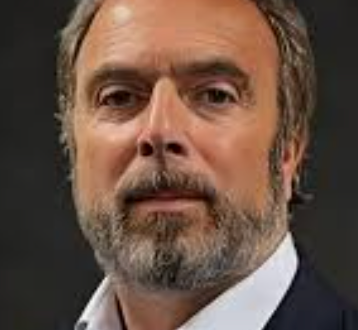
Peter Hitchens, former Marxist; brother of Christopher Hitchens
“I have since come to believe that the Bible is a serious book that demands serious attention, that it rewards rereading, and that it is not what I lazily assumed it to be.” Younger brother of the celebrated atheist Christopher Hitchens, Peter publicly burned his Bible as a teenager and spent decades as a committed Marxist journalist. His gradual conversion to Christianity was driven by moral seriousness — the bankruptcy of Soviet atheism, encounters with great Christian art, and a confrontation with his own conscience. He came to believe that only Christian moral foundations could sustain Western civilization. The two brothers held public debates until Christopher’s death in 2011. The Rage Against God: How Atheism Led Me to Faith (Zondervan, 2010).Ontology: Human Experience > Conversions
THE GULAG GAVE BACK GOD
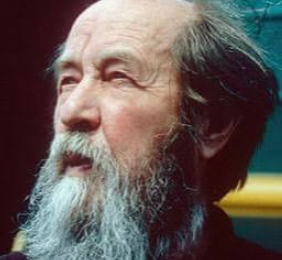
Aleksandr Solzhenitsyn, Nobel Prize novelist & Soviet dissident
“Bless you, prison, bless you for being in my life. For there, lying upon the rotting prison straw, I came to realize that the object of life is not prosperity as we are made to believe, but the maturing of the human soul.” Raised under Soviet atheism and imprisoned in the Gulag labor camp system for eight years after criticizing Stalin in a private letter, Solzhenitsyn emerged with a deepened Russian Orthodox Christian faith. He credited his suffering with stripping away ideological illusions and bringing him face to face with God. His works documenting Soviet crimes became foundational critiques of totalitarian atheism, and his Harvard commencement address (1978) called the secular West to moral renewal. The Gulag Archipelago, Vol. 2 (Harper & Row, 1974); Harvard Commencement Address, June 8, 1978.Ontology: Human Experience > Conversions
THE SECULAR POET DRAWN TOWARD FAITH HE DIDN’T CHOOSE
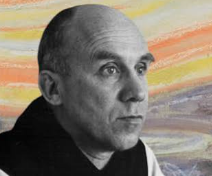
Thomas Merton, poet, author & Trappist monk
“I had one of those vague, sweet attractions to the Catholic Church — one of those interior movements that are strange and sudden and seem to be without adequate cause — and I began to argue with myself, to explain it away.” A poet and intellectual who grew up without religious faith in Europe and the United States, Merton was drawn toward Catholicism through philosophy, art, and a series of unexpected interior experiences he initially resisted. He was received into the Catholic Church in 1938 and eventually became a Trappist monk at the Abbey of Gethsemani in Kentucky. His autobiography sold over a million copies within its first year and remains among the most influential spiritual memoirs in the English language. The Seven Storey Mountain (Harcourt Brace, 1948).Ontology: Human Experience > Conversions
THE SOCIALIST SATIRIST WHO FOUND THE REAL THING
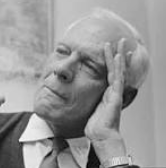
Malcolm Muggeridge, BBC journalist & Catholic convert
“I may regard myself as a relatively successful man… and yet I say to you — multiply these outward successes by millions, and they are nothing measured against one draught of that living water Christ offers to the spiritually thirsty.” Editor of Punch magazine, prolific BBC television personality, and former socialist who had reported from Moscow and observed Soviet totalitarianism firsthand, Muggeridge spent decades in public skepticism before a gradual conversion. He was received into the Catholic Church at age 79 alongside his wife Kitty — profoundly influenced by his friendship with Mother Teresa, whom he introduced to the English-speaking world. Jesus Rediscovered (Fontana, 1969); Something Beautiful for God (Harper & Row, 1971).Ontology: Human Experience > Conversions
THE JEWISH PHILOSOPHER WHO READ ALL NIGHT AND SAID: THAT IS THE TRUTH
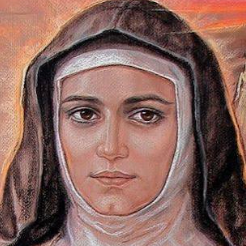
Edith Stein (St. Teresa Benedicta of the Cross), Carmelite nun & martyr
“The moment I opened the book, I began to read; I went on reading all night until I came to the end. When I put it down, I said to myself: ‘That is the truth.'” A German-Jewish philosopher and protégé of Edmund Husserl and a committed atheist since her teens, Stein spent a single night reading the autobiography of St. Teresa of Ávila in 1921 and immediately sought baptism. She became a Carmelite nun, taking the name Sister Teresa Benedicta of the Cross. Arrested by the Gestapo in 1942 because of her Jewish birth, she was killed at Auschwitz. She was canonized by Pope John Paul II in 1998 and named a co-patron of Europe. Life in a Jewish Family (ICS Publications, 1986); Waltraud Herbstrith, Edith Stein: A Biography (Harper & Row, 1985).Ontology: Human Experience > Conversions
“JANE ROE” BECOMES PRO-LIFE
Norma McCorvey (“Jane Roe”), plaintiff in Roe v. Wade
“I am pro-life. I think I have always been pro-life. I just didn’t know it.” The plaintiff identified as “Jane Roe” in the landmark Supreme Court decision that established a constitutional right to abortion in the United States, McCorvey converted to Christianity in 1995 after a friendship developed with Operation Rescue workers whose office was next door to her abortion clinic employer. She was subsequently baptized as a Catholic in 1998. In her final years she spoke publicly and repeatedly about her regret and her support for overturning the decision that bore her name. Won by Love (Thomas Nelson, 1997).Ontology: Human Experience > Conversions
THE NOVELIST WHO CONVERTED ON INTELLECTUAL GROUNDS
Evelyn Waugh, novelist & convert to Roman Catholicism
“You have no idea how much nastier I would be if I was not a Catholic. Without supernatural aid I would hardly be a human being.” One of the 20th century’s greatest English novelists — author of Brideshead Revisited and Decline and Fall — Waugh converted to Roman Catholicism in 1930 after a deliberate intellectual examination, describing it explicitly as being on philosophical and historical rather than sentimental grounds. He found the Catholic Church alone to offer a coherent account of truth, moral order, and civilization. Faith became the organizing principle of his mature literary work and his unflinching critique of secular modernity. A Little Learning (Chapman & Hall, 1964); Selina Hastings, Evelyn Waugh: A Biography (Houghton Mifflin, 1994).Ontology: Human Experience > Conversions
THE SPY WHO LEFT THE WINNING SIDE
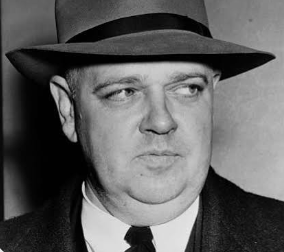
Whittaker Chambers, former Soviet intelligence agent & Time editor
“I know that I am leaving the winning side for the losing side, but it is better to die on the losing side than to live under Communism.” A senior editor at Time magazine and former Soviet spy who had passed classified US government documents to Soviet intelligence, Chambers abandoned Communism after concluding that its materialism denied both God and human dignity. He described his conversion as beginning when he watched his infant daughter’s ear and realized it could not be a product of chance. His explosive testimony before the House Un-American Activities Committee was among the most consequential episodes of the Cold War. Witness (Random House, 1952).Ontology: Human Experience > Conversions
THE OXFORD BIOCHEMIST WHO OUTGREW ATHEISM
Dr. Alister McGrath, Oxford molecular biologist & former atheist
“My earlier confident atheism now seemed to lack the intellectual rigor and robustness that I had assumed it possessed.” Trained as a molecular biologist at Oxford with an avowed atheism, McGrath was confronted with the historical and philosophical case for Christianity during his undergraduate studies and concluded that his atheism was intellectually insufficient. He was received into the Church of England, then earned doctorates in both molecular biophysics and Christian theology — becoming one of the world’s leading scholars of science and religion and a prominent critic of the New Atheism of Richard Dawkins. The Twilight of Atheism (Doubleday, 2004); Why God Won’t Go Away (SPCK, 2011).Ontology: Human Experience > Conversions
THE SKEPTIC WHO SET OUT TO REFUTE THE RESURRECTION
Josh McDowell, author & former skeptic
“The resurrection of Jesus Christ is either the most wicked, vicious hoax ever foisted upon the minds of men — or it is the most fantastic fact of history.” A university pre-law student who accepted a dare from Christian classmates to systematically examine the evidence for Christianity with the explicit goal of refuting it, McDowell spent months investigating historical, archaeological, and philosophical evidence for the resurrection. He concluded it was historically defensible by the same standards applied in courts of law and converted to Christian faith. His subsequent research volume became one of the most widely distributed apologetics works of the 20th century. Evidence That Demands a Verdict (Campus Crusade for Christ, 1972).Ontology: Human Experience > Conversions
THE ABORTION PIONEER WHO CHANGED SIDES
Dr. Bernard Nathanson, obstetrician-gynecologist & NARAL co-founder
“I am one of those who helped usher in this barbaric age. I have such heavy moral baggage to drag into the next world that failing to expiate it here… is unthinkable.” A prominent New York obstetrician who co-founded the National Abortion Rights Action League (NARAL) and by his own account presided over or directly performed approximately 75,000 abortions, Nathanson reconsidered the humanity of the unborn after advances in ultrasound technology made the developing child undeniably visible. He abandoned abortion advocacy by 1974 and converted from atheism to Roman Catholicism in 1996, baptized by Cardinal John O’Connor at St. Patrick’s Cathedral. He described the discovery of God’s unconditional mercy as the one thing he had never believed possible. The Hand of God (Regnery, 1996).Ontology: Human Experience > Conversions
THE DEVOUT MUSLIM WHO SEARCHED FOR ISLAM AND FOUND JESUS
Dr. Nabeel Qureshi, physician & former Ahmadiyya Muslim
“I had been a Muslim my whole life — fasting for Ramadan, praying five times a day, memorizing the Quran. And yet the historical evidence for the resurrection of Jesus was stronger than anything I had for Islam’s core claims.” A Pakistani-American physician raised in a devout Ahmadiyya Muslim family, Qureshi subjected both Islam and Christianity to rigorous historical scrutiny through years of sustained debate with a Christian friend. His investigation of the evidence for Jesus’s resurrection and the textual history of the Quran convinced him of Christianity’s historical superiority. He was baptized in 2005 and later earned an M.D. and two graduate degrees, including study at Oxford in Islamic studies and Christian apologetics. He died of stomach cancer at age 34. Seeking Allah, Finding Jesus (Zondervan, 2014).Ontology: Human Experience > Conversions
THE SON OF HAMAS READS THE SERMON ON THE MOUNT
Mosab Hassan Yousef, son of Hamas co-founder Sheikh Hassan Yousef
“I converted to Christianity because I was convinced that Jesus Christ is the only way to the truth… My father’s God demands blood. The God of the Bible is a God of love.” The eldest son of Sheikh Hassan Yousef — a co-founder and senior leader of Hamas — Mosab was arrested by Israeli security services as a teenager and ultimately became an intelligence asset for the Shin Bet while simultaneously encountering the New Testament for the first time. Reading the Sermon on the Mount, he found a morality unlike anything in his upbringing. He publicly converted to Christianity in 2008 and was disowned by his family and condemned by Hamas. Son of Hamas (Tyndale House, 2010).Ontology: Human Experience > Conversions
THE GANG LEADER WHO WANTED TO HUG INSTEAD OF STAB
Nicky Cruz, former Brooklyn Mau Maus gang president
“The night I was saved, my whole life changed. I knew something had happened inside me — something clean and pure. I wanted to hug people instead of stab them.” Born in Puerto Rico and raised in a family that practiced Santeria, Cruz immigrated to New York City as a teenager and became president of the Mau Maus, one of Brooklyn’s most feared street gangs. An encounter with evangelist David Wilkerson in 1958 led to a conversion Cruz describes as immediate and total. He subsequently founded Nicky Cruz Outreach and wrote one of the best-selling Christian autobiographies of the 20th century, later made into the film The Cross and the Switchblade (1970). Run Baby Run (Logos International, 1968).Ontology: Human Experience > Conversions
THE KORN GUITARIST WHO MET MATTHEW 11:28
Brian “Head” Welch, lead guitarist of Korn
“I did every drug there was. I had all the money. I had the fame. I had everything the world said would make you happy — and I was the most miserable person I had ever met.” Lead guitarist of Korn — one of the most commercially successful nu-metal bands of the 1990s — Welch was deep in methamphetamine addiction when a neighbor showed him Matthew 11:28 (“Come to me, all who are weary and burdened, and I will give you rest”). He converted to Christianity in 2005, subsequently quit Korn, was baptized in the Jordan River in Israel, and later rejoined the band as an openly practicing Christian. His conversion prompted his former bandmates to publicly examine their own lives. Save Me from Myself (HarperOne, 2007).Ontology: Human Experience > Conversions
THE SUICIDAL ATHEIST WHO ARRIVED TO CONFRONT GOD
Lacey Sturm, vocalist of Flyleaf & former atheist
“I came to church that morning to ask God — if He existed — to make me not afraid to kill myself. Instead, He turned my whole world upside down.” Lead vocalist of the Christian rock band Flyleaf, Sturm was a suicidal teenage atheist who arrived at a church in Louisiana not to worship but to challenge God before ending her life. A conversation with an elderly woman and a subsequent encounter during prayer reversed her plans entirely. She describes the experience as undeniably real and impossible to explain naturalistically — the beginning of a life she documents in detail. Flyleaf’s music, centered on her story, sold millions of records to a largely secular rock audience. The Reason: How I Discovered a Life Worth Living (Baker Books, 2014).Ontology: Human Experience > Conversions
THE REAL REBEL CHOOSES CHRIST
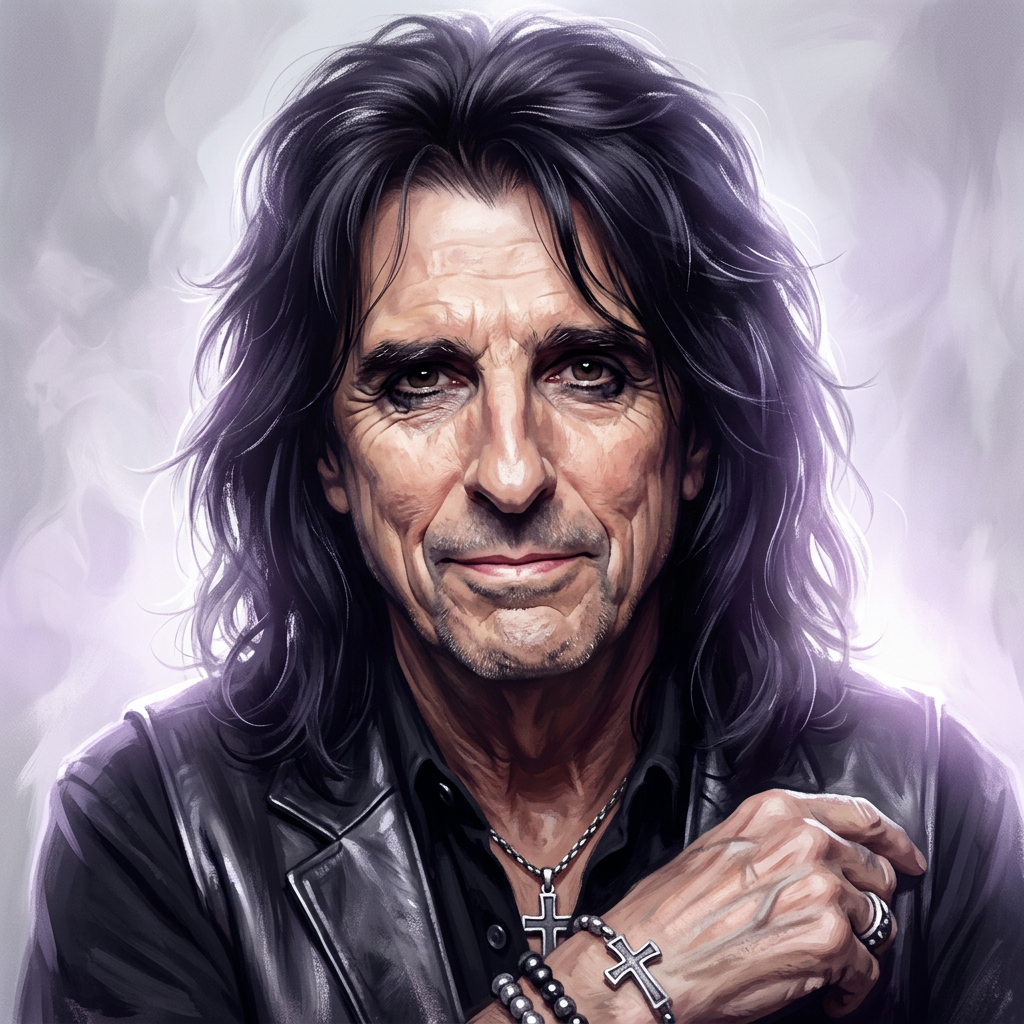
Alice Cooper (Vincent Furnier), rocker; born-again Christian
“Drinking beer is easy. Trashing your hotel room is easy. But being a Christian — that’s a tough call. That’s the real rebel.” Born Vincent Damon Furnier and raised in a Christian home in Phoenix, Alice Cooper built a career on theatrical shock rock before alcoholism brought him to rehabilitation in the early 1980s. He returned to the Christian faith of his upbringing and has been an open, practicing Christian since — attending church regularly, attributing his sobriety to God, and describing Christianity as the genuinely countercultural choice in a rock-and-roll world. He has spoken about his faith in numerous interviews with Christianity Today and other publications. Golf Monster: A Rock ‘n’ Roller’s 12 Steps to Becoming a Golf Addict (Crown Publishers, 2007).Ontology: Human Experience > Conversions
MEGADETH’S FRONTMAN FINDS WHAT HE WAS LOOKING FOR
Dave Mustaine, founder & frontman of Megadeth
“I became a Christian. I didn’t like it at first. I thought I was giving everything up. But I feel like I found what I was looking for — I just didn’t know I was looking for it.” Fired from Metallica in 1983 in one of rock’s most famous splits, Mustaine founded Megadeth and sold over 38 million albums across four decades — but struggled throughout with drug and alcohol addiction, injury, legal trouble, and broken relationships. He converted to Christianity in 2002, influenced by his wife Pamela’s faith and meetings with a San Diego pastor during recovery from a nerve injury that had briefly ended his guitar playing. Mustaine: A Heavy Metal Memoir (It Books, 2010).Ontology: Human Experience > Conversions
THE BLACK PANTHER SAW A FACE IN THE MOON
Eldridge Cleaver, Black Panther Party & author
“I saw the faces of my heroes in the clouds — Mao, then Fidel. Then the face of Jesus Christ appeared. I fell to my knees and cried out to God.” A senior figure in the Black Panther Party and author of the explosive Soul on Ice (1968), Cleaver was in exile in Cuba, Algeria, and France after fleeing US assault charges. In 1975, on a balcony in the South of France, he described a vision in the clouds that culminated in the face of Jesus Christ. He returned to the United States, surrendered to authorities, and became an outspoken Christian. His conversion from revolutionary Marxism to Christianity was widely covered in the national press. Soul on Fire (Word Books, 1978).Ontology: Human Experience > Conversions
THE YUPPIE DON WHO WALKED AWAY FROM THE MOB ALIVE
Michael Franzese, former Colombo crime family capo
“I walked away from the Mob — and I walked away alive. The only way I can explain that is God.” Named by Fortune magazine as one of the ten wealthiest and most powerful mob bosses in America during the 1980s, Franzese was a capo in the Colombo crime family who ran a multi-billion-dollar gasoline tax fraud scheme. He became a Christian through his wife Camille’s faith, cooperated with federal prosecutors, renounced the Mafia — and uniquely among senior organized crime figures — walked away without witness protection or retribution. He has spoken in over 600 schools, universities, and churches. Blood Covenant (Whitaker House, 2003).Ontology: Human Experience > Conversions
THE QUARK PHYSICIST WHO RESIGNED TO BECOME A PRIEST
Sir John Polkinghorne KBE FRS, Cambridge particle physicist
“Science can explain the how; it cannot explain the why. Why is there something rather than nothing? Why is the universe rationally transparent to us? These questions point beyond science to its source.” A particle physicist at Cambridge who contributed to the foundational theory of quarks — among the most fundamental particles in physics — Polkinghorne resigned his professorship in 1979 to be ordained as an Anglican priest. He argued for the remainder of his career that science and Christian theology were not in conflict but mutually illuminating, producing seventeen books at their intersection. He was knighted in 1997. The Faith of a Physicist (Princeton University Press, 1994); Science and Christian Belief (SPCK, 1994).Ontology: Human Experience > Conversions
THE WORLD’S MOST FAMOUS ATHEIST BECOMES A CHRISTIAN
Ayaan Hirsi Ali, Somali-born author, former Dutch MP & former atheist
“I no longer consider myself a Muslim apostate, but a lapsed atheist who has converted to the Christianity of the West.” Born in Mogadishu, Somalia, raised as a devout Muslim, and a former member of the Dutch Parliament, Hirsi Ali spent more than fifteen years as one of the world’s most prominent atheists and critics of Islam. In November 2023 she publicly announced her conversion to Christianity — stating that atheism cannot provide the moral and civilizational foundations needed to resist totalitarianism and nihilism, and that only the Christian tradition has the resources to defend the values she wished to uphold. Infidel (Free Press, 2007); conversion announced in UnHerd, November 11, 2023.Ontology: Human Experience > Conversions
THE NEW AGE BESTSELLER AUTHOR WHO WALKED AWAY FROM IT ALL
Doreen Virtue, Ph.D., former New Age author
“I spent decades in the New Age movement selling books and courses on angels, oracle cards, and divination — and I came to see that what I was offering people was, in fact, forbidden by God.” A clinical psychologist who became one of the world’s most commercially successful New Age authors — publishing more than 50 books on angels, tarot, and spirituality with Hay House — Virtue converted to Christianity in 2017 following a vision during a church service in Hawaii. She subsequently withdrew her entire New Age product line from sale and publicly renounced it, writing at length about the supernatural deceptions she now believes she had been involved in and offering. Deceived No More: How Jesus Led Me Out of the New Age and Into His Word (Thomas Nelson, 2020).Ontology: Human Experience > Conversions
CHRIST HIMSELF CAME DOWN AND TOOK POSSESSION OF ME
Simone Weil, French philosopher, mystic & social activist
“In a moment of intense physical pain — while reciting George Herbert’s poem ‘Love’ — Christ himself came down and took possession of me.” A French philosopher and political activist raised in an agnostic Jewish household, Weil (1909–1943) remained outside organized religion throughout most of her life. During a period of severe illness and contemplative prayer — reciting Herbert’s poem “Love (III)” — she described an experience of Christ’s direct and overwhelming presence that transformed her philosophical understanding of suffering, beauty, and justice. She died at age 34 of tuberculosis in England, having refused to eat more than the wartime ration of occupied France. Waiting for God (Putnam, 1951); Gravity and Grace (Routledge, 1952).Ontology: Human Experience > Conversions
NO PIT SO DEEP THAT GOD IS NOT DEEPER STILL
Corrie ten Boom, Dutch watchmaker, Holocaust survivor & author (1892–1983)
“There is no pit so deep that God’s love is not deeper still.” A Dutch watchmaker’s daughter who, with her family, hid Jewish refugees in a secret room during the Nazi occupation of the Netherlands, Corrie ten Boom was arrested in 1944 and imprisoned in Ravensbrück concentration camp, where her sister Betsie died. She attributed these words — which became the message of her entire post-war ministry — to Betsie, spoken in the camp. Ten Boom survived and spent decades speaking worldwide, including publicly forgiving a former Ravensbrück guard who sought her out. Her memoir has sold tens of millions of copies. The Hiding Place (with John and Elizabeth Sherrill, Chosen Books, 1971).Ontology: Human Experience > Conversions
THE HIGH-RANKING SATANIST INTERRUPTED BY GOD
John Ramirez, former Satanic cult leader, South Bronx, New York
“I was a high-ranking Satanist in New York City — given power to call down demonic assignments. I was in the middle of a ritual when God interrupted my life and called me by name.” Raised in the South Bronx in a family that practiced Santeria and Spiritism, Ramirez claims to have risen to a position of occult leadership in New York City. He describes a dramatic conversion encounter in which he heard his name called by a voice that identified itself as Jesus Christ, disrupting a ritual and prompting an immediate break with his past. He subsequently became an evangelical minister and has spoken extensively on the realities and dangers of occult practice from firsthand experience. Armed and Dangerous: The Ultimate Battle Plan for Targeting and Defeating the Enemy (Charisma House, 2013).Ontology: Human Experience > Conversions
THE MIT PROFESSOR WHO EXAMINED THE RESURRECTION EVIDENCE
Dr. Rosalind Picard, MIT Media Lab professor & founder of Affective Computing
“I went from rolling my eyes at Christians to realizing that the historical evidence for the resurrection of Jesus is actually quite compelling — better than I had ever given it credit for.” A professor at MIT’s Media Lab and founder of its Affective Computing research group — one of the world’s leading experts in artificial intelligence and human emotion — Picard was a self-described atheist who examined the historical case for the resurrection during a period of personal crisis. She concluded that the evidence was serious and historically defensible and converted to Christianity. She has since written and spoken widely on the relationship between science, consciousness, and faith. Documented in recorded MIT interviews, public lectures, and published essays (c. 2010–present).Ontology: Human Experience > Conversions
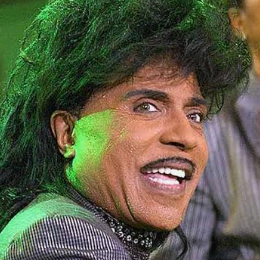
THE ARCHITECT OF ROCK AND ROLL TURNS TO THE MINISTRY
Little Richard (Richard Wayne Penniman), pioneer of rock and roll
“I was the beginning of rock and roll. God gave me the music. When I got saved, I gave it up — I just didn’t think you could serve God and rock and roll at the same time.” Richard Wayne Penniman — Little Richard — was among the founding architects of rock and roll, cited by the Beatles, the Rolling Stones, and Elvis Presley as a seminal influence. He underwent a dramatic conversion in 1957 during an Australian tour, which he understood as a divine warning following engine trouble on his aircraft and a subsequent vision. He abandoned rock music for evangelical ministry for several years, returning periodically to secular performance but maintaining a public Christian profession throughout his life until his death in 2020. The Life and Times of Little Richard by Charles White (Harmony Books, 1984).Ontology: Human Experience > Conversions
THE MAN IN BLACK CRAWLS OUT OF NICKAJACK CAVE
Johnny Cash, country music legend & Christian author
“I went into Nickajack Cave to commit suicide… I had wasted my life. I lay down to die. But the Spirit of God moved upon me and I felt it surge through me. I crawled upward toward a light and toward the outside.” One of the most iconic figures in American music, Cash struggled for years with amphetamine and barbiturate addiction that nearly destroyed his career, his marriage, and his life. In 1967, at a nadir of despair, he crawled into the Nickajack Cave system in Tennessee intending to die, and described experiencing what he understood as a divine encounter that turned him back toward life. His recovery and renewed Christian faith, sustained by his marriage to June Carter Cash and his friendship with Billy Graham, shaped the final three decades of his life and career. Cash: The Autobiography (HarperOne, 1997); Steve Turner, The Man Called Cash (Thomas Nelson, 2004).Ontology: Human Experience > Conversions
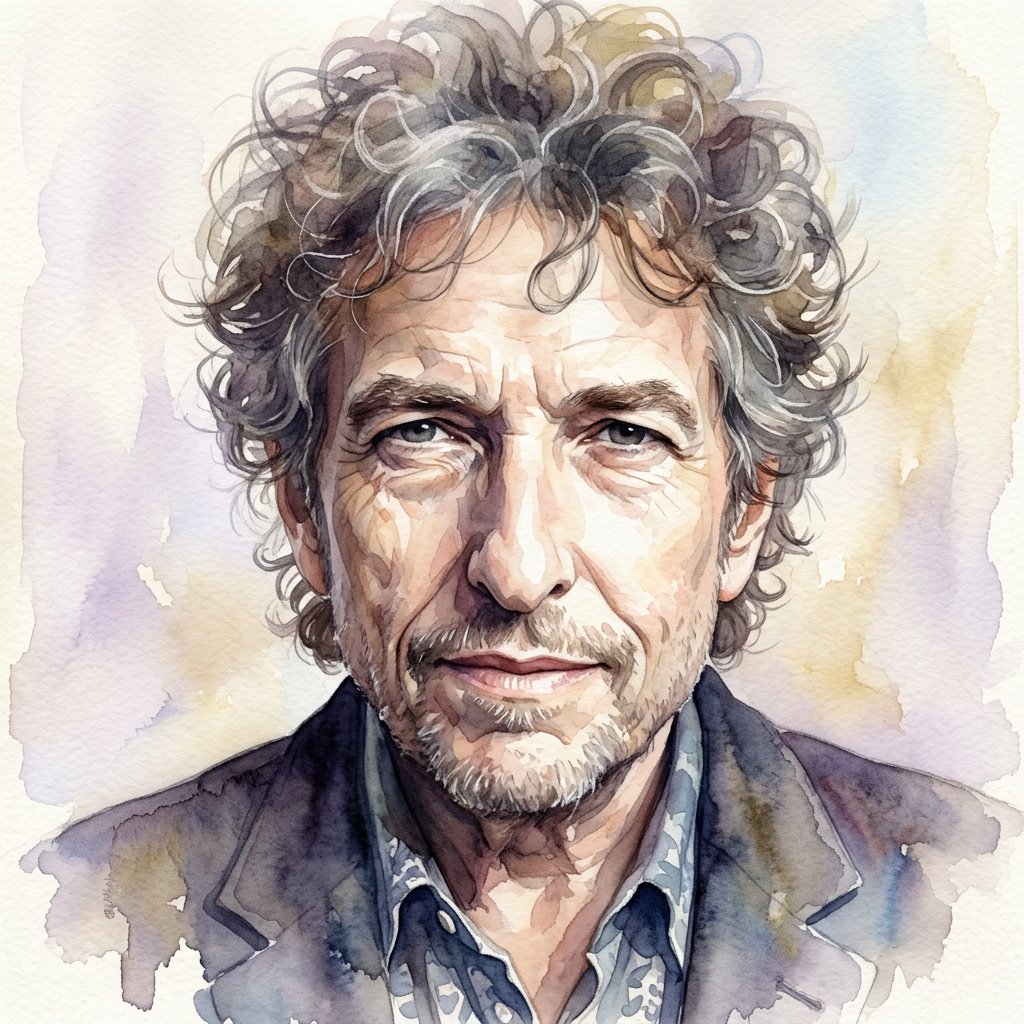
THE VOICE OF A GENERATION HEARS A DIFFERENT VOICE
Bob Dylan (Robert Zimmerman), Nobel Prize laureate in Literature
“I always knew there was a God or a creator — but I wasn’t conscious of Jesus and what that had to do with the Supreme Being.” Widely regarded as one of the most significant songwriters of the 20th century and later a Nobel Prize laureate in Literature, Dylan underwent a documented conversion to Christianity in 1978–1979, producing three consecutive Christian albums. Slow Train Coming (1979) won a Grammy Award for Best Male Rock Vocal Performance. He told audiences during his 1979–1980 Christian tours that he had met Jesus personally and been born again. His Christian period produced some of his most prophetically direct writing. Slow Train Coming (Columbia, 1979); Saved (Columbia, 1980); Rolling Stone interview, November 1985.Ontology: Human Experience > Conversions
THE COLD-CASE DETECTIVE INVESTIGATES THE RESURRECTION
J. Warner Wallace, Los Angeles County homicide detective & former atheist
“I was a committed atheist trained to follow evidence wherever it leads. When I applied cold-case methodology to the resurrection, the eyewitness testimony was more reliable than in most homicide cases I had worked.” A homicide detective with the Los Angeles County Sheriff’s Department — later featured as a cold-case specialist on Dateline NBC — Wallace applied investigative methodology (chain of custody analysis, eyewitness reliability testing, circumstantial evidence evaluation) to the Gospel accounts of Jesus’s resurrection. He had been a committed atheist. His analysis convinced him that the evidence met criminal conviction standards. He converted to Christianity at age 35. Cold-Case Christianity: A Homicide Detective Investigates the Claims of the Gospels (David C. Cook, 2013).Ontology: Human Experience > Conversions
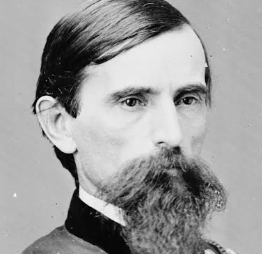
THE GENERAL WHO WROTE BEN-HUR TO DISPROVE CHRIST
General Lew Wallace, Union Army general, Governor of New Mexico Territory & novelist
“I was neither a Christian nor any other kind of believer when I began. I set out to examine the life of Jesus to refute it — and instead the story of His life converted me.” A Union Army general during the Civil War and later Governor of the New Mexico Territory, Wallace began writing what would become Ben-Hur specifically to disprove Christianity — prompted by a train conversation with agnostic orator Robert Ingersoll in 1876. His research into Roman history, Jewish culture, and the New Testament’s historicity had the opposite of its intended effect: he became a convinced Christian. The resulting novel became the best-selling American novel of the entire 19th century, adapted six times for film including the 1959 Academy Award epic. Ben-Hur: A Tale of the Christ (Harper & Brothers, 1880).Ontology: Human Experience > Conversions
THE POET CONVERTED BY BEAUTY AND GRIEF
Sheldon Vanauken, author, poet & friend of C.S. Lewis
“The best argument for Christianity is Christians — their joy, their certainty, their completeness. The strongest argument against is also Christians — when they are dull and joyless. But the thing that clinched it for me was my wife.” An Oxford-educated poet and agnostic aesthete, Vanauken arrived at Oxford and encountered C.S. Lewis and a community of intellectually serious, joyful Christians — including his wife Davy, whose own conversion preceded his. His correspondence with Lewis over several years, combined with the shattering experience of Davy’s early death from illness, became the substance of a memoir Lewis himself described as a record of “severe mercy.” A Severe Mercy (HarperOne, 1977).Ontology: Human Experience > Conversions
“SON OF SAM” FINDS ANOTHER FATHER
David Berkowitz (“Son of Sam”), convicted of six murders, New York City 1976–1977
“While many people are seeking pleasure, happiness, love and peace in all the wrong places, I have found it — all of it — in Jesus Christ.” Convicted of the murders of six people across New York City and sentenced to 365 years in prison, Berkowitz converted to Christianity in 1987 through the influence of a fellow prisoner and minister. He has consistently declined to attend parole hearings, stating publicly that he does not believe he deserves release and wishes to remain accountable for his crimes. He has spent decades engaged in prison ministry and correspondence evangelism. His conversion is extensively documented in interviews with Chuck Colson’s Prison Fellowship (2002) and in his own written testimony.Ontology: Human Experience > Conversions
THE HAPPY ATHEIST WHO STARTED ASKING HARD QUESTIONS
Dr. Mary Jo Sharp, Christian apologist & former atheist
“I was a happy atheist. I had no desire whatsoever to become a Christian — until I started looking honestly at the evidence for the resurrection.” Raised in a secular household in the Pacific Northwest with no religious background, Sharp converted to Christianity after examining the historical evidence for the resurrection of Jesus while attending a Bible study as a skeptical participant. She subsequently earned a Master of Arts in Christian Apologetics and became one of the first women to receive a doctorate in apologetics from New Orleans Baptist Theological Seminary. She has written and spoken widely on the intersection of women, scholarship, and Christian evidence. Defending the Faith: Apologetics in Women’s Ministry (B&H Academic, 2011).Ontology: Human Experience > Conversions
THE FEMINIST WHO FOUND HERSELF INSIDE ANCIENT THEOLOGY
Frederica Mathewes-Green, journalist, author & Eastern Orthodox convert
“I came to Eastern Orthodoxy kicking and screaming. We had gone to seminary to be liberal, feminist, Episcopal priests — and instead I found myself inside a theology that was ancient and did not change.” A journalist, former feminist activist, and former Hindu who had passed through Hinduism and liberal Episcopalianism, Mathewes-Green followed her husband into Eastern Orthodoxy when he was ordained as a priest. Her account of the journey — through feminism, Hinduism, and Protestant denominations — is one of the most candid records of a contemporary spiritual pilgrimage in modern Christian writing, and an unexpected rebuke to the assumption that ancient, confessional theology has nothing to offer modern women. Facing East: A Pilgrim’s Journey into the Mysteries of Orthodoxy (HarperOne, 1997).Ontology: Human Experience > Conversions
THE ATHEIST WHO DECLARED WAR ON RELIGION — AND LOST
Giovanni Papini, Italian philosopher, literary critic & convert (1881–1956)
“I was nothing — neither saint nor poet — I was a brute who desired to destroy everything that man had built. And yet He came looking for me.” An Italian literary figure and avowed atheist who had made his early reputation attacking Christianity with contempt, Papini underwent an unexpected conversion in 1920 that shocked the Italian intellectual world. He subsequently wrote Storia di Cristo (1921) — a literary meditation on the life of Christ that sold over a million copies in its first year and was translated into more than twenty languages, becoming one of the most widely read books in post-World War I Europe. His reversal from dismissive atheism to passionate Christian faith remains one of the most dramatic in 20th-century Italian letters. Storia di Cristo The Life of Christ] (Vallecchi, Florence, 1921).Ontology: Human Experience > Conversions
THE PUNK ADDICT WHO BECAME A PASTOR TO MISFITS
Nadia Bolz-Weber, Lutheran pastor, author & former stand-up comedian
“I want to be a pastor to the people who have given up on church — the misfits, the doubters, the addicts, the people nobody else seems to be going after.” A former stand-up comedian who struggled with alcoholism and drug addiction throughout her twenties, Bolz-Weber found herself drawn to Christianity through a twelve-step recovery program and a Lutheran congregation that welcomed those excluded from conventional church life. She was ordained as a Lutheran pastor and founded House for All Sinners and Saints in Denver — a congregation explicitly designed for people on society’s margins — which became one of the most discussed new church communities in America and attracted national media coverage. Pastrix: The Cranky, Beautiful Faith of a Sinner & Saint (Jericho Books, 2013).Ontology: Human Experience > Conversions