THE EARLIEST KNOWN CHRISTIAN SYMBOL OF THE RESURRECTION
Dr. James Tabor, professor of religious studies at the University of North Carolina Charlotte & archaeologist“Using a robotic camera to explore a sealed first-century tomb in Jerusalem, we discovered an ossuary bearing what appears to be a carved image of a large fish with a human figure emerging from its mouth — a Jonah symbol — and a Greek inscription referencing resurrection. If correctly interpreted, this is the earliest known Christian artistic expression of the resurrection, carved by Jewish Christians within a generation of the crucifixion.” The Talpiot tomb’s Jonah image — if the interpretation holds — would represent the earliest physical artistic evidence of Christian resurrection belief, predating all known Christian art by at least a century. Evidence: Robotic camera imaging of sealed first-century Jerusalem tomb, ossuary iconographic analysis, and Greek inscription study. [Ontology: Jesus > Broader Physical Evidence]+ Read More
File Under: The Resurrection
Cross Reference: Ossuary & Nail Remains
The Resurrection — Tomb Evidence Summary
A four-card summary cross-reference anchoring the tomb-evidence argument in this page, before linking to the full deep-dive on the parent Resurrection page. The Holy Sepulchre Edicule, the Garden Tomb alternative, the first-century acrosolia-tomb architecture, and the Roman guard-and-seal custom each receive one summary card here.
The Holy Sepulchre Edicule — The Tomb Shrine
Archaeological & historical evidence — Jerusalem; Edicule restored 2017“And he rolled a great stone to the door of the sepulchre, and departed.” — Matthew 27:60 (cf. 28:2), KJV The Edicule, the small shrine enclosing the tomb within the Church of the Holy Sepulchre, encloses a first-century rock-cut tomb identified since the Constantinian period (c. AD 326) as Jesus’ burial place. The 2016–2017 restoration led by the National Technical University of Athens team under Antonia Moropoulou exposed the original limestone bedrock of the burial bench for the first time in centuries, confirming the tomb’s material continuity with a first-century acrosolia-type rock-cut tomb beneath centuries of encrustation.File Under: Jesus Christ > Life & Ministry > Historical & Physical Evidence > The Resurrection — Tomb Evidence Summary Cross-References: The Resurrection (full page) | The Crucifixion — Physical Evidence SummaryThe 2017 restoration confirmed that beneath the marble cladding (installed since at least the Crusader period), the original limestone burial shelf survives — the kind of acrosolia-type rock-cut bench used for first-century Jewish primary burial. The _National Geographic_ team that documented the restoration noted that the bedrock could be dated to the Herodian period by its carving style. The deeper analysis is treated on the full Resurrection parent page. Citation: Antonia Moropoulou et al., _Holy Sepulchre Restoration Reports_, NTUA, 2017; National Geographic Society documentation, 2016–2017.

The Garden Tomb — Why Most Scholars Prefer the Holy Sepulchre
Archaeological evidence — Jerusalem; Garden Tomb identified 1883“And he said, The place is nigh unto thee…” — Genesis 19:2 (cf. 1 Sam. 28:22, KJV — context: proximity) The Garden Tomb, identified by General Charles Gordon in 1883, is a first-century rock-cut tomb north of Damascus Gate that some Protestant groups favor as Jesus’ burial place. However, Gabriel Barkay‘s detailed archaeological study found that the tomb dates to the Iron Age (8th–7th century BC), not the first century AD — making it too old to be the “new tomb” of John 19:41. The surrounding quarry contains first-century tombs, but the Garden Tomb itself was already ancient. Most scholars, including evangelicals, prefer the Holy Sepulchre site for the tomb identification.File Under: Jesus Christ > Life & Ministry > Historical & Physical Evidence > The Resurrection — Tomb Evidence Summary Cross-References: The Resurrection (full page) | First-Century Jewish Burial CustomsBarkay’s analysis, published through the Israel Exploration Society, demonstrated that the Garden Tomb’s interior architecture matches Iron Age Judahite tombs, not Herodian-period acrosolia tombs. The distinctive _kōchim_ (squared burial niches) visible in the Garden Tomb differ from the bench-style acrosolia of first-century Jerusalem family tombs like those surrounding the Holy Sepulchre. The Garden Tomb’s serene setting makes it popular as a devotional site, but the archaeological evidence favors the Holy Sepulchre. Citation: Gabriel Barkay, “The Garden Tomb — A Re-evaluation,” _Israel Exploration Journal_ 37 (1987); Dan Bahat, “Does the Holy Sepulchre Church Mark the Burial of Jesus?” _BAR_ 12:3 (1986).
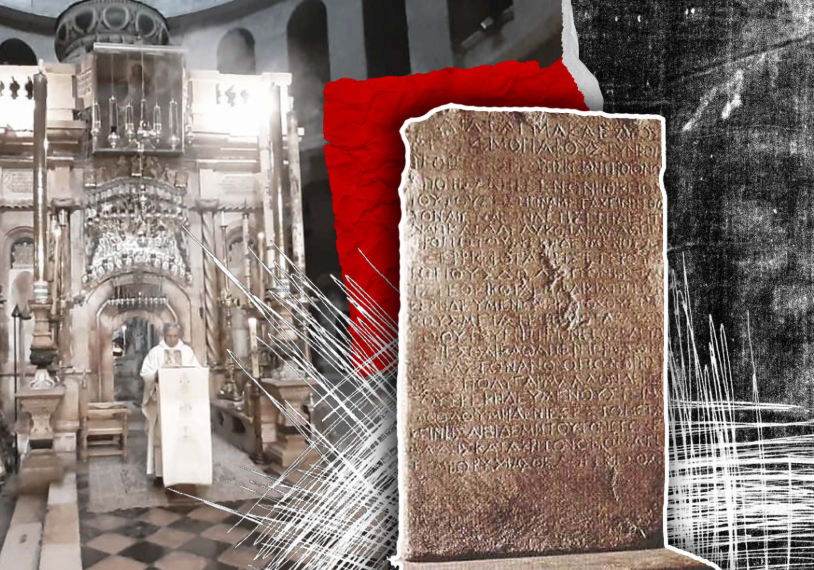
First-Century Acrosolia-Tomb Architecture — Matching the Gospels
Archaeological evidence — Jerusalem, first-century acrosolia tombs“And he bought fine linen, and took him down, and wrapped him in the linen, and laid him in a sepulchre which was hewn out of a rock, and rolled a stone unto the door of the sepulchre.” — Mark 15:46, KJV The Gospel accounts of Jesus’ burial — hewn from rock, a rolling-stone entrance, a bench for the body, a “new” tomb unused by any other family member — match the first-century Jerusalem acrosolia-tomb profile precisely. Mark 15:46’s rolling stone, John 20:5’s stooping to look inside, Luke 24:3’s “found not the body of the Lord Jesus” — all presuppose the architecture of acrosolia tombs excavated throughout the Jerusalem area. The architectural consistency between the Gospels and archaeology confirms their setting within first-century Jewish burial practice.File Under: Jesus Christ > Life & Ministry > Historical & Physical Evidence > The Resurrection — Tomb Evidence Summary Cross-References: The Resurrection (full page) | First-Century Jewish Burial CustomsThe empty-tomb narrative in John 20 requires a tomb wide enough for two men to stoop and enter (Jn 20:3–8), an antechamber with a visible burial bench, and a low entrance that requires bending — all features present in the acrosolia tomb type surrounding the Holy Sepulchre site. Amit Re’em and other IAA archaeologists have documented multiple examples in the immediate vicinity. The architecture matches the narrative precisely, making it difficult to maintain that the Gospel writers invented a setting they had never seen. Citation: Shimon Gibson, _The Final Days of Jesus_, HarperOne, 2009; Rachel Hachlili, _Jewish Funerary Customs_, Brill, 2005.

The Roman Guard & Seal — Matthew 27:62–66
Textual & historical evidence — Matthew 27:62–66, KJV; Roman guard practice“So they went, and made the sepulchre sure, sealing the stone, and setting a watch.” — Matthew 27:66, KJV The Gospel of Matthew the Evangelist records that the chief priests and Pharisees asked Pilate for a guard to secure the tomb (Mt 27:62–66). The request reflects the _custodia_ system by which Roman guards could be assigned to prevent tampering with official sites. The Roman _custodia_ seal on the stone made any breach punishable by death — a detail that fits Roman administrative practice of the period. Matthew’s account also records the counter-narrative that the disciples stole the body (28:11–15), showing awareness of competing explanations circulating in the first century.File Under: Jesus Christ > Life & Ministry > Historical & Physical Evidence > The Resurrection — Tomb Evidence Summary Cross-References: The Resurrection (full page) | The Crucifixion — Physical Evidence SummaryThe guard-and-seal account is debated — some scholars note only Matthew records it. But its inclusion in Matthew 28:11–15 — which addresses the “stolen body” explanation that was apparently still circulating when Matthew wrote — suggests the author was responding to an actual first-century counter-argument. The deeper analysis of this passage and its apologetic significance is treated on the full Resurrection parent page. Citation: William Lane Craig, “The Guard at the Tomb,” _New Testament Studies_ 30 (1984); Gary Habermas, _The Historical Jesus_, College Press, 1996.