Where do our morals come from?
MORAL ARGUMENT
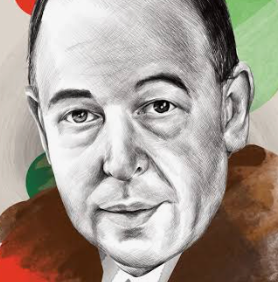
C.S. Lewis, scholar, novelist & theologian“My argument against God was that the universe seemed so cruel and unjust. But how had I got this idea of just and unjust? A man does not call a line crooked unless he has some idea of a straight line. What was I comparing this universe with when I called it unjust?”From ‘Mere Christianity’ (1952), arguing that the universal human recognition of an objective moral standard points directly to a supreme Moral Lawgiver.
MORAL ARGUMENT
William Lane Craig, analytic philosopher & theologian“If God does not exist, objective moral values and duties do not exist. But objective moral values and duties do exist. Therefore, God exists.”Formulated in ‘Reasonable Faith’ (2008), detailing how socio-biological evolution can only account for subjective preferences, not binding objective moral duties.

MORAL ARGUMENT
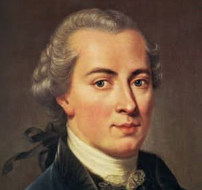
Immanuel Kant, Enlightenment philosopher“Two things fill the mind with ever new and increasing admiration and awe… the starry heavens above me and the moral law within me.”From ‘Critique of Practical Reason’ (1788), where Kant postulated God as a necessary practical requirement for ultimate cosmic justice and moral coherence.
MORAL ARGUMENT
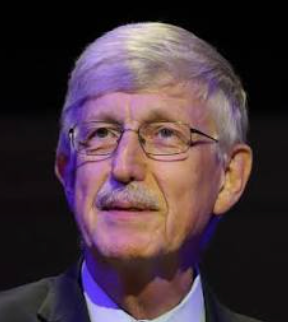
Francis Collins, physician-geneticist & former director of the NIH“The Moral Law stands out for me as the strongest signpost to God. It suggests that the universe has a purpose, and that there is a Lawgiver who cares about right and wrong.”From ‘The Language of God’ (2006), arguing that radical sacrificial altruism contradicts purely Darwinian survival mechanisms and reflects a divine footprint.
MORAL ARGUMENT
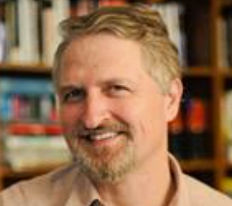
Paul Copan, philosopher at Palm Beach Atlantic University“Objective moral values are grounded in the character and nature of God. Without a personal, good God, human beings are simply accidental products of nature with no intrinsic moral dignity.”From ‘Is God a Moral Monster?’ (2011), establishing God’s nature as the essential anchor for objective human rights and intrinsic value.
MORAL ARGUMENT
J.P. Moreland, distinguished professor of philosophy at Talbot School of Theology“You cannot get a moral ‘ought’ from a purely physical ‘is.’ Matter, force, and energy know nothing of duty or obligation. Only a moral Mind can generate genuine moral duties.”From ‘Scaling the Secular City’ (1987), demonstrating the ontological failure of physicalism to produce binding moral imperatives.

MORAL ARGUMENT
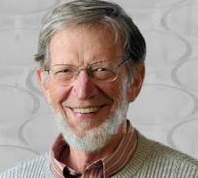
Alvin Plantinga, philosopher & former president of the APA“It is difficult to see how there could be such a thing as objective moral duty if there were no such person as God… A moral obligation is an obligation owed to someone, and ultimately to God.”From ‘Warranted Christian Belief’ (2000), examining the interpersonal relational nature of moral obligations.
MORAL ARGUMENT
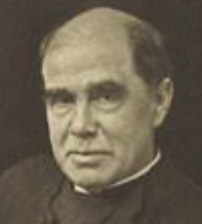
Hastings Rashdall, philosopher & Anglican theologian“An absolute Moral Law implies an absolute Mind in which and for which it exists… The existence of a moral ideal only makes sense if it is grounded in the mind of God.”From ‘The Theory of Good and Evil’ (1907), developing one of the classic idealist formulations of the moral argument.
MORAL ARGUMENT
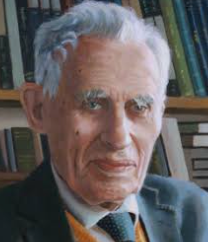
Richard Swinburne, emeritus professor of philosophy at the University of Oxford“God’s action in creating moral agents who can choose between good and evil, and who are aware of objective moral truths, provides a powerful probabilistic argument for His existence.”From ‘The Existence of God’ (2004), applying Bayesian probability to show how moral awareness is far more probable under theism than naturalism.
MORAL ARGUMENT
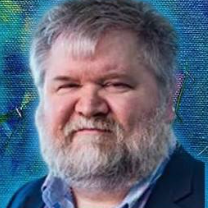
David Baggett, philosopher & professor of apologetics“Morality is best made sense of in light of theism. Objective duties, human dignity, moral knowledge, and ultimate accountability fit naturally within a biblical worldview.”From ‘Good God: The Theistic Foundations of Morality’ (2011), offering a comprehensive defense of theistic moral realism against secular alternatives.
1 / 8