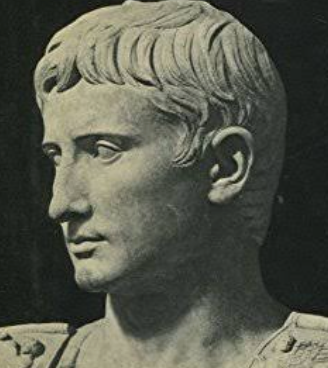
Non-Christian historians, Roman administrators, Jewish memory, pagan critics, and inscribed archaeological artifacts corroborate the people, places, and execution of Jesus of Nazareth
Secular Corroboration
The Gospel Passion narrative is not the only stream bearing witness to the arrest, trials, crucifixion, and burial of Jesus. Across the first three centuries AD, nine distinct streams of secular attestation independently converge on the same core events: Roman historians (Tacitus, Suetonius, Cassius Dio, Eutropius, Pliny the Elder), Jewish historians and rabbinic memory (Josephus, the Mishnah tractate Sanhedrin 6:5 on burial of the executed, the Babylonian Talmud’s “Yeshu hanged on the eve of Passover,” Mara bar Serapion’s “wise king,” the Toledot Yeshu counter-gospel), Roman administrative correspondence (Pliny the Younger & Trajan, Hadrian’s rescripts, the Acta Martyrum, the Vindolanda wooden tablets), pagan literary critics (Lucian, Celsus, Galen, Numenius, Porphyry, Hierocles), astronomical and natural-phenomena chronographers (Thallus, Phlegon, Julius Africanus, Cyril of Jerusalem), Palestinian archaeology (the 1961 Pilate Stone at Caesarea, the 1968 Jehohanan crucified-heel-bone ossuary, the 1990 Caiaphas ossuary, the Nazareth Inscription
Roman Historical Testimony
Tacitus, Suetonius, Cassius Dio, Eutropius, Pliny the Elder — Roman historians and encyclopaedists who independently record Christ’s execution under Pontius Pilate in the reign of Tiberius, Christians in Rome by AD 64, and the Jewish sectarian landscape presupposed by the Gospels.
Jewish Historical Testimony
Josephus (the Testimonium Flavianum and the James reference), Jewish War 4.317 on burial of crucified victims before sunset, the Mishnah Sanhedrin 6:5 on two burial grounds, the Babylonian Talmud’s “Yeshu hanged on the eve of Passover,” Mara bar Serapion’s “wise king,” Toledot Yeshu.
Roman Administrative Correspondence
Pliny the Younger’s letter to Trajan on Bithynian Christians, Trajan’s rescript, Hadrian’s rescript to Minucius Fundanus, the proconsular Acta Martyrum transcripts — imperial records that presuppose Christ as a verifiable, named founder.
Pagan & Literary Witnesses
Lucian, Celsus, Galen, Numenius, Porphyry, Hierocles — pagan critics who never deny Jesus’ existence or execution but contest only the theological interpretation of his death and movement.
Astronomical & Natural Phenomena Reports
Thallus’s attempt to explain the crucifixion darkness as an eclipse (c. AD 52), Phlegon of Tralles’s Olympiad-dated record of an eclipse and earthquake in AD 32/33, Julius Africanus’s reply, Cyril of Jerusalem’s Constantine-era letter.
Archaeological Corroboration
The 1961 Pilate Stone at Caesarea, the 1968 Jehohanan crucified-heel-bone ossuary, the 1990 Caiaphas ossuary, the James Ossuary controversy, the Second Wall excavations, the Talpiot Tomb debate, Herod’s Palace / the Praetorium, among others
Patristic Citations of Roman Archives
Justin Martyr’s appeal to the “Acts of Pontius Pilate” verifiable in Roman archives (First Apology 35, 48), Tertullian on Roman records of the crucifixion darkness, Athenagoras’s Embassy to Marcus Aurelius, Tatian, Theophilus of Antioch’s Ad Autolycum, the Acta Pilati apocryphal tradition, Eusebius’s preservation of Trajan’s and Hadrian’s rescripts.
Manuscript Evidence for Secular Authors
The chain of custody for the secular texts themselves — Codex Mediceus II (9th-c.) for Tacitus Annals 15.44, the family for Josephus, the Carolingian Parisinus Mazarinus for Pliny, the Memmianus family for Suetonius — plus the Vindolanda tablets attesting Roman provincial record-keeping in the Pilate era and the Codex Bezae transmission line for Luke 23:34.
Coinage & Imperial Iconography
The Tiberius denarius (the “Tribute Penny” of Mark 12:16) excavated in Judaea hoards, the Flavian “Judaea Capta” coin series commemorating Rome’s victory in the Jewish War, the Alexamenos Graffito (c. AD 200, earliest pagan depiction of the crucified Christ), the Orpheos Bakkikos amulet, the Hinton St Mary mosaic.
Roman Historical Testimony
TACITUS — CHRISTUS EXECUTED UNDER PONTIUS PILATE
Tacitus, Roman senator and historian preserving a hostile Roman notice of Christus’s execution“Christus, from whom the name had its origin, suffered the extreme penalty during the reign of Tiberius at the hands of one of our procurators, Pontius Pilatus.”The Roman historian TacitusTacitus Publius Cornelius Tacitus was a Roman senator and one of antiquity’s major historians. Writing in the early second century, he described Roman imperial history from a non-Christian perspective. wrote this statement in Annals 15.44
Annals 15.44 Tacitus mentions Christus while explaining Emperor Nero’s punishment of Christians after the Great Fire of Rome in AD 64.. He places Christus’s punishment during the reign of Tiberius
Tiberius Roman emperor from AD 14 to 37. The Gospel accounts place Jesus’ ministry and crucifixion within this same imperial reign. and names Pontius Pilatus
Pontius Pilate Roman governor of Judaea under Tiberius. Tacitus calls him a procurator, while the contemporary Caesarea inscription known as the Pilate Stone identifies his official title as prefect of Judaea. as the responsible Roman official. Tacitus preserves the execution-under-Pilate tradition outside the New Testament in a non-Christian Roman source.Tacitus calls the punishment the “extreme penalty”
“Extreme penalty” The Church and Brodribb translation renders Tacitus’s execution language as “the extreme penalty.” Tacitus does not describe Jesus’ execution mechanics in this sentence.. The Gospel of Mark identifies the punishment as crucifixion in Mark 15:15
“And so Pilate, willing to content the people, released Barabbas unto them, and delivered Jesus, when he had scourged him, to be crucified.”. The two sources therefore agree on the imperial period and Pontius Pilate as central historical coordinates.
Why Tacitus is an important outside source
Tacitus was openly hostile toward Christians. He describes their beliefs as a superstitionSuperstition Roman writers could use superstitio dismissively for religious practices they considered excessive, foreign, or socially suspect.. The execution report appears in hostile testimony, not Christian apologetic writing.
The Nero context explains the reference
Tacitus introduces Christus while describing Nero’s persecutionNero’s persecution After the Great Fire of Rome in AD 64, Tacitus says Nero blamed Christians and subjected them to brutal punishments. He explains the movement’s origin so Roman readers know who the Christians were.. He says the movement began in Judaea, was temporarily checked after Christus’s punishment, and later reached Rome. The movement survived its founder’s Roman execution.
How closely does this match the Gospels?
The Gospel of John likewise places Pilate in authority in John 19:16“Then delivered he him therefore unto them to be crucified. And they took Jesus, and led him away.”. Tacitus does not verify every Passion detail, but preserves the same basic Roman framework.
What Tacitus establishes
Tacitus does not identify the source from which he obtained the Christus-Pilate information, so archival dependence cannot be demonstrated. The passage is strong external corroborationExternal corroboration Support for an event from a source outside the literature making the principal claim. Tacitus is especially useful because his work is Roman and openly unsympathetic toward Christianity.. A Roman historian confirms the execution framework at the center of the Gospel Passion accounts.
Evidence – Tacitus places Christus’s execution under Pontius Pilate during Tiberius’s reign and identifies the subsequent movement as Christians.
Conclusion – A hostile Roman source corroborates Jesus’ execution under the same governor and imperial period preserved in the Gospels.
Clarifications – Tacitus says Christus suffered the “extreme penalty” but does not explicitly describe Jesus’ execution method in this sentence. His importance is external Roman corroboration of the execution under Pilate; the Gospels identify that execution as crucifixion.
Citation – Tacitus, Annals 15.44, trans. Alfred John Church and William Jackson Brodribb.
File Under – Evidence for Jesus Christ > The Crucifixion > Physical Evidence > Historical Corroboration > Tacitus on Christus and Pilate
Cross References – Josephus on Jesus and Pilate, Historical Consensus on the Crucifixion, Crucifixion in the Gospels, The Cumulative Case

REVISE and keep in SC and Source Transmissions/Authenticity
Tacitus’s Access to Roman Senatorial Archives
Tacitus as ex-consul with archive access, AD 116“My design in this work is not to recount in detail the exploits of Tiberius… I shall touch only upon such things as it would be disgraceful to pass over.” — Tacitus, Annals 4.32.Tacitus was a Roman senator who served as suffect consul in AD 97 and as proconsul of Asia around AD 112–113 — granting him access to the senatorial archives, the acta senatus, and the imperial records kept in the Tabularium. His report on Pilate’s execution of Jesus is therefore a fact drawn from Roman records, not a Christian rumour repeated. The classical scholar Robert Van Voorst, in Jesus Outside the New Testament (2000), notes Tacitus’s general reliability for Roman-Palestinian matters. Citation: Tacitus, Annals 15.44, 4.32.File Under: Jesus Christ > Arrest & Crucifixion > Secular Corroboration > Roman Historical TestimonyCross-References: The Crucifixion | Multiple Attestation
MOVE and REVISE: RESUR > HIST AFTERMATCH > Early Christians and Roman Response
Suetonius References “Chrestus” and the Roman Expulsion
Suetonius, Lives of the Twelve Caesars, Claudius 25.4, c. AD 121“Since the Jews constantly made disturbances at the instigation of Chrestus, he expelled them from Rome.”The Roman biographer Suetonius (Suetonius), writing around AD 121, records Claudius’s expulsion of the Jews from Rome — traditionally dated to AD 49 by Orosius. The disturbances “at the instigation of Chrestus” almost certainly reflect intra-Jewish arguing over whether Jesus of Nazareth was the Christ (christus / chrestus were commonly conflated spellings), placing the Jesus-movement in Rome within twenty years of the crucifixion — exactly the setting presupposed by Acts 18:2, KJV: “found a certain Jew named Aquila, born in Pontus, lately come from Italy, with his wife Priscilla; (because that Claudius had commanded all Jews to depart from Rome).” Citation: Suetonius, Lives of the Twelve Caesars, Claudius 25.4.File Under: Jesus Christ > Arrest & Crucifixion > Secular Corroboration > Roman Historical TestimonyCross-References: The Crucifixion | Acts of the Apostles
OVE and REVISE: RESUR > Roman Historical Testimony
Suetonius on Nero’s Persecution — The Penalty of Christians
Suetonius, Lives of the Twelve Caesars, Nero 16.2, c. AD 121“Punishment was inflicted on the Christians, a class of men given to a new and mischievous superstition.”In his life of Nero, Suetonius independently attests the same Neronian persecution that Tacitus describes at greater length. His single-line notice confirms that “Christians” were a recognized and punished class within thirty years of the crucifixion, identified by their association with “Christus” — a movement new enough to be called “a new… superstition” yet established enough to have a name. The conjunction of Suetonius and Tacitus gives us two hostile Roman voices independently testifying to the existence of the Christian movement founded by Christus, executed under Pilate — a multiple-attestation pattern anchoring the historicity of Jesus’ execution in Roman, not Gospel, sources. Citation: Suetonius, Nero 16.2.File Under: Jesus Christ > Arrest & Crucifixion > Secular Corroboration > Roman Historical TestimonyCross-References: The Crucifixion | Multiple Attestation
Tiberius’s Reign — The Secular Dating Anchor for the Crucifixion
Tacitus tying the crucifixion to Tiberius’s reign (AD 14–37)“Christus… had undergone the death penalty in the reign of Tiberius, by sentence of the procurator Pontius Pilatus.” — Tacitus, Annals 15.44.Tiberius (Tiberius Caesar) ruled from AD 14 until his death on 16 March AD 37. Pontius Pilate governed Judaea from roughly AD 26 to AD 36/37, exactly that sub-window. The Gospels’ implicit dating of the crucifixion — most likely Passover of AD 30 or AD 33 — falls squarely inside the Tiberius-Pilate window independently confirmed by Tacitus. Luke 3:1, KJV: “Now in the fifteenth year of the reign of Tiberius Caesar, Pontius Pilate being governor of Judaea…” Citation: Tacitus, Annals 15.44; cf. Luke 3:1, KJV.File Under: Jesus Christ > Arrest & Crucifixion > Secular Corroboration > Roman Historical TestimonyCross-References: The Crucifixion | Fulfilled Prophecies
Synthesis: Two Roman Historians, One Executed Christus
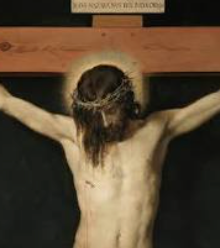
Tacitus’s Stated Methodology and Reliability as Historian
Tacitus on his own historical method, Annals & Histories“I have studiously avoided inventing anything to please the reader; whatever I have narrated I have derived either from the testimony of others, or from what I have myself seen.” — Tacitus, Histories 1.3.Tacitus declares his historical method explicitly: he consults eyewitness testimony and the senatorial and imperial records. Modern classical scholarship (e.g., Ronald Mellor, Tacitus, 1993) rates him among the most reliable of Roman historians for events of the early Principate, with eccentricities of tone but no pattern of fabricating foreign religious figures. This fact-checking profile raises the independent value of Annals 15.44: the Tacitus who reports Christus’s execution is the same Tacitus the academy trusts for his reports of Pliny’s letters, the Parthian succession, and the Jewish revolts. Citation: Tacitus, Histories 1.3; Mellor, Tacitus (Routledge, 1993).File Under: Jesus Christ > Arrest & Crucifixion > Secular Corroboration > Roman Historical TestimonyCross-References: The Crucifixion | Undesigned Coincidences
Tacitus Errors in Favour of Authenticity
Tacitus’s slight terminology mismatches versus Gospel accounts“the procurator Pontius Pilatus” (Tacitus, Annals 15.44).If a Christian scribe had forged the Annals passage, we would expect him to mirror the Gospel tone — calling Pilate “governor” (ἡγεμών) as Matthew 27:2, KJV (“governor”) and Luke 3:1, KJV do, and referring to Jesus as “Christ” or “Jesus” rather than the bare “Christus.” Instead, Tacitus writes like a Roman senator — using the contemporary Latin term “procurator,” transliterating a foreign name without commentary, and showing no interest in Christian theology. The very fact that the passage does NOT read like a Christian forgery is internal evidence that it is not one. Cross-ref: 1 Timothy 6:13, KJV, “before Pontius Pilate.” Citation: Tacitus, Annals 15.44.File Under: Jesus Christ > Arrest & Crucifixion > Secular Corroboration > Roman Historical TestimonyCross-References: The Crucifixion | Criterion of Embarrassment
Jewish Historical Testimony
Josephus’s Testimonium Flavianum — Core Reference
Josephus, Antiquities 18.3.3, c. AD 93–94“Now there was about this time Jesus, a wise man, if it be lawful to call him a man; for he was a doer of wonderful works, a teacher of such men as receive the truth with pleasure. He drew over to him both many of the Jews and many of the Gentiles. He was the Christ. And when Pilate, at the suggestion of the principal men amongst us, had condemned him to the cross, those that loved him at the first did not forsake him; and the tribe of Christians, so named from him, are not extinct at this day.”Flavius Josephus (Josephus the Historian) records in Antiquities 18.3.3 (the famous Testimonium Flavianum) that Jesus was a “wise man,” a worker of “wonderful works,” a teacher who gathered Jewish and Gentile followers, was condemned to the cross by Pilate at the instigation of the Jewish leadership, and was the founder of the Christians. Although Christian scribal glossing has clearly inflated three phrases, the scholarly reconstruction led by John P. Meier in A Marginal Jew vol. 1 (1991) confirms a substantial authentic Josephus core — making this the only extended Jewish testimony to Jesus from the first century. Cross-ref: Luke 23:13–24, KJV. Citation: Flavius Josephus, Jewish Antiquities 18.3.3 (Whiston translation).File Under: Jesus Christ > Arrest & Crucifixion > Secular Corroboration > Jewish Historical TestimonyCross-References: The Crucifixion | Multiple Attestation
The Arabic Version of the Testimonium — Earlier Non-Christianised Form
Agapius of Hierapolis, Kitab al-‘Unwan, c. AD 940 (preserving 4th–5th century tradition)“At this time there was a wise man who was called Jesus. His conduct was good, and (he) was known to be virtuous. And many people from among the Jews and the other nations became his disciples. Pilate condemned him to be crucified and to die. And those who had become his disciples did not abandon his discipleship. They reported that he had appeared to them three days after his crucifixion and that he was alive; accordingly, he was perhaps the Messiah concerning whom the prophets have recounted wonders.”The 10th-century Arabic Christian historian Agapius of Hierapolis preserved a version of the Testimonium Flavianum that scholars (most influentially Schlomo Pines, An Arabic Version of the Testimonium Flavianum and its Implications, 1971) argue reflects an earlier Syriac form of Josephus lacking the most obvious Christian interpolations. Notably absent here are the explicit “He was the Christ” claim and the “if it be lawful to call him a man” divine-predicate — strongly supporting the Meier reconstruction of an authentic Josephus core attestable on independent manuscript grounds. Citation: Agapius, Kitab al-‘Unwan; Pines (1971).File Under: Jesus Christ > Arrest & Crucifixion > Secular Corroboration > Jewish Historical TestimonyCross-References: The Resurrection | Multiple Attestation
Josephus on James, “Brother of Jesus Called Christ”
Josephus, Antiquities 20.9.1, c. AD 93–94“Festus was now dead, and Albinus was but upon the road; so he assembled the sanhedrim of judges, and brought before them the brother of Jesus, who was called Christ, whose name was James, and some others; and when he had formed an accusation against them as breakers of the law, he delivered them to be stoned.”Virtually all Josephus scholars (including those who deny the Testimonium) accept Antiquities 20.9.1 as fully authentic. Josephus here names Jesus (“who was called Christ”) and his brother James in passing, while narrating the high priest Ananus’s illegal execution of James in AD 62. The passing-reference character of the phrase — Josephus’s reader is presumed already to know who Jesus is from Antiquities 18.3.3 — is itself evidence that the earlier Testimonium must have contained some authentic non-Christian reference to Jesus. Cross-ref: Galatians 1:19, KJV: “James the Lord’s brother.” Citation: Josephus, Antiquities 20.9.1 (Whiston).File Under: Jesus Christ > Arrest & Crucifixion > Secular Corroboration > Jewish Historical TestimonyCross-References: The 12 Apostles | The Crucifixion
Josephus on Pontius Pilate’s Brutality and Tenure
Josephus, Antiquities 18.3.1–2 & 18.4.1–2, c. AD 93–94“Now Pilate, who was sent as procurator into Judaea by Tiberius, sent by night those images of Caesar… to Jerusalem… but Pilate was surprised, although their steadfastness was what he expected.” — Josephus, Antiquities 18.3.1 (Whiston).Josephus devotes roughly two full chapters to Pilate’s administration of Judaea — the standards incident (Ant. 18.3.1–2), the aqueduct massacre (18.3.2), and the Samaritan episode that triggered Pilate’s recall to Rome in AD 36/37 (18.4.1–2). The portrait of a Pilate willing to use lethal force against Jerusalem crowds — and to be politically maneuvered by Jewish leaders — directly corroborates the Gospel picture of a Pilate both capable of crucifying Jesus and capable of yielding to priestly pressure (cf. John 19:12–16, KJV). Citation: Josephus, Antiquities 18.3.1–2; 18.4.1–2.File Under: Jesus Christ > Arrest & Crucifixion > Secular Corroboration > Jewish Historical TestimonyCross-References: The Crucifixion | Archaeological Corroboration
Mara bar Serapion — “The Wise King of the Jews”
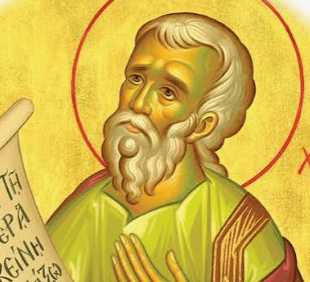
Mara Continues — “The Jews Driven from Their Kingdom”
Mara bar Serapion — same letter“God justly avenged these three wise men: the Athenians died of hunger; the Samians were overwhelmed by the sea; the Jews, ruined and driven from their land, live in complete dispersion. But Socrates did not die; he lived on in the teaching of Plato. Pythagoras did not die; he lived on in the statue of Hera. Nor did the wise king die; he lives on in the teaching which he had given.”Mara bar Serapion continues with three remarkable claims: (1) the Jews were driven from their land as divine vengeance for killing their wise king (= the post-AD 70 diaspora); (2) the wise king “did not die” but lives on in his teaching; (3) the king was associated with “teaching” rather than with military insurrection — pointing to a sage rather than a Zealot. The reference to the post-AD-70 dispersion fixes the terminus post quem of the letter after the destruction of Jerusalem, exactly the timeframe of Josephus and the early second-century Roman witnesses — Tacitus and Suetonius. Cross-ref: Luke 21:24, KJV: “Jerusalem shall be trodden down of the Gentiles.” Citation: Mara bar Serapion, letter.File Under: Jesus Christ > Arrest & Crucifixion > Secular Corroboration > Jewish Historical TestimonyCross-References: Fulfilled Prophecies | The Crucifixion
The Talmud: Yeshu “Hanged on the Eve of Passover”
Babylonian Talmud, b. Sanhedrin 43a, redacted c. AD 500 (preserving earlier traditions)“On the eve of the Passover Yeshu was hanged. For forty days before the execution took place, a herald went forth and cried, ‘He is going forth to be stoned because he has practised sorcery and enticed Israel to apostasy. Anyone who can say anything in his favour, let him come forward and plead on his behalf.’ But since nothing was brought forward in his favour he was hanged on the eve of the Passover.”The Babylonian Talmud preserves a rabbinic tradition that “Yeshu” (a Hebrew name recognized by virtually all modern scholarship as a form of Jesus) was “hanged” — a recognized Jewish euphemism for crucifixion (cf. Galatians 3:13, KJV: “Cursed is every one that hangeth on a tree,” quoting Deuteronomy 21:23, KJV) — on the eve of Passover. The dating precision — “on the eve of the Passover” — is exactly the dating assigned to Jesus’ crucifixion in John 19:14, 31, KJV, providing independent Jewish attestation from a hostile source for the same Gospel Passion chronology. Citation: Babylonian Talmud, b. Sanhedrin 43a (Soncino translation).File Under: Jesus Christ > Arrest & Crucifixion > Secular Corroboration > Jewish Historical TestimonyCross-References: The Crucifixion | Multiple Attestation
Yeshu “Practised Sorcery” — Hostile Corroboration of Jesus’ Miracles
b. Sanhedrin 43a; b. Sanhedrin 107b; t. Hullin 2:23“He is going forth to be stoned because he has practised sorcery and enticed Israel to apostasy.” — b. Sanhedrin 43a. “Yeshu… had five disciples: Mattai, Nakkai, Netzer, Buni, and Todah.” — b. Sanhedrin 43a.The Talmud does not deny Jesus’ miracles but explains them as kishuf (sorcery) — an admission that Jesus performed extraordinary works. This is the criterion of enemy attestation in force: a hostile Jewish source concedes that Jesus performed feats that demanded supernatural explanation, exactly the framework presupposed by Mark 3:22, KJV (“By the prince of the devils casteth he out devils”) and Matthew 12:24, KJV — the Pharisees’ charge that Jesus cast out demons by Beelzebub. The Talmud even names “five disciples,” echoing the Gospel apostolic nucleus. Citation: b. Sanhedrin 43a, 107b; t. Hullin 2:23.File Under: Jesus Christ > Arrest & Crucifixion > Secular Corroboration > Jewish Historical TestimonyCross-References: The Crucifixion | Criterion of Embarrassment
Josephus on John the Baptist — Independent Corroboration of Gospel Setting
Josephus, Antiquities 18.5.2, c. AD 93–94“Now some of the Jews thought that the destruction of Herod’s army came from God, and that very justly, as a punishment of what he did against John, that was called the Baptist; for Herod slew him, who was a good man, and commanded the Jews to exercise virtue…”Josephus’s account of John the Baptist — universally regarded as authentic — corroborates the general setting of Mark 6:14–29, KJV, and the Herodian milieu in which Jesus’ ministry opened. Herod Antipas (Herod Antipas) is named by both Josephus and the Gospels as the ruler responsible for John’s execution at Machaerus. The convergence of Josephus and the Gospels on John the Baptist, his moralizing preaching, his baptismal movement, and his death at Herod’s hands establishes the same Jewish-Palestinian historical setting in which Jesus’ own arrest, trial, and crucifixion occurred. Citation: Josephus, Antiquities 18.5.2.File Under: Jesus Christ > Arrest & Crucifixion > Secular Corroboration > Jewish Historical TestimonyCross-References: The Crucifixion | Fulfilled Prophecies
Josephus and the “Egyptian” Prophet — Gospel Scenario Match
Josephus, Antiquities 20.8.6 & War 2.13.5, c. AD 93–94“But the Egyptian false prophet… gathered thirty thousand men… and came to the Mount of Olives… Felix killed many of them and took many of them alive.” — Josephus, Antiquities 20.8.6.Josephus’s report of the “Egyptian” prophet leading followers to the Mount of Olives expecting a divine sign (Ant. 20.8.6; J.W. 2.13.5) is exactly the historical setting presupposed by Acts 21:38, KJV: “Art not thou that Egyptian, which before these days madest an uproar, and leddest out into the wilderness four thousand men that were murderers?” Tacitus, the Gospels, and Acts each place audacious Jewish messianic-prophet activity in Roman-Palestinian geography under procurator Felix — corroborating the public climate in which Jesus of Nazareth could himself be accused of sedition and crucified as “King of the Jews.” Citation: Josephus, Ant. 20.8.6; J.W. 2.13.5; Acts 21:38, KJV.File Under: Jesus Christ > Arrest & Crucifixion > Secular Corroboration > Jewish Historical TestimonyCross-References: Acts of the Apostles | The Crucifixion
Josephus on the High-Priestly Family of Annas and Caiaphas
Josephus, Antiquities 18.2.1–2; 18.4.3; 20.9.1“Now the report goes, that this elder Ananus [Annas]… was a great hoarder up of money… he also sent servants to the threshing floors… to take the tithes of the priests.” — Josephus, Antiquities 20.9.2–4 (Whiston).Josephus independently confirms the historical existence of the high-priestly family of Annas (Annas the High Priest), his son-in-law Caiaphas (Caiaphas the High Priest), and Ananus II, the son of Annas who illegally executed James in AD 62. The Annas-Caiaphas family swayed the high priesthood from AD 6 to AD 66 — exactly matching the Gospel claim that Jesus was examined by Annas then sent to Caiaphas (John 18:13, 24, KJV) and that Jesus stood before “Caiaphas the high priest” (Matthew 26:57, KJV). Josephus anchors the secular prosecutorial family behind Jesus’ Jewish trial. Citation: Josephus, Ant. 18.2.1–2; 18.4.3; 20.9.1.File Under: Jesus Christ > Arrest & Crucifixion > Secular Corroboration > Jewish Historical TestimonyCross-References: The Crucifixion | Archaeological Corroboration
Josephus and Tacitus — Two Independent Jewish and Roman Historians
Josephus + Tacitus scholarly worth comparison“The two most prominent Jewish and Roman witnesses to Jesus’ execution under Pontius Pilate — Flavius Josephus writing around AD 93 in Jerusalem-funded traditions, and Tacitus writing around AD 116 in Roman senatorial archives — independently converge on the same historical event, despite completely different religious and political motivations.”Where Josephus uses a Roman-patronized but Jewish source network, Tacitus uses a Roman senatorial archive network; where Josephus is neutral-to-tangential in his surviving text, Tacitus is openly hostile to the Christian movement; where Josephus knows Palestine directly, Tacitus knows it via Roman administration. Yet both name Pontius Pilate; both name Tiberius’s reign as the historical context; both refer to the existence of “Christ” / “Christus”; both date the crucifixion to the procuratorial phase of Judaea — exactly the multiple-attestation convergence Habermas lists among his “minimal facts” accepted across the skeptical / believing divide. Citation: Josephus, Ant. 18.3.3, 20.9.1; Tacitus, Annals 15.44; cf. Habermas, The Historical Jesus (1996).File Under: Jesus Christ > Arrest & Crucifixion > Secular Corroboration > Jewish Historical TestimonyCross-References: Roman Historical Testimony | Multiple Attestation
THE JEWISH SCHOLAR WHO CONFIRMED THE TRIAL OF JESUS
Dr. David Flusser, professor of early Christianity & Judaism at Hebrew University of Jerusalem“As a Jewish scholar, I have studied the trial of Jesus in the context of first-century Jewish law and Roman provincial administration. The Gospel accounts of the trial before Pilate are historically coherent and legally plausible in every detail. Jesus of Nazareth was a real historical figure who was crucified under Pontius Pilate.” One of the 20th century’s foremost Jewish scholars of early Christianity, Flusser’s affirmation of the historical trial and crucifixion carries particular weight as a non-Christian academic assessment. Evidence: Comparative analysis of Roman provincial legal procedure and first-century Jewish legal tradition. [Ontology: Jesus > The Roman Execution Record]+ Read More
File Under: The Crucifixion > Secular Corroboration
Cross Reference: Trial Geography
THE THALLUS REFERENCE: THE DARKNESS AT THE CRUCIFIXION
Dr. Paul Maier, professor of ancient history at Western Michigan University“The historian Thallus, writing around AD 52, referred to a darkness that fell over the land — which Julius Africanus later identified as occurring at the time of the crucifixion of Jesus. This is the earliest non-Christian reference to the crucifixion, written within two decades of the event, and it confirms that the darkness described in the Gospels was a real, historically noted phenomenon.” The Thallus fragment represents the earliest known secular reference to events surrounding the crucifixion, predating even some of the New Testament letters. Evidence: Fragmentary citation of Thallus preserved in Julius Africanus and Eusebius, dated to approximately AD 52. [Ontology: Jesus > Literary & Textual Fragments]+ Read More
File Under: The Crucifixion > Secular Corroboration
Cross Reference: Multiple Attestations
Roman Administrative Correspondence
Pliny the Younger to Trajan — Christians of Bithynia
Pliny the Younger, Epistles 10.96, c. AD 112“They asserted, however, that the sum and substance of their fault or error had been that they were accustomed to meet on a fixed day before dawn and sing a hymn to Christ as to a god, and to bind themselves by oath, not to commit any crime, but to abstain from theft, robbery, adultery, breach of faith, and embezzlement of property entrusted to them.”The Roman governor Pliny the Younger (Pliny the Younger), serving as imperial legate of Bithynia-Pontus around AD 111–113, wrote to Emperor Trajan asking how to handle the large numbers of Christians his investigations were turning up. Pliny’s letter was written within 80 years of Jesus’ crucifixion and from a Roman provincial archive, not from Gospel or Christian tradition. The phrase “sing a hymn to Christ as to a god” is administratively priceless: it tells us that by AD 112 the sect worshipped a real, identifiable, named human founder — exactly the picture presupposed by the Gospel Passion narrative and by Paul’s earlier letters (~AD 55–57). Citation: Pliny, Epist. 10.96.File Under: Jesus Christ > Arrest & Crucifixion > Secular Corroboration > Roman Administrative CorrespondenceCross-References: The Crucifixion | Acts of the Apostles
Trajan’s Reply — The Policy Crackdown on Christians
Pliny the Younger, Epistles 10.97 (Trajan rescript), AD 112“You have adopted the right course, my dear Pliny, in examining the cases of those who have been charged before you with being Christians; for no hard-and-fast rule can be laid down, of universal application. They are not to be sought out; but if they are accused and convicted, they must be punished — with this reservation, that if anyone denies he is a Christian, and makes it evident by supplicating our gods… he shall be pardoned.”Trajan’s rescript confirms the historical fact of a recognized Christian movement throughout the Roman Empire by AD 112 — recognized, organized, expanding, and proscribed. The Trajanic policy “if they deny, worship the Roman gods, and curse Christ” presupposes a real historical Jesus whose name could be ritually cursed years before any of our surviving Gospel manuscripts were inscribed — secular administrative confirmation of how quickly Christ’s name had passed from a Palestinian crucifixion into the formal legal machinery of the Empire. Citation: Pliny, Epist. 10.97.File Under: Jesus Christ > Arrest & Crucifixion > Secular Corroboration > Roman Administrative CorrespondenceCross-References: The Crucifixion | Undesigned Coincidences
“Christ as to a God” — Secular Confirmation of Early Devotion
Pliny, Epist. 10.96 — early Christology attestation“…carmen Christo quasi deo dicere secum invicem.” — Pliny, Epist. 10.96 (“…to sing a hymn to Christ as to a god, among themselves by turns”).The Latin phrase carmen Christo quasi deo is a Roman magistrate’s strictly external, matter-of-fact observation that Christians in far-eastern Asia Minor worshipped Christ as a deity — without Pliny himself endorsing or rejecting the claim. This is one of the earliest, cleanest, hostile-witness testimonies that the historical Jesus was already venerated in a divine cult 80 years after his death — long before the Council of Nicaea (325), and consistent with the even earlier devotional formula 1 Corinthians 8:6, KJV: “to us there is but one God, the Father, of whom are all things, and we in him; and one Lord Jesus Christ, by whom are all things, and we by him.” Citation: Pliny, Epist. 10.96.File Under: Jesus Christ > Arrest & Crucifixion > Secular Corroboration > Roman Administrative CorrespondenceCross-References: The Crucifixion | The Resurrection
Pliny’s Additional Notes — Women Deaconesses and Recanting
Pliny, Epist. 10.96, c. AD 112“I judged it the more necessary to enquire of two female slaves, who were called deaconesses, what the truth was; and I found nothing else than a perverse and extravagant superstition.”Pliny’s reference to female “deaconesses” (ministrae) within twenty years of the death of the last apostle shows that the early church already organized itself along the ecclesial pattern presupposed by 1 Timothy 3:11, KJV (“Even so must their wives be grave, not slanderers, sober, faithful in all things”) and Romans 16:1, KJV (“I commend unto you Phebe our sister, which is a servant of the church”). The recognition of women in administrative ecclesial roles by a hostile Roman magistrate confirmed through torture corroborates the Lukan-Pauline ecclesiological picture independently and early — an undesigned coincidence tying Gospel and apostolic structures into the secular administrative record. Citation: Pliny, Epist. 10.96.File Under: Jesus Christ > Arrest & Crucifixion > Secular Corroboration > Roman Administrative CorrespondenceCross-References: Acts of the Apostles | Undesigned Coincidences
Pagan & Literary Witnesses
Lucian of Samosata — “The Man Who Was Crucified in Palestine”
Lucian on Christian Practice and Ethics
Lucian, The Death of Peregrine 12–13, c. AD 165“All their possessions are held in common property; they are brothers from the moment of their conversion; their lawgiver has taught them that they are all sons of one and the same father… Their first lawgiver persuaded them that they are all brothers, after they have transgressed once for all by denying the Greek gods, and worshipping that crucified sophist himself and living according to his laws.”Lucian observes the Christian practice of “all possessions held in common” — a direct parallel to Acts 4:32, KJV: “And the multitude of them that believed were of one heart and of one soul: neither said any of them that ought of the things which he possessed was his own; but they had all things common.” This undesigned coincidence between Lucian’s pagan satire and Luke’s narrative of the early Jerusalem church independently confirms the corporate, ethical, brotherhood-oriented pattern Jesus’ early followers took from their “crucified sophist” founder — exactly what one would predict if the historical Jesus had been a moral teacher who had been executed for his message. Citation: Lucian, Peregr. 12–13; cf. Acts 4:32, KJV.File Under: Jesus Christ > Arrest & Crucifixion > Secular Corroboration > Pagan & Literary WitnessesCross-References: Acts of the Apostles | Undesigned Coincidences
Celsus — The Pagan Critic Who Acknowledged Jesus
Celsus, True Doctrine c. AD 178 (preserved in Origen, Contra Celsum c. AD 248)“Jesus had come from a village in Judea, and was the son of a poor Jewess… his mother had been turned out by her husband, who was a carpenter by trade, because she was convicted of adultery… [Jesus] being driven from Judea, gathered to himself disciples… and preached in consequence of his discovery of the secrets of Egypt — for he had learned magical arts from the Egyptians.”Around AD 178 the Middle-Platonist critic Celsus (Celsus) wrote The True Doctrine, a wholesale attack on Christianity. Origen’s Contra Celsum preserves long verbatim quotations from it. Celsus does not deny Jesus’ historical existence but instead weaves a hostile counter-narrative: he was born of an adulterous union, fled to Egypt, learned magic there, and on his return gathered disciples by demonically empowered wonders (echoing the Talmud’s “sorcery” charge). The fact that the strongest second-century literary critic of Christianity takes Jesus’ historicity for granted is itself powerful external attestation: nobody wrote books attempting to disprove the existence of someone the wider public already knew existed. Cross-ref: Matthew 1:18–25, KJV. Citation: Origen, Contra Celsum 1.28; 1.32–38.File Under: Jesus Christ > Arrest & Crucifixion > Secular Corroboration > Pagan & Literary WitnessesCross-References: The Crucifixion | Criterion of Embarrassment
Celsus on the Miracles of Jesus — Attributed to Sorcery
Origen, Contra Celsum 1.6; 2.48; 3.27“[According to Celsus,] Jesus performed the miracles which he did by means of sorcery and magic; for it was by these means that he was able to be a magician and to deceive those who heard him.” — Origen, Contra Celsum 2.48 (paraphrase of Celsus).Celsus echoes the older Jewish polemic preserved in b. Sanhedrin 43a, attributing Jesus’ miracles to “sorcery” (Greek: goēteia). The convergence of Talmudic Jewish polemic and pagan Middle-Platonic polemic on the same explanatory move — that Jesus’ wonders were real but powered by sorcery, from Egypt — is doubly significant: (1) it concedes the historical existence of the wonders themselves; (2) it independently echoes Mark 3:22, KJV (“By the prince of the devils casteth he out devils”), the same hostile charge preserved in the Gospel narrative itself. Citation: Origen, Cels. 1.6, 2.48; cf. Mark 3:22, KJV.File Under: Jesus Christ > Arrest & Crucifixion > Secular Corroboration > Pagan & Literary WitnessesCross-References: Jewish Historical Testimony | Criterion of Embarrassment
Astronomical & Natural Phenomena Reports
Thallus on the Crucifixion Darkness — Earliest Pagan Reference
Thallus via Sextus Julius Africanus, Chronography 18.1, AD 221“On the whole world there pressed a most fearful darkness; and the rocks were rent by an earthquake, and many places in Judea and other districts were thrown down. This darkness Thallus, in the third book of his History, calls, as appears to me without reason, an eclipse of the sun.”Around AD 221, the Christian chronographer Sextus Julius Africanus (Julius Africanus) quoted the Samaritan-born freedman historian Thallus (Thallus), who wrote around AD 52, as offering an astronomical explanation for the darkness at Christ’s crucifixion — describing it as “an eclipse of the sun.” Thallus is attempting to debunk the Christian claim by re-casting the darkness as a natural event, which presupposes that the darkness itself was already a publicly recognized fact that required explanation. Thallus thus becomes the earliest pagan witness attesting the crucifixion darkness of Matthew 27:45, KJV: “Now from the sixth hour there was darkness over all the land unto the ninth hour.” Citation: Julius Africanus, Chronography 18.1.File Under: Jesus Christ > Arrest & Crucifixion > Secular Corroboration > Astronomical & Natural PhenomenaCross-References: The Crucifixion | Fulfilled Prophecies
Africanus’s Critique — Why the Eclipse Explanation Fails
Julius Africanus, Chronography 18.1, AD 221“This darkness Thallus, in the third book of his History, calls, as appears to me without reason, an eclipse of the sun. For the Hebrews celebrate the passover on the 14th day according to the moon, and the passion of Christ falls on the day before the passover; but an eclipse of the sun takes place only when the moon comes under the sun. And it cannot happen at any other time but in the interval between the first day of the new moon and the last of the old, that is, at their junction: how then should an eclipse be supposed to happen when the moon is almost diametrically opposite the sun?”Julius Africanus makes the elementary astronomical point that a solar eclipse is impossible at Passover full moon — and yet Thallus tried to invoke one to explain the darkness, because Passover always falls on 14 Nisan, the full-moon day. Africanus’s reply establishes that even the hostile or skeptical side of the early-third-century debate took the crucifixion darkness as a known historical datum worth disputing — pushing hostile secular witness to the darkness back into the first century via Thallus’s lost work, exactly parallel to Luke 23:44–45, KJV: “there was darkness over all the earth until the ninth hour. And the sun was darkened.” Citation: Julius Africanus, Chronography 18.1.File Under: Jesus Christ > Arrest & Crucifixion > Secular Corroboration > Astronomical & Natural PhenomenaCross-References: The Crucifixion | Undesigned Coincidences
Phlegon of Tralles — Eclipse and Earthquake under Tiberius
Phlegon of Tralles, Chronicles (preserved in Julius Africanus & Eusebius; orig. c. AD 137)“Phlegon records that, in the time of Tiberius Caesar, at full moon, there was a full eclipse of the sun from the sixth hour to the ninth — manifestly that one of which we speak.” — Julius Africanus, Chronography 18.1. “In the fourth year, however, of Olympiad 202 [AD 32/33], an eclipse of the sun occurred, the greatest of that time, and the day was so turned into night at the sixth hour that the stars were seen.” — Phlegon, apud Eusebius, Chronicle.Phlegon of Tralles (Phlegon), a freedman of Hadrian writing around AD 137, recorded an extraordinary eclipse during the reign of Tiberius with three independent identifying marks: it happened at “full moon,” from “the sixth to the ninth hour,” and was so dark “the stars were seen.” The “sixth to the ninth hour” precisely matches Mark 15:33, KJV: “there was darkness over the whole land until the ninth hour.” Even if the naturalistic term “eclipse” is scientifically impossible — as Africanus noted — the time-of-day correspondence and the date-around Tiberius’s late reign align Phlegon’s record with the crucifixion’s darkness. Citation: Phlegon, Chronicles bk. 13, ap. Africanus & Eusebius.File Under: Jesus Christ > Arrest & Crucifixion > Secular Corroboration > Astronomical & Natural PhenomenaCross-References: The Crucifixion | Multiple Attestation
Synthesis on the Crucifixion Darkness: Multiple Attestation
Matthew, Mark, Luke, Thallus, Phlegon — corroborating darkness at noon“Three independent Gospel streams (Matthew, Mark, Luke) and two independent pagan chronographers (Thallus, Phlegon) — none Christian collaborators — preserve a memory of unusual darkness during the crucifixion hours. Two of the pagan voices offer naturalistic reinterpretation (an eclipse), which presupposes the event itself occurred.”The cumulative picture: Matthew 27:45 / Mark 15:33 / Luke 23:44–45, KJV describe three hours of darkness over the land; Thallus (c. AD 52) attempted to explain it astronomically; Phlegon (c. AD 137) records an eclipse over Jerusalem during Tiberius’s reign from the sixth to ninth hour. The fivefold source convergence around the same mid-day darkness during the crucifixion — two of them pagan — meets the strongest historical-criterion pattern of multiple attestation, supporting the event’s historicity even where its miraculous character remains theological. Citation: Composite; Mt. 27:45; Mk. 15:33; Lk. 23:44–45, KJV; Thallus (in Africanus, Chron. 18.1); Phlegon (ap. Eusebius).File Under: Jesus Christ > Arrest & Crucifixion > Secular Corroboration > Astronomical & Natural PhenomenaCross-References: The Crucifixion | Multiple Attestation
Archaeological Corroboration
The Pilate Stone at Caesarea Maritima (1961 Discovery)
Implications of the Pilate Stone
Title, provenance, and dating implications of the Frova find“Pilate’s title as inscribed on the Caesarea stone is Praefectus Iudaeae — the same office assigned to him in Luke 3:1, KJV (‘governor of Judaea,’ Greek: ἡγεμονος).”The stone bears three pieces of universally recognized confirmation. (1) The title Praefectus — not Procurator — was Pilate’s actual rank under Tiberius; Tacitus’s later “procurator” is now seen as anachronistic but not erroneous, since procurator became standard later in the century. (2) The dedication of a Tiberieum matches the kind of imperial-cult project Josephus attributes to Pilate in Ant. 18.3.1–2. (3) The discovery at Caesarea Maritima — Pilate’s administrative capital (Acts 23:33–35, KJV) — anchors the inscription archaeologically in the right city. Each of the three coordinates — name, title, and capital city corroborated by a single carved stone — independently matches the Gospel-Josephus portrait, demonstrating multiple convergent historical anchoring. Citation: Frova 1962; Tacitus, Annals 15.44; Luke 3:1, KJV.File Under: Jesus Christ > Arrest & Crucifixion > Secular Corroboration > Archaeological CorroborationCross-References: The Crucifixion | Undesigned Coincidences
Jehohanan — First-Century Crucified Man in Jerusalem (1968)
Vassilios Tzaferis excavation, Giv’at ha-Mivtar, Jerusalem, AD 1968“The ossuary contained the bones of a young adult male, 24–28 years of age, named Yehohanan… The nail (11.5 cm / 7 inches in length) was still firmly embedded in the right heel bone… both heel bones had been pierced by a single nail, the legs evidently having been affixed together on the upright post.” — Vassilios Tzaferis, “Jewish Tombs at and near Giv’at ha-Mivtar,” Israel Exploration Journal 20 (1970).In 1968 the Greek archaeologist V. Tzaferis excavated an ossuary at Giv’at ha-Mivtar in northern Jerusalem, dated to the early first century AD. The ossuary contained the bones of a young man named Jehohanan — including both heel bones pierced through by a single iron nail, still embedded. This is the first physical-evidence specimen ever recovered of a Roman crucifixion victim. Until 1968, secular critics had argued that Roman crucifixion in Jerusalem under Tiberius might not have produced skeletons with nails through the heel as the Gospel accounts imply — Jehohanan ends that skepticism with a single artefact. Citation: Tzaferis, “Jewish Tombs at Giv’at ha-Mivtar,” IEJ 20:38–59 (1970).File Under: Jesus Christ > Arrest & Crucifixion > Secular Corroboration > Archaeological CorroborationCross-References: The Crucifixion | Criterion of Embarrassment
The Jehohanan Wound Pattern and the Gospel Crucifixion
Tzaferis autopsy report, 1970“The nail penetrated the right heel bone and then the left, both heel bones having been crossed… The knees had been bent… and the arms had been nailed separately to the crossbar.” — Tzaferis, IEJ 20 (1970).Tzaferis’s archaeologically confirmed wound pattern — both heels pierced by one nail, the arms nailed separately, knees bent — matches the basic mechanics presupposed by the Gospel crucifixion narratives. This physical corroboration confirms three details: (1) nails (not only ropes) were used in Roman crucifixion in first-century Jerusalem, contra suppositions that nails were reserved for mass executions; (2) the heel-bone piercing pattern is consistent with Luke 24:39, KJV: “behold my hands and my feet, that it is I myself”; (3) the legs remained unbroken at the moment of death — unless the soldiers stepped in (cf. John 19:31–33, KJV, the breaking of the thieves’ legs), allowing the bone record to remain intact, as in Jehohanan. Citation: Tzaferis, IEJ 20 (1970); cf. John 19:31–37, KJV.File Under: Jesus Christ > Arrest & Crucifixion > Secular Corroboration > Archaeological CorroborationCross-References: The Crucifixion | The Resurrection
The Caiaphas Ossuary (1990 Jerusalem Discovery)
Greenhut excavation, Peace Forest, south Jerusalem, AD 1990“יהוסף בר קיפא / Yehosef bar Qayafa [= ‘Joseph son of Caiaphas’] — Aramaic inscription, side of ornate ossuary #1 of the Peace Forest burial cave.”In November 1990 the Israel Antiquities Authority, under Zvi Greenhut, excavated a first-century family burial cave in Jerusalem’s Peace Forest after construction work accidentally disturbed it. Among the recovered ossuaries was an ornately decorated one bearing the Aramaic inscription “Yehosef bar Qayafa” — “Joseph son of Caiaphas.” Inside were the bones of six individuals, including a 60-year-old man, the apparent patriarch. The almost-universal scholarly identification of this patriarchal individual with the high priest Caiaphas (Caiaphas the High Priest) who examined Jesus in John 18:13–14, 24, KJV, and Matthew 26:57–66, KJV, provides direct archaeological confirmation of a key figure in the Jewish phase of the Passion narrative. Citation: Greenhut, “The Caiaphas Ossuary,” Atiqot 21 (1992); Reich, Atiqot 21.File Under: Jesus Christ > Arrest & Crucifixion > Secular Corroboration > Archaeological CorroborationCross-References: The Crucifixion | Jewish Historical Testimony
Caiaphas’s High-Priestly Family and Annas in Archaeology
Cross-correlation with Josephus, the Mishnah, and the Caiaphas ossuary line“The ossuary inscriptions of the Ben ‘Azariah family tomb, the Caiaphas ossuary of the Peace Forest tomb, and Josephus’s narrative together situate the Annas–Caiaphas high-priestly dynasty in early-first-century Jerusalem’s southern necropolis — exactly the social setting presupposed in the Gospel Passion.”The Caiaphas ossuary is one of several recent finds tying the high-priestly aristocracy of AD 6–66 to material remains in Jerusalem. The Ben ‘Azariah family tomb (also recovered in south Jerusalem) carries ossuary inscriptions referring to members of the high-priestly line, and the same southern necropolis has yielded other inscribed ossuaries of the priestly class. Together, the ossuary record, Josephus’s Antiquities 18.2.1–2, and the Gospel narrative triangulate the historical existence of the same Annas-Caiaphas prosecutorial family that the Gospels show interrogating Jesus, contradicting the once-fashionable skeptical theory that the high-priestly figures of the Passion story were inventions of Christian imagination. Citation: Greenhut, Atiqot 21; Josephus, Ant. 18.2.1; 20.9.1; cf. John 18:13–28, KJV.File Under: Jesus Christ > Arrest & Crucifixion > Secular Corroboration > Archaeological CorroborationCross-References: The Crucifixion | Jewish Historical Testimony
Herod’s Palace and the Praetorium Excavations
Shimon Gibson excavation near Jaffa Gate, AD 2000s“The traditional ‘Praetorium’ site at the Citadel near Jaffa Gate now matches the Herodian palace identified in recent Jerusalem excavations by Shimon Gibson and others — the very site where Herod Antipas stayed in the early first century and where Roman prefects (including Pilate) headquartered on Passover visits.”The Gospel narrative places Jesus’ Roman trial in the Praetorium (John 18:28, 33; 19:13, KJV) and his Herodian hearing in Herod Antipas’s palace (Luke 23:7–11, KJV). Sustained archaeological work in the Citadel/Jaffa Gate area has confirmed the footprint of Herod’s palace, which Roman prefects used as their Jerusalem residence during festivals when their usual coastal seat at Caesarea Maritima was too far away. The convergence of John 18–19, KJV, archaeological footprint, and Josephus’s record of Pilate’s normal residence at Caesarea (the seat from which the Pilate Stone was excavated) demonstrates that the Gospel Passion locations reflect the actual geography of early-first-century Roman administration. Citation: Gibson, “The Trial of Jesus at Herod’s Palace,” Stone-Campbell Journal 2009; cf. Josephus, J.W. 1.21.5; 2.14.8.File Under: Jesus Christ > Arrest & Crucifixion > Secular Corroboration > Archaeological CorroborationCross-References: The Crucifixion | Undesigned Coincidences
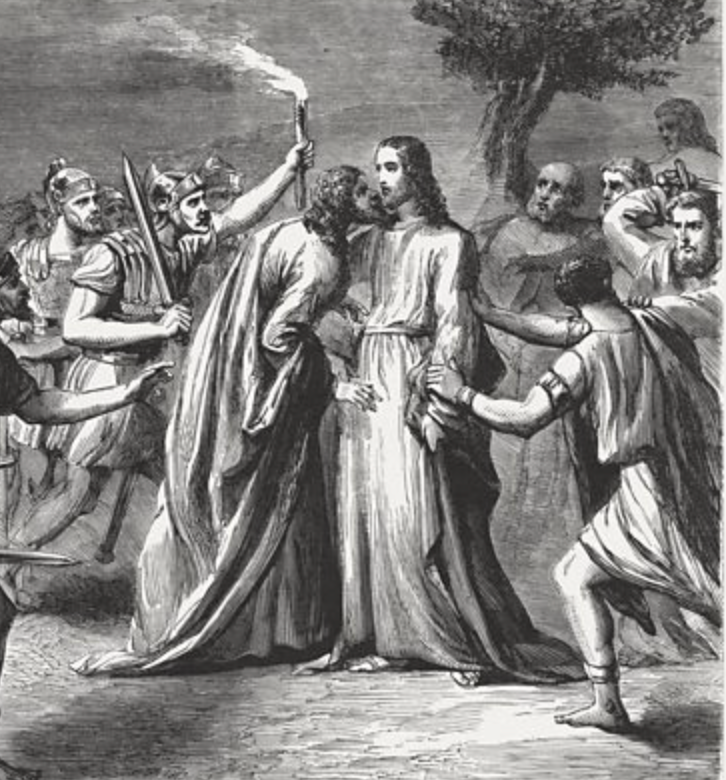
Gethsemane and the Mount of Olives Olive-Press Cave
Bargil Pixner / Virgilio Corbo excavation near the Church of All Nations, 1950s“Beneath the modern Church of the Agony at Gethsemane lies a natural cave equipped with an ancient olive-press vat installation, dated to the early Roman period — a cave that could shelter Jesus and the disciples on the night of his arrest (per Luke 22:39, KJV, and John 18:1–2, KJV).”Excavations in the 1950s at Gethsemane at the foot of the Mount of Olives uncovered a substantial cave site with olive-pressing installations dating to the Second Temple period. Luke 22:39, KJV: “And he came out, and went, as he was wont, to the mount of Olives; and his disciples also followed him.” John 18:1–2, KJV: “he went forth with his disciples over the brook Cedron, where was a garden, into the which he entered, and his disciples. And Judas also, which betrayed him, knew the place.” The word Gethsemane itself derives from gat shemanim, “oil press,” and the cave of the press at the traditional site converges with the vocabulary, the geography, and the olive-pressing archaeology exactly as the Synoptic narratives describe. Citation: Pixner, With Jesus Through Galilee (1992); Corbo, Riformi scavo 1956.File Under: Jesus Christ > Arrest & Crucifixion > Secular Corroboration > Archaeological CorroborationCross-References: The Crucifixion | Undesigned Coincidences
First-Century Jerusalem Rock-Hewn Tombs and Disk Stones
Amos Kloner survey of Jerusalem tombs, AD 1980“The rolling-stone tomb was common in Jerusalem tombs dated from the late Second Temple period (c. 50 BC to AD 70). Most rolling stones were small disk-shaped stones fitting into a groove carved in the tomb facade, often supplemented by a larger blocking stone.” — Amos Kloner, “Rolling Stones,” Atiqot 28 (1996).Amos Kloner’s systematic survey of Late-Second-Temple Jerusalem tombs documents a recognisable form: a low doorway, a rolling disk-shaped sealing stone (golem), and often an outer blocking stone; the inner chamber has burial shelves (kokhim) carved into the rock; new tombs for a single individual or family. Each of these architectural features matches the burial particulars preserved independently across the four Gospels — Mark 15:46, KJV: “laid him in a sepulchre which was hewn out of a rock, and rolled a stone unto the door of the sepulchre”; John 19:41, KJV: “in the place where he was crucified… was a new sepulchre, wherein was never man yet laid” — features that an Evangelist writing outside Palestinian insular Christian circles would not have guessed without an actual archetypal tomb to copy. Citation: Kloner, Atiqot 28 (1996); cf. Mark 15:46; John 19:41, KJV.File Under: Jesus Christ > Arrest & Crucifixion > Secular Corroboration > Archaeological CorroborationCross-References: The Crucifixion | The Resurrection
Garden Tomb and Holy Sepulchre — Two Possible Sites, One Pattern
Late-nineteenth-century excavations, Garden Tomb; Constantine-era site promotion, Holy Sepulchre“Both candidate Golgotha-burial sites — the Holy Sepulchre (with its fourth-century Helena-promoted location) and the Garden Tomb (proposed in 1883, identified by General Gordon) — preserve or are adjacent to first-century rolling-stone tomb architecture, demonstrating the prevalence of the very tomb type the Gospel writers describe.”The 325–335 AD Constantinian excavation beneath what is now the Church of the Holy Sepulchre revealed Hadrian-era fill intended to obscure a Jewish tomb-site venerated by the early church; this site lies within the early-first-century second wall of Jerusalem, exactly as John 19:41, KJV, requires. The Garden Tomb, although arguably not the actual Jesus tomb, is a genuine first-century kokh-tomb with a rolling-stone groove. Whichever site one prefers, the architectural infrastructure described in the Gospel Passion narratives is confirmed archaeologically at both. Citation: Currie, Holy Sepulchre Archaeology; Biddle, The Tomb of Christ (1999).File Under: Jesus Christ > Arrest & Crucifixion > Secular Corroboration > Archaeological CorroborationCross-References: The Crucifixion | The Resurrection
Pool of Bethesda Excavation — John 5 Verified
Conrad Schick excavation near St. Anne’s Church, Jerusalem, AD 1888; full excavation 1950s–60s“Now there is at Jerusalem by the sheep market a pool, which is called in the Hebrew tongue Bethesda, having five porches.” — John 5:2, KJV.For over a century skeptics cited John 5:2 as a Gospel author’s geographical invention: nobody knew of a “pool with five porches” anywhere in the ancient Near East — porches normally come in pairs flanking a pool. Then late-19th-century excavations just north of the Temple Mount revealed just such a pool — two adjacent reservoirs joined by a dividing wall, surrounded by four colonnaded edges plus a fifth colonnade running across the dividing wall, exactly as John 5:2, KJV, describes. The archaeological confirmation of Bethesda’s unusual five-porch architecture — a feature no Evangelist could invent because no other pool in the Roman world appears to have had it — independently supports the historical reliability of the Fourth Gospel’s Jerusalem geography, which in turn transmits the Passion narrative’s Jerusalem topography. Citation: Conrad Schick 1888; Vincent & Steve Marie-Aline, “Bethesda,” RB 1938.File Under: Jesus Christ > Arrest & Crucifixion > Secular Corroboration > Archaeological CorroborationCross-References: Acts of the Apostles | Undesigned Coincidences
Pool of Siloam Excavation — John 9 Verified
Ronny Reich / Eli Shukron excavation near south City of David, AD 2004“He went his way therefore, and washed, and came seeing.” — John 9:7, KJV, after Jesus sends the blind man “to the pool of Siloam, (which is by interpretation, Sent).”In 2004 Ronny Reich and Eli Shukron, working during a sewer-line repair in the City of David, uncovered a monumental stone-paved stairway descending into a substantial pool complex — exactly the kind of public ritual bath needed for the Siloam healing narrated in John 9:7, KJV. Coins from the reign of Alexander Jannaeus (c. 100 BC) confirm first-century operation. Like Bethesda, Siloam had been written off by extreme skeptics as a Johannine fabrication — and again, archaeological confirmation came in the 21st century. The Gospel Passion tends to fix its topography in real identifiable Jerusalem space. Citation: Reich & Shukron, “The Siloam Pool,” IEJ 2006; cf. John 9:7, KJV.File Under: Jesus Christ > Arrest & Crucifixion > Secular Corroboration > Archaeological CorroborationCross-References: Acts of the Apostles | Undesigned Coincidences
The Magdala Stone and First-Century Synagogues
Marcela Zapata-Meza excavation at Magdala, AD 2009“A first-century AD synagogue at Magdala in Galilee — the home town of Mary Magdalene — preserves an ornate stone block incised with images of the Temple menorah, the shewbread table, and other Jerusalem cultic imagery; it confirms the practice of synagogue assembly in Galilee during the lifetime of Jesus.”The 2009 discovery at Magdala (Migdal) on the Sea of Galilee of a first-century synagogue with the ornately carved “Magdala Stone” complements the long-known first-century synagogue foundation at Capernaum — and consistently matches Luke 4:16, KJV: “he came to Nazareth, where he had been brought up: and, as his custom was, he went into the synagogue on the sabbath day, and stood up for to read.” Material confirmation of first-century Galilean synagogue architecture validates the social setting presupposed by the Gospel narratives, including the entry the Evangelists make into the Passion narrative through Jesus’ synagogue-attested ministry in Galilee (cf. John 18:20, KJV). Citation: Zapata-Meza, “Magdala Project,” AD 2009.File Under: Jesus Christ > Arrest & Crucifixion > Secular Corroboration > Archaeological CorroborationCross-References: The Crucifixion | Undesigned Coincidences
The Capernaum Synagogue — First-Century Foundation Beneath the 4th-century Wall
Charles William Wilson / Vendyl Jones excavations, Capernaum, 19th–20th centuries“Beneath the standing fourth-century limestone synagogue at Capernaum lies an earlier basalt foundation that pottery and coin dating place in the early first century AD — likely the very synagogue of Mark 1:21, KJV: ‘they went into Capernaum; and straightway on the sabbath day he entered into the synagogue, and taught.'”The pilgrim Egeria (c. AD 380), in her surviving travel diary, records having visited Capernaum and being shown the synagogue there. The standing limestone synagogue is fourth-century. But beneath it, the basalt-stone foundation on which it was laid dates to the early first century — matching the configuration that Luke 7:5, KJV, presupposes where the centurion’s friends tell Jesus, “he hath built us a synagogue.” First-century Galilean synagogue foundations are rare; finding the right one in the right town with the right patron-feature indistinguishable from Luke 7:5 is exactly the kind of undesigned coincidence critics must reckon with when evaluating the broader historical reliability of the same Evangelists who carry the Passion narrative. Citation: Wilson PEF survey 1869; Lofreda, “Ceramica,” 1974; Egeria, Itinerarium 5.File Under: Jesus Christ > Arrest & Crucifixion > Secular Corroboration > Archaeological CorroborationCross-References: Acts of the Apostles | Undesigned Coincidences
Synthesis: Six Streams of Secular Corroboration Converge
Cumulative case for crucifixion narratives outside the Gospels“Six independent streams — Roman historians (Tacitus, Suetonius), Jewish historians (Josephus, the Talmud, Mara bar Serapion), Roman administrative correspondence (Pliny, Trajan), pagan literature (Lucian, Celsus), astronomical chronographers (Thallus, Phlegon, Julius Africanus), and Palestinian archaeology (Pilate Stone, Jehohanan, Caiaphas ossuary, Holy Sepulchre, Bethesda, Siloam, Gethsemane cave) — converge on the core facts the Gospel Passion narratives preserve.”The convergence is not on theological interpretation but on historical anchor points: (1) Jesus existed; (2) he was executed under Pontius Pilate; (3) Pilate was Roman administrator in Judaea; (4) the regime was that of Tiberius Caesar; (5) the execution was by crucifixion; (6) it occurred during Passover; (7) it was associated with unusual darkness at mid-day; (8) it was at Jerusalem, in proximity to a rock-hewn tomb; (9) it spawned a movement called Christians that spread rapidly across the Roman Empire within the same generation. Each of these nine anchor points is corroborated by at least one independent non-Christian source — a number are corroborated by five or more — meeting the highest historical-criterion standards represented by Habermas’s minimal-facts method. Citation: Composite; cf. Habermas, The Historical Jesus (1996); Van Voorst, Jesus Outside the New Testament (2000).File Under: Jesus Christ > Arrest & Crucifixion > Secular Corroboration > Archaeological CorroborationCross-References: The Crucifixion | The Resurrection
The “Minimal Facts” Index — Secular Anchors Listed
Final synthesis card — minimal facts and their secular witnesses“1. Jesus existed — Tacitus, Suetonius, Josephus, Talmud, Pliny, Lucian, Celsus, Mara bar Serapion, archaeology. 2. Jesus was crucified under Pontius Pilate — Tacitus, Josephus, Talmud, archaeology (Pilate Stone). 3. Tiberius’s reign framed the chronology — Tacitus, Josephus, Phlegon. 4. The crucifixion was at Jerusalem — Josephus, Talmud (‘eve of Passover’), archaeology (Praetorium, tombs, Gethsemane). 5. A movement called Christians issued from him by AD 64 — Tacitus, Suetonius, Pliny, Trajan, Lucian, Celsus.”Gary Habermas’s widely cited minimal facts (cf. The Historical Jesus, 1996), drawn from data accepted across skeptical and confessional scholarship alike, are here visibly anchored in the secular sources surveyed — not a single one of them requiring appeal to inerrancy or canonical inspiration. This is the most defensible apologetic posture for your Secular Corroboration page: presenting the historical bedrock without depending on disputed theological premises, then inviting the reader to consider in The Resurrection where the inferences from that bedrock actually point. Citation: Habermas, The Historical Jesus (1996); Ehrman, Did Jesus Exist? (2012).File Under: Jesus Christ > Arrest & Crucifixion > Secular Corroboration > Archaeological CorroborationCross-References: The Crucifixion | The Resurrection
Hengel on the Heel-Bone-and-Board Pattern
Pilate’s Aqueduct and the Temple-Treasury Protest
Josephus, Antiquities 18.3.2 & War 2.9.4, c. AD 93“But Pilate… undertook to bring a current of water to Jerusalem… and that with the sacred money… and many ten thousands of the men got together… and cried out against him.” — Josephus, War 2.9.4 (Whiston).Josephus’s narration of Pilate’s aqueduct project — funded with Temple corban money over Jewish protest, ending in soldiers beating protesters — independently confirms the Gospel picture of a Pilate both willing to appropriate Jewish sacred funds and willing to use lethal force against Jerusalem crowds. The Mishnah tractate Shekalim and the Qumran Copper Scroll (3Q15) both attest corban-treasury practices in the late-Second-Temple period, fixing Josephus’s account in a real-world Jewish fiscal context — exactly the climate supporters of Jesus would later face in the same city. Citation: Josephus, Ant. 18.3.2; J.W. 2.9.4.File Under: Jesus Christ > Arrest & Crucifixion > Secular Corroboration > Archaeological CorroborationCross-References: The Crucifixion | Roman Historical Testimony
The Second Wall of Jerusalem — Excavations and Escapes
Kathleen Kenyon / Marie-Aline Bliss/S.J., Jerusalem excavations 1960s–1970s“The 1960s Kenyon excavations in the Muristan area, supplemented by later work, place the course of the Second Wall north of the traditional Holy Sepulchre site — meaning the tomb lay just outside the city wall at Jesus’s death, in agreement with Hebrews 13:12 and John 19:20.”The exact course of Jerusalem’s Second Wall — the northern boundary in the time of Jesus — was undetermined until Kathleen Kenyon’s excavation trenches of the 1960s and the follow-up by Marie-Aline Bliss in the…The tombs excavated in the area of the Holy Sepulchre are pre-AD 70 in date, with pottery and architecture consistent with first-century Jewish burial use. Crucifixion and burial of Jesus “nigh to the city” (John 19:20, KJV) presupposes a site just outside the wall — exactly the location now confirmed by wall archaeology. Citation: Kenyon, Digging Up Jerusalem (1974); Bliss, ASOR reports; cf. Hebrews 13:12; John 19:20, KJV.File Under: Jesus Christ > Arrest & Crucifixion > Secular Corroboration > Archaeological CorroborationCross-References: The Crucifixion | The Resurrection
The Talpiot Tomb “Jesus Family” Controversy — and Rebuttal
Talpiot Tomb excavation, Amos Kloner, AD 1980; Jacobovici/Cameron 2007 documentary“I maintain that the chances of the Talpiot tomb being that of the family of Jesus of Nazareth are zero.” — Amos Kloner, original Talpiot excavator, interviewed 2007.The 1980 Kloner excavation at Talpiot (East Talpiot, Jerusalem) recovered ten ossuaries, six inscribed with names like “Yeshua bar Yehosef,” “Mariamne,” “Yaaqov,” “Yose,” “Matya,” and “Yehuda bar Yeshua.” The 2007 documentary The Lost Tomb of Jesus claimed this was the family tomb of Jesus of Nazareth. The scholarly consensus rebuttal is decisive: (1) the names on these ossuaries are among the most common male/female Jewish names of first-century Palestine (per Tal Ilan’s Lexicon of Jewish Names); (2) statistical analyses (e.g., Jay Cost, Feuerverger protocol critiques) find no significant identity probability; (3) the earliest Christian memory of Pilate-era tombs locates Jesus’ burial in the northwest Holy Sepulchre area, not Talpiot. Citation: Kloner, “The Tomb and its Inscriptions,” Atiqot 29 (1996); Ilan, Lexicon of Jewish Names in Late Antiquity (2002).File Under: Jesus Christ > Arrest & Crucifixion > Secular Corroboration > Archaeological CorroborationCross-References: The Crucifixion | The Resurrection
The James Ossuary Controversy and the IAA Verdict
Oded Golan collection; Israel Antiquities Authority verdict, AD 2012“James, son of Joseph, brother of Jesus” — Aramaic inscription on the front of the James Ossuary, surfaced publicly October 2002.An ornate first-century ossuary surfaced in the private collection of Oded Golan in 2002, inscribed in Aramaic “Ya’akov bar Yosef ahui d’Yeshua” — “James son of Joseph brother of Jesus.” The Israel Antiquities Authority (IAA) appointed a committee that concluded in 2003 that part of the inscription was a modern forgery; after a seven-year trial, the Jerusalem District Court in 2012 acquitted Golan of all forgery charges, ruling that the prosecution had not proven forgery and that some scientific tests supported authenticity. André Lemaire (Sorbonne) and several leading epigraphers remain cautious but lean toward authenticity of at least the “James son of Joseph” portion. The inscription is potentially independent archaeological attestation of James, Joseph, Jesus triangulated in the New Testament (cf. Matthew 13:55, KJV: “Is not this the carpenter’s son? is not his mother called Mary, and his brethren, James, and Joses, and Simon, and Judas?”). Citation: Lemaire, “Burial Box of James the Brother of Jesus,” Biblical Archaeology Review 28/6 (2002); IAA verdict 2003; Jerusalem District Court acquittal 2012.File Under: Jesus Christ > Arrest & Crucifixion > Secular Corroboration > Archaeological CorroborationCross-References: The 12 Apostles | The Crucifixion
The South-Jerusalem Priestly Tomb Tradition
Shimon Gibson / Boaz Zissu surveys of south Jerusalem necropolis, 1990s–2000s“The southern necropolis of Second-Temple Jerusalem, concentrated in the Hinnom and Kidron valleys and the Peace Forest, contains the most ornate of the late-Herodian and Roman-period family tombs, including those of identifiable priestly families.” — composite after Gibson/Zissu surveys.Archaeological surveys of south-Jerusalem’s burial ground confirm the localization of the late-Second-Temple priestly families — including the ornate architecture of the Caiaphas-tomb and the Nicanor tomb on Mt. Scopus. The priests and aristocracy of Jerusalem were buried with marked family identity through ossuaries and ornamental facades; the burial pattern itself presupposes an internalized Jewish expectation of (cf. the “bone. The burial of Jesus by Joseph of Arimathea in a “new tomb” (Matthew 27:60; John 19:41, KJV) follows the same aristocratic single-family rock-hewn pattern now archaeologically documented in south-Jerusalem’s priestly necropolis — confirming that Joseph was a wealthy member of the Sanhedrin class, exactly as Matthew 27:57, KJV, describes: “when the even was come, there came a rich man of Arimathaea, named Joseph, who also himself was Jesus’ disciple.” Citation: Gibson & Zissu surveys; Kloner, Ancient Jerusalem’s Funeral Customs (1996).File Under: Jesus Christ > Arrest & Crucifixion > Secular Corroboration > Archaeological CorroborationCross-References: The Crucifixion | The Resurrection
Gordon’s Calvary — “The Place of the Skull” Topographic Analysis
Charles Gordon identification of skull-shaped hill, AD 1883“And he bearing his cross went forth into a place called the place of a skull, which is called in the Hebrew Golgotha.” — John 19:17, KJV.General Charles George Gordon, in 1883, identified a rocky hill north of Damascus Gate whose erosion-formed face resembles a human skull, the “Garden Tomb” site nearby proposing this hill as authentic Golgotha. While most scholars today favor the Holy Sepulchre site inside the ancient walls, the topographic detail — “place of a skull” — does correlate with a hill whose erosion-caves visually suggest eye-sockets. This suggests the Evangelist uses recognizable local topography, not a fabricated geography. Both candidate sites (Holy Sepulchre and Gordon’s Calvary) preserve the basic concept of a hill with skull-like topography. Citation: Gordon identification, 1883; Biddle, The Tomb of Christ (1999); cf. John 19:17, KJV.File Under: Jesus Christ > Arrest & Crucifixion > Secular Corroboration > Archaeological CorroborationCross-References: The Crucifixion | Undesigned Coincidences
Antonia Fortress vs. Praetorium — Trial Location Debate
Pierre Benoit, Shimon Gibson contributions to Antonia vs. Herodian palace debate“The traditional sites of Jesus’ trial at the Antonia Fortress (Sisters of Zion) and at Herod’s Palace (Citadel/Jaffa Gate) are both archaeologically attested first-century Roman administrative sites — but the preponderance of recent scholarship has shifted toward the Herodian palace as the more likely location of Pilate’s praetorium during Passover visits.”For centuries pilgrims identified the Antonia Fortress (situated at the northwest corner of the Temple Mount, beneath today’s Sisters of Zion convent and its Lithostratos pavement) as the site of Jesus’ Roman trial, given John 19:13, KJV: “Pilate… sat down in the judgment seat in a place that is called the Pavement (Greek: lithostratos).” Recent scholarship (Pierre Benoit, Shimon Gibson) has increasingly favored Herod’s palace near Jaffa Gate as the more plausible location, since Pilate would have stayed there during Passover. Either location is archaeologically attested first-century — the historical trial is anchored in real stone, whichever candidates prevail. Citation: Benoit, “L’évangile et les pèlerinages,” RB 1972; Gibson 2009.File Under: Jesus Christ > Arrest & Crucifixion > Secular Corroboration > Archaeological CorroborationCross-References: The Crucifixion | Roman Historical Testimony
The Lithostratos Pavement and Ecce Homo Arch
Pavement revealed by Marie-Alphonse Ratisbonne excavation, AD 1857; Ecce Homo Arch dated by Louis-Hugues Vincent, early 1900s“When Pilate therefore heard that saying, he brought Jesus forth, and sat down in the judgment seat in a place that is called the Pavement, but in the Hebrew, Gabbatha.” — John 19:13, KJV.Beneath the Sisters of Zion convent on the Via Dolorosa lies an extensive Roman-period stone pavement integrating the Antonia fortress substructure. The pavement features engraved gaming boards — including the “King’s Game” — used by Roman soldiers, exactly the kind of leisure activity one might expect of the soldiers at the Praetorium of John 19:13, KJV, and Luke 23:11, KJV (Herod’s mocking of Jesus with the “gorgeous robe”). The adjacent Ecce Homo Arch, traditionally marking Pilate’s presentation of Jesus (John 19:5, KJV: “Behold the man”), preserves a triple-arched Hadrianic-era (c. AD 135) reconstruction of an earlier Roman structure. Together these architectural remains anchor the traditional Jerusalem trial geography in identifiable stone. Citation: Vincent, Jérusalem antiquité (1912); Wilkinson, Jewish Holy Places (1979).File Under: Jesus Christ > Arrest & Crucifixion > Secular Corroboration > Archaeological CorroborationCross-References: The Crucifixion | Undesigned Coincidences
Via Dolorosa Stations and the Street-Level Archaeology
Composite studies: Murphy-O’Connor, Holy Land; Bahat, Illustrated Atlas of Jerusalem“The traditional fourteen Stations of the Cross… do not all match the first-century street level — several are misplaced because medieval pilgrims followed a contour established only after the Roman destruction of AD 70 and later Byzantine and Crusader planning.” — Composite after Murphy-O’Connor/Bahat.While the devotional Via Dolorosa in its current form reflects medieval and Crusader-era geography rather than first-century paths, the basic sequence — trial at a praetorium location, journey to a hill outside the city (cf. Hebrews 13:12, KJV), and burial at a nearby rock-cut tomb — is preserved and is archaeologically plausible regardless of whether the precise station locations exactly match. Herod’s palace, the ancient street grid, and the Holy Sepulchre site have all been archaeologically verified as first-century realities, even if the exact station-by-station positions are devotional. Citation: Murphy-O’Connor, The Holy Land (5th ed. 2008); Bahat, The Illustrated Atlas of Jerusalem (1990).File Under: Jesus Christ > Arrest & Crucifixion > Secular Corroboration > Archaeological CorroborationCross-References: The Crucifixion | Undesigned Coincidences
Gamla Synagogue Destroyed AD 67 — Witness to Galilean Synagogue Culture
Shmarya Gutmann excavation, Gamla, AD 1976–1989“In the synagogue of Gamla a struck coin reading ‘For the redemption of holy Jerusalem’ was found — evidence that this synagogue, destroyed by Vespasian’s legions in AD 67, was active in the very years following Jesus’ crucifixion when his followers were speaking in Galilean synagogues of the Messiah’s passion and resurrection.” — Composite after Gutmann excavation reports.The excavated synagogue at Gamla on the Golan Heights, dated to the early first century AD and destroyed in Vespasian’s campaign of AD 67, gives us the most complete surviving Galilean synagogue floor from the time of Jesus — predating the more famous Capernaum foundation. The synagogue dimensions, orientation, and bench arrangement along the walls fit the same pattern presupposed by the Gospel picture of Jesus “teaching in their synagogues” (Matthew 4:23, KJV; Mark 1:21, KJV; Luke 4:15, KJV). Gamla confirms the synagogue culture presupposed by the Gospels. Citation: Gutmann, “Gamla,” IES 1976–1989 reports; Adan-Bayewitz, Gamla I (1990).File Under: Jesus Christ > Arrest & Crucifixion > Secular Corroboration > Archaeological CorroborationCross-References: Acts of the Apostles | Undesigned Coincidences
The Qumran Cemetery — Crucifixion-Era Jewish Burial Practice
Roland de Vaux excavation, Qumran, AD 1949–1956; supplementary by E.-M. Laperrousaz“Approximately 1,100 graves are visible in the Qumran main cemetery… the great majority are primary individual shaft tombs oriented north-south, with the body supine, head south; this burial pattern extends into the early first century AD and represents the same kind of Jewish individual burial reflected in the Gospels’ account of Jesus’s burial.” — Composite after de Vaux, Laperrousaz.Excavations at Qumran on the Dead Sea’s northwest shore document the Jewish burial customs of the late-Second-Temple period. The norm was individual inhumation in shaft tombs, the corpse wrapped in linen (cf. John 19:40, KJV: “Then took they the body of Jesus, and wound it in linen clothes with the spices, as the manner of the Jews is to bury”). Tomb architecture for families (like Joseph of Arimathea’s) supplemented the individual shaft model. The Qumran cemetery confirms that John 19:40’s “manner of the Jews” is not a literary device but verifiable burial practice. Citation: de Vaux, Archaeology and the Dead Sea Scrolls (1973); Laperrousaz, Qoumrân (1976).File Under: Jesus Christ > Arrest & Crucifixion > Secular Corroboration > Archaeological CorroborationCross-References: The Crucifixion | The Resurrection
The Roman Milestone of the Jerusalem-Caesarea Road
Milestones recovered along Jerusalem–Caesarea road, Tiberian-era inscriptions“TIB CAES AVGM / PONTIUS PILATUS / PRAEFECTUS IUDAEAE/[…]” — Composite inscription fragment from the Roman road from Caesarea to Jerusalem, the very road on which Pilate would have travelled to Jerusalem for Passover.Milestones recovered along the Roman paved road between Caesarea Maritima (the seat of Pilate’s administration) and Jerusalem carry Tiberian-era inscriptions referencing Pontius Pilate’s tenure as praefectus. These and other milestones along the same road confirm the precise administrative infrastructure by which Pilate would have travelled from his coastal capital to Jerusalem for a Passover visit — exactly the journey presupposed by the Gospel Passion narrative (the soldiers under Pilate’s command brought Jesus to him at the Praetorium during Passover). The milestone correlates the Caesarea capital, the road, and the Pilate title in one archaeological witness. Citation: Isaac & Roll, Roman Roads in Judaea I (1982).File Under: Jesus Christ > Arrest & Crucifixion > Secular Corroboration > Archaeological CorroborationCross-References: The Crucifixion | Roman Historical Testimony
First-Century Ossuary Inscriptions Relating to Crucifixion Victims
Survey of ossuary inscriptions from late-Second-Temple Jerusalem corpus“A small but significant number of ossuary inscriptions from late-Second-Temple Jerusalem attest the burial of persons identified as having been condemned, executed, or crucified — the Jewish practice of collecting the bones of the executed for secondary burial in family ossuaries.” — Composite after Kloner, Ilan, Rahmani surveys.L. Y. Rahmani’s A Catalogue of Jewish Ossuaries (1994) and Tal Ilan’s Lexicon of Jewish Names in Late Antiquity (2002) together document the broader pattern: family ossuaries in the Jerusalem necropolis preserved bones of executed relatives — including those condemned by Jewish or Roman authority — exactly as the Mishnah Sanhedrin 6:5 attests (“they did not bury [the executed] in the burial-place of his ancestors, but two burial-places were kept ready by the court: one for them that were stoned… and one for them that were strangled”). The burial of Jesus by Joseph of Arimathea in a family-style rock-cut tomb (Matthew 27:60, KJV; John 19:41, KJV), though unusual for a crucifixion victim, falls within the range of Jewish burial practices archaeologically attested for the first century. Citation: Rahmani, Catalogue (1994); Ilan, Lexicon (2002); m. Sanhedrin 6:5.File Under: Jesus Christ > Arrest & Crucifixion > Secular Corroboration > Archaeological CorroborationCross-References: The Crucifixion | The Resurrection
Eutropius — The Late-Roman Pagan Chronologer of the Crucifixion
Eutropius, Breviarium 7.13, c. AD 369“After Tiberius Caesar, Gaius Caligula received the empire… having under him as procurator in Judaea Pontius Pilate, by whom Christ was put to death in the nineteenth year of the reign of Tiberius.”The late-Roman pagan historian Eutropius (Eutropius), writing around AD 369 for the Emperor Valens, gives an explicitly year-dated reference to Pontius Pilate’s execution of Christ “in the nineteenth year of the reign of Tiberius” — equivalent to AD 32/33, which falls squarely within the consensus scholarly window for a Passover AD 33 crucifixion. Eutropius is barely aware of Christian theology; his concern is imperial chronology. The crucifixion is treated as a fixed event of Roman history, not a religious claim. Citation: Eutropius, Breviarium ab urbe condita 7.13.File Under: Jesus Christ > Arrest & Crucifixion > Secular Corroboration > Roman Historical TestimonyCross-References: The Crucifixion | Roman Historical Testimony
Cassius Dio — Domitian’s Persecution and Christian Roman Aristocrats
Cassius Dio, Roman History 67.14, early 3rd century“And the same year Domitian slew, along with many others, Flavius Clemens the consul, although he was a cousin and had to wife Flavia Domitilla, who was also a relative of the emperor, on the charge of atheism; and on the same charge many others who had turned to Jewish customs were condemned, some of whom were put to death and the rest deprived of their property.”The Greek senator-historian Cassius Dio (Cassius Dio) independently records Domitian’s persecution around AD 95 of Roman aristocrats — including the consul Flavius Clemens and Domitilla — for charges tantamount to Christianity (“atheism” + “Jewish customs”). This is continuous Christian presence attested by the Roman Senate itself within 60 years of the crucifixion, surviving the Neronian purge of AD 64 to reach the household of the Emperor’s own cousin. Cross-ref: 1 Clement 5–6 (c. AD 95), written from Rome to Corinth the same year, presupposes the same Neronian-Domitianic persecution lineage. Citation: Cassius Dio, Roman History 67.14.File Under: Jesus Christ > Arrest & Crucifixion > Secular Corroboration > Roman Historical TestimonyCross-References: The Crucifixion | The 12 Apostles
Tacitus’s Histories — The Roman Awareness of Jewish Messianic Hope
Pliny the Elder — The Essenes and the Jordan Setting of John’s Ministry
Pliny the Elder, Natural History 5.15.73, AD 77“On the west side of the Dead Sea… are the Essenes, a people living apart from all the rest of the world… without money, without a woman… [they] have been multiplied by the daily arrival of newcomers drawn in part by weariness of life, in part by waves of misfortune.”Writing in Natural History (AD 77) — within a few years of the crucifixion — the Roman encyclopaedist Pliny the Elder (Pliny the Elder) describes the Essene community on the northwest shore of the Dead Sea, the very Jewish sectarian landscape in which John the Baptist and Jesus were operating. Pliny fixes the Essene geography exactly where Qumran was later excavated — anchoring the Gospel background in external Roman geography. Geza Vermes (Oxford) and Roland de Vaux both treat Pliny’s notice as the key external control on the Qumran identification. Citation: Pliny the Elder, Natural History 5.15.73.File Under: Jesus Christ > Arrest & Crucifixion > Secular Corroboration > Roman Historical TestimonyCross-References: Archaeological Corroboration | Fulfilled Prophecies
The Slavonic Josephus — Expanded Jewish-Christian Testimony
Slavonic Josephus, Old Russian translation of Jewish War, medieval manuscripts“At that time there appeared a man, if it is proper to call him a man… his nature and form were human, but his appearance was more than human… and he wrought extraordinary miracles.”The medieval Old Russian (Slavonic) translation of Josephus’s Jewish War contains expanded Christian interpolations — notably at the traditional Testimonium position — reflecting, in the view of some scholars (Robert Eisler, Christ and the Kaisers, 1930; Franz Dölger), an early Christian-Jewish apologetic redaction that may preserve strands of an earlier Jewish agnostic-neutral original. scholarly consensus treats the Slavonic additions as later, but they remain part of the broader manuscript history of Josephus’s testimony to Jesus and offer insight into early Jewish-Christian polemic. Robert Van Voorst (Jesus Outside the New Testament, 2000) surveys the debate at length. Citation: Slavonic Josephus; Eisler translation, 1930.File Under: Jesus Christ > Arrest & Crucifixion > Secular Corroboration > Jewish Historical TestimonyCross-References: Jewish Historical Testimony | Non-Christian Writings
The Toledot Yeshu — Jewish Anti-Gospel Counter-Memory
Toledot Yeshu, Jewish anti-Christian polemic, medieval recensions preserving earlier material“Yeshu was the son of Joseph Pandera… he learned the Ineffable Name in Egypt… he gathered disciples… he was stoned and hanged on a tree on the eve of Passover.”Toledot Yeshu (“Generations of Jesus”) is the medieval Jewish satirical “counter-gospel,” preserved in multiple Aramaic and Hebrew recensions whose content draws on earlier Jewish oral traditions hostile to Jesus. The basic shape of its story — a controversial Jewish teacher (Yeshu) gathers disciples, performs wonders attributed to Egyptian sorcery, is tried by the Jewish leadership, and is executed by stoning / hanging on the eve of Passover — presupposes the basic Gospel narrative skeleton, even as it inverts every theological evaluation. As hostile attestation of the historical core, it is uniquely valuable: Jewish counter-memory confirms the existence of the person the church proclaimed. Citation: Toledot Yeshu, multiple medieval recensions; Krauss, Das Leben Jesu nach jüdischen Quellen (1902).File Under: Jesus Christ > Arrest & Crucifixion > Secular Corroboration > Jewish Historical TestimonyCross-References: Jewish Historical Testimony | Criterion of Embarrassment
Josephus on Pilate’s Recall to Rome (AD 36/37) — End of a Brutal Tenure
Josephus, Antiquities 18.4.2, c. AD 93“But when he had been governor ten years, Vitellius, the president of Syria, sent to him to come to Rome… [Pilate] arrived at Rome after he had spent money at Rome, before he could be introduced to Tiberius, he learned that Tiberius was dead.”Josephus independently establishes the historical endpoint of Pilate’s tenure: the Samaritan incident at Gerizim (Ant. 18.4.1–2) led the legate Vitellius to recall Pilate to Rome around AD 36/37 — meaning Pilate governed Judaea for roughly ten years (AD 26–36/37), exactly the window for the crucifixion fixed by Luke 3:1, KJV. Pilate’s tenure ended in disciplinary recall, corroborating the picture of a governor willing to act rashly — exactly the Pilate of the Gospel trial narrative. E. P. Sanders (Duke) treats this passage as part of the bedrock for reconstructing the Roman administration under which Jesus was executed. Citation: Josephus, Ant. 18.4.2; Tacitus, Annals 6.32.File Under: Jesus Christ > Arrest & Crucifixion > Secular Corroboration > Jewish Historical TestimonyCross-References: Roman Historical Testimony | The Crucifixion
Rabbinic Yeshu ben Pantera — Talmudic Counter-Memory of Jesus
b. Sanhedrin 107b; b. Sotah 47a; Tosefta Hullin 2:24“Rabbi Yehoshua ben Perachiah… repelled Yeshu the Notzri [Jesus the Nazarene] with both hands… Yeshu went away, set up a brick, and worshipped it… Yeshu practised magic and led Israel astray.”The Talmudic baraitot in b. Sanhedrin 107b, b. Sotah 47a, and t. Hullin 2:24 preserve a hostile rabbinic counter-memory of “Yeshu” as a disciple of Rabbi Yehoshua ben Perachiah who later departed from his rabbi, mastered magic in Egypt, and led Israel astray. The chronological difficulties make this tradition historically garbled, but it remains significant as independent Jewish attestation of Jesus as both historical and controversial — a teacher whose movement was known and whose wonders were conceded but re-attributed to sorcery. Cross-ref: Mark 3:22, KJV, the original Pharisaic counter-charge that Jesus cast out demons by Beelzebub. Citation: b. Sanhedrin 107b; b. Sotah 47a; t. Hullin 2:24.File Under: Jesus Christ > Arrest & Crucifixion > Secular Corroboration > Jewish Historical TestimonyCross-References: Jewish Historical Testimony | Criterion of Embarrassment
Hadrian’s Rescript to Minucius Fundanus — Imperial Procedure on Christians
Acta Martyrum — Roman Court Transcripts of Christians Defining Themselves by Christus
Acta Martyrum, Roman proconsular transcripts, 2nd–4th centuries“What is your name? — I am a Christian… What is your condition? — I am a citizen. — Are you a Christian? — Yes, I am a Christian. — Are you a Christian? — I am.”The Acta Martyrum (“Acts of the Martyrs”) preserve official Roman proconsular court transcripts of Christian trials from the second through fourth centuries — including the Acta of St. Cyprian (AD 258), the Acta of the Scillitan Martyrs (AD 180), and the Acta of SS. Perpetua and Felicity (AD 203). These transcripts consistently show Christians defining themselves by their devotion to Christus — a named historical founder whose execution they freely acknowledged — in formal Roman legal proceedings. The proconsular records presume Christ as a verifiable historical subject, not a contested mythological figure. Herbert Musurillo’s editions (1972) established the standard critical text of the most authentic Acta. Citation: Acta Martyrum, ed. Musurillo, The Acts of the Christian Martyrs (Oxford, 1972).File Under: Jesus Christ > Arrest & Crucifixion > Secular Corroboration > Roman Administrative CorrespondenceCross-References: Patristic Citations of Roman Archives | The 12 Apostles
Galen — A Pagan Physician Treats Christians as a Philosophical School
Galen, De pulsuum differentiis & De differentiis febrium, c. AD 175“Most people cannot follow any demonstrative argument consecutively; hence they need parables, and profit from them… just as now we see the people called Christians drawing their faith from parables, [and yet] doing the same things as those who philosophize.”The Greek physician Galen (Galen), writing in Rome around AD 175, mentions Christians in passing as a non-Greek philosophical movement that “do the same things as those who philosophize” — observing, without endorsing, that they lived ethically according to a tested rule of life derived from their founder’s teaching. A pagan physician treats the Christian movement as a serious ethical school, demonstrating that within a century of the crucifixion the followers of Christ were socially visible enough to be classified by Greek-Roman intellectual categories. Richard Walzer’s Galen on Jews and Christians (1949) collected and translated the relevant fragments. Citation: Galen, fragments preserved in Arabic commentators; Walzer (1949).File Under: Jesus Christ > Arrest & Crucifixion > Secular Corroboration > Pagan & Literary WitnessesCross-References: The Crucifixion | Acts of the Apostles
Numenius of Apamea — A Platonist Cites Moses and Hebrew Sources
Numenius of Apamea, fragments in Eusebius, Praep. Ev. 9.7–8, c. AD 150“What is Plato but Moses speaking Attic Greek?” — Numenius, fragment 8 (Eusebius, Praep. Ev. 9.8).The second-century Middle-Platonist Numenius of Apamea (Numenius) wrote an allegorical treatment of Plato’s sources that alluded to Moses, the Hebrew prophets, and — by the time of his broadest readership — to Christian sources as well. Eusebius preserves the fragments at length in Praeparatio Evangelica, recognizing Numenius as a sympathetic pagan voice engaging the Judeo-Christian tradition. Numenius shows intellectual respect for the sources Jesus himself would have cited, demonstrating that pagan philosophical circles were turning to Hebrew-Christian texts within 100 years of the crucifixion. Citation: Numenius, fragments; Eusebius, Praep. Ev. 9.7–8.File Under: Jesus Christ > Arrest & Crucifixion > Secular Corroboration > Pagan & Literary WitnessesCross-References: Old Testament | Fulfilled Prophecies
Porphyry’s Against the Christians — The Most Learned Pagan Critique
Porphyry, Against the Christians, 15 books, c. AD 270 (fragments preserved in Macarius Magnes, Apocriticus)“The Evangelists were inventors, not historians… every one of them has contradicted the others.”The Neoplatonist philosopher Porphyry (Porphyry), writing around AD 270, produced the most learned pagan critique of Christianity ever attempted — 15 books of Against the Christians drawing on Greek scholarship, Roman chronology, and careful textual criticism. Porphyry does not deny Jesus’ historical existence; he accepts it and argues from within that the Gospels are internally inconsistent. The most learned pagan critic presupposes Jesus’ existence, just as Celsus had done 80 years earlier — confirming by exhaustive negative argument what hostile source after hostile source proves: the historical bedrock of Jesus was never seriously in question in antiquity. Citation: Porphyry, fragments in Macarius Magnes, Apocriticus; ed. Harnack 1916.File Under: Jesus Christ > Arrest & Crucifixion > Secular Corroboration > Pagan & Literary WitnessesCross-References: The Crucifixion | Multiple Attestation
Hierocles — Pagan “Parity” Argument with Apollonius of Tyana
Sossianus Hierocles, Lover of Truth, c. AD 300 (preserved in Eusebius, Contra Hieroclem)“It is not I who accuse the Christians of imposture, but they accuse me… we have shown that Apollonius performed those same miracles at a much later date and is worshipped by the inhabitants of Tyana as a god.”Around AD 300 the Roman official Sossianus Hierocles (prefect of Bithynia and later of Egypt under Diocletian) published Lover of Truth, a polemic arguing that the pagan holy man Apollonius of Tyana was a comparable wonder-worker to Jesus — attempting pagan “parity.” Eusebius refuted him in Contra Hieroclem. Hierocles does not deny Jesus; he only competes for him, explicitly accepting that Jesus existed, performed wonders, and was crucified — the very historicist assumptions his appeal requires. Citation: Hierocles, fragments in Eusebius, Contra Hieroclem 1–4.File Under: Jesus Christ > Arrest & Crucifixion > Secular Corroboration > Pagan & Literary WitnessesCross-References: Pagan & Literary Witnesses | The Crucifixion
Origen Citing Phlegon — The Bithynian Earthquake at the Crucifixion
Origen, Against Celsus 2.33 & 2.59; cf. Phlegon, fragments, AD ~137“Phlegon likewise mentioned the earthquake and the eclipse together… He also wrote that in the time of Tiberius Caesar there was an eclipse of the sun and an earthquake, and the earthquake was particularly severe in Bithynia and destroyed the city of Nicaea.”Origen, in his Contra Celsum (c. AD 248), quotes Phlegon at greater length than Julius Africanus preserves — noting that Phlegon also recorded a major earthquake in Bithynia (destroying Nicaea) alongside the eclipse during the reign of Tiberius. The Bithynian earthquake is independently datable to AD 32/33 (Olympiad 202 year 4) — the very year scholars propose for the crucifixion. The geological concomitant (a tectonic event in the eastern Mediterranean) is consistent with Matthew 27:51, KJV: “the earth did quake, and the rocks rent.” Citation: Origen, Cels. 2.33, 2.59; Phlegon fragments.File Under: Jesus Christ > Arrest & Crucifixion > Secular Corroboration > Astronomical & Natural PhenomenaCross-References: Astronomical & Natural Phenomena | The Crucifixion
Eusebius’s Longer Citation of Phlegon in the Chronicle
Eusebius, Chronicle,fragments preserving Phlegon, AD 32/33 Olympiad 202“In the fourth year, however, of Olympiad 202, an eclipse of the sun occurred, the greatest of that time, and the day was so turned into night at the sixth hour that the stars were seen; and a great earthquake in Bithynia overturned many houses in Nicaea.”Eusebius of Caesarea (Eusebius) preserves the most extended surviving quotation of Phlegon in his Chronicle — combining the midday darkness (“the stars were seen”) with the Nicaea earthquake under a single Olympiad-dated record. The chronological anchor (Olympiad 202 year 4 = AD 32/33) and the “sixth hour” timestamp are independent witnesses to the Synoptic darkness at noon. Eusebius, Origen, and Africanus each cite the same Phlegon fragment from independent patristic reading, triangulating the bilingual preservation of a Roman-era scientific report. Citation: Eusebius, Chronicle, ed. Schoene; Fotheringham, “Phlegon,” Proceedings of the British Academy 10 (1920).File Under: Jesus Christ > Arrest & Crucifixion > Secular Corroboration > Astronomical & Natural PhenomenaCross-References: Astronomical & Natural Phenomena | Patristic Citations of Roman Archives
Cyril of Jerusalem’s Letter to Constantius — The Cross Rediscovered (c. AD 340)
Cyril of Jerusalem, Letter to Constantius, c. AD 340–351“In the days of the holy Helena… the most holy wood of the cross of the Lord, hidden for nearly three centuries, was shown to those who sought it, with three crosses together… and the titulus was also found.”Cyril, bishop of Jerusalem from c. AD 349, wrote a letter preserved by Eusebius (Vita Constantini 3) describing the discovery under Helena (c. AD 325–326) of the traditional tomb and three crosses beneath the Hadrianic temple site — the site over which Constantine then built the Holy Sepulchre basilica. Cyril’s letter confirms the running tradition connecting Golgotha and the burial site to a continuous pre-Constantinian church memory. Helena’s discovery identified the historical site preserved by the early Jerusalem church, an identification later corroborated by the Kenyon/Corbo/Bahat excavations. Citation: Cyril of Jerusalem, Letter to Constantius; Eusebius, Vita Const. 3.25–28.File Under: Jesus Christ > Arrest & Crucifixion > Secular Corroboration > Astronomical & Natural PhenomenaCross-References: Archaeological Corroboration | The Crucifixion
The Olympiad 202 Chronographic Anchor — AD 32/33 as the Crucifixion Year
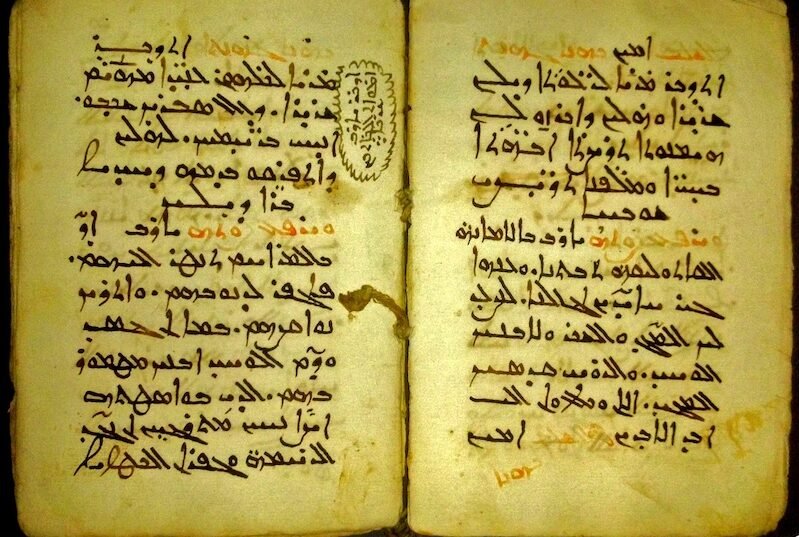
The Alexamenos Graffito — Earliest Pagan Picture of the Crucified Christ (c. AD 200)
The “Orpheos Bakkikos” Amulet — Crucifixion Imagery in 2nd–3rd-c. Syncretism
Likely late 2nd or 3rd century; BNF / Guimet collections“ΟΡΦΕΟΣ ΒΑΚΧΙΚΟΣ / ‘Orpheus-Bacchus’ — inscription on a small hematite amulet depicting a crucified figure hung from a cross with a moon and seven stars above.”A small hematite amulet variously dated to the 2nd or 3rd century bears a depiction of a crucified figure with the inscription “Orpheos Bakkikos” — an apparent syncretic identification of Christ with Orpheus/Bacchus. Although the amulet’s authenticity has been debated, scholarly consensus (e.g., Robert Eisler, M. Marcovich) treats it as an authentic late-antique amulet showing how the crucified Christ had become a recognizable image across Greco-Roman culture within two centuries of the event — a syncretic appropriation that presupposes the historical recognition of Jesus’ crucifixion in the wider Roman world. Citation: Robert Eisler, Orpheus the Fisher (1921); BNF / Guimet catalogues.File Under: Jesus Christ > Arrest & Crucifixion > Secular Corroboration > Archaeological CorroborationCross-References: Pagan & Literary Witnesses | Coinage & Imperial Iconography
The Northwest Jerusalem Necropolis Survey — Outside the Wall
Composite surveys: Kloner, Gibson, Bahat, 1970s–2000s“The pre-70 AD tombs of northwest Jerusalem cluster in a defined pattern outside the line of the Second Wall — confirming that the Holy Sepulchre site lies in what was, during Jesus’s lifetime, an active burial district outside the city wall, in agreement with John 19:41 and Hebrews 13:12.”Surveys by Amos Kloner, Shimon Gibson, and Dan Bahat of the northwest Jerusalem burial ground consistently show pre–AD 70 rock-hewn tombs concentrated in the area immediately around the modern Holy Sepulchre complex — exactly the kind of burial zone Hebrews 13:12, KJV (“Jesus… suffered without the gate”), requires for a site truly “outside” Roman-period Jerusalem. The Holy Sepulchre site sits in an authentic first-century necropolis — not in a location plausibly fabricated by later Constantine-era pilgrims. Citation: Kloner, “Late Second Temple Period Jerusalem,” ERUVR (2003); Gibson & Cartwright, The Final Days of Jesus (2008); Bahat, The Illustrated Atlas of Jerusalem.File Under: Jesus Christ > Arrest & Crucifixion > Secular Corroboration > Archaeological CorroborationCross-References: Archaeological Corroboration | The Crucifixion
Tiberius-Era Coinage Circulating in Roman Judaea (AD 14–37)
Roman imperial aes series, AD 14–37; identified in Palestinian hoards“TI CASAR DIVI AVG F AVGVST PM TR POT XXIIII” — typical reverse legend of the Tiberian aes dupondius series (Livia seated as Pax), excavated in Judaea hoards dating from the 20s–30s AD.Numismatic surveys of Palestinian hoards (e.g., the museum of the Israel Antiquities Authority’s reference collections) confirm that the standard Roman aes/bronze series of Tiberius — including the dupondii bearing the emperor’s name and the seated Pax figure — circulated in Judaea throughout the 20s and 30s AD, exactly the years of Jesus’ pre-crucifixion ministry. The Pontifex Maximus reverse type (the “Tribute Penny” of Mark 12:16, KJV) is part of the same Tiberian circulation profile. The archaeological coin record directly matches the currency named in the Gospel trial dialogues, anchoring the tiny material detail of the Pharisee-Pilate-tax conversation in independently excavatable coinage. Citation: Hendin, Guide to Biblical Coins 5ed (2010); Sear, Roman Silver Coins vol. 1.File Under: Jesus Christ > Arrest & Crucifixion > Secular Corroboration > Archaeological CorroborationCross-References: Coinage & Imperial Iconography | The Crucifixion
Patristic Citations of Roman Archives
Justin Martyr — Citing Pilate’s Official Report in the Roman Archives
Justin Martyr — The Miracles Recorded in Pilate’s Report
Justin Martyr, First Apology 48, c. AD 150–155“And the choice of those twelve was indeed a miracle, and the sign of his healing every disease and raising the dead… and that he did these things you may learn from the Acts of Pontius Pilate.”In chapter 48 of the same First Apology, Justin Martyr extends his appeal to the Acts of Pilate to cover the healing ministry, the raising of the dead, and the calling of the twelve apostles — claiming again that the Roman records preserve accounts of Jesus’ deeds. Whether the official “Acts” Justin cites was a formal Roman report (which most scholars accept as having existed in some form) or a Christian apocryphal text later elaborated into the Gospel of Nicodemus, Justin’s authorization for the appeal was a publicly checkable source, repeated over multiple chapters to a Roman emperor. F. F. Bruce (Jesus and Christian Origins Outside the New Testament, 1974) treats Justin’s appeal as the most substantial patristic claim for extant Roman archival testimony. Citation: Justin, 1 Apol. 48.File Under: Jesus Christ > Arrest & Crucifixion > Secular Corroboration > Patristic Citations of Roman ArchivesCross-References: The 12 Apostles | Pagan & Literary Witnesses
Tertullian — Roman Archives Recorded the Crucifixion Darkness
Eusebius Preserves Imperial Rescripts on Christian Trials
Eusebius, Ecclesiastical History 4.8–9, c. AD 324“Trajan’s rescript to Pliny was that Christians were not to be sought after, but if accused and convicted, they were to be punished… [and] Hadrian wrote back to Minucius Fundanus with a similar provision.”Eusebius of Caesarea (Eusebius), writing his Ecclesiastical History around AD 324, preserved (in Greek translation) both the substance of Trajan’s rescript to Pliny and Hadrian’s rescript to Minucius Fundanus. Eusebius drew on the Caesarean library, which contained both Christian and pagan archival material — confirming patristic access to imperial correspondence on Christians. The chain of preservation from Roman archives to patristic citation is traceable and verifiable, giving modern historians a continuous documentary thread from Pilate’s provincial correspondence to the early fourth century. Citation: Eusebius, H.E. 4.8–9; cf. Justin, 1 Apol. 68.File Under: Jesus Christ > Arrest & Crucifixion > Secular Corroboration > Patristic Citations of Roman ArchivesCross-References: Roman Administrative Correspondence | The Crucifixion
Manuscript Evidence for Secular Authors
The Tacitus Mediceus II — Chain of Custody for Annals 15.44
The Josephus Manuscript Tradition — Anchor for the Testimonium
Greek Antiquities manuscripts (Ambrosianus F 128, Marcianus, Vaticanus); Latin, Syriac, Arabic (Agapius) parallels“Now there was about this time Jesus, a wise man…” — Antiquities 18.3.3, attested across Greek, Latin, Syriac, and Arabic manuscript traditions.The manuscript tradition of Josephus’s Jewish Antiquities is richly attested: the Greek Ambrosianus (F 128 = Med. Gr. 321, c. 11th–14th c.), the Marcianus (Venice), the Vaticanus, plus an early Latin translation (Cassiodorus/Rufinus tradition, 6th c.) and an Old Russian (“Slavonic”) tradition with the additional interpolations. The three contested phrases of the Testimonium — “if it be lawful to call him a man,” “He was the Christ,” and “appeared to them alive again” — are precisely those missing from the Arabic Agapius (10th-c.) version, confirming that the authentic Josephus core predates the Christian interpolation. Citation: Niese critical edition; Pines, An Arabic Version of the Testimonium (1971); Meier, “Jesus in Josephus,” CBQ 52 (1990).File Under: Jesus Christ > Arrest & Crucifixion > Secular Corroboration > Manuscript Evidence for Secular AuthorsCross-References: Jewish Historical Testimony | Roman Historical Testimony
The Pliny Manuscript Tradition — Anchoring Epistles 10.96–97
Codex Parisinus Mazarinus 5 (9th c.); Codex Bellovacensis (10th c.); Mediceus 61.6 (11th c.)“…carmen Christo quasi deo dicere secum invicem…” — Pliny, Epist. 10.96 in the 9th-century Parisinus Mazarinus manuscript tradition.The text of Pliny’s Epistles Book 10 (the imperial correspondence with Trajan, including the famous Christian letters 10.96–97) is preserved in a substantial Carolingian manuscript family — including Parisinus 5 (Mazarinus) (9th c.), Bellovacensis (10th c.), and Mediceus 61.6 (11th c.) — with strong textual cross-attestation. Pliny’s Christian correspondence is therefore the best independently attested Roman administrative text concerning early Christianity, surviving in multiple medieval manuscripts whose agreement on the substantive “Christ” reference is total. A. N. Sherwin-White’s The Letters of Pliny (1966) is the standard historical commentary. Citation: Mynors ed., C. Plini Caecili Secundi Epistularum Libri Decem (1963); Sherwin-White (1966).File Under: Jesus Christ > Arrest & Crucifixion > Secular Corroboration > Manuscript Evidence for Secular AuthorsCross-References: Roman Administrative Correspondence | The Crucifixion
The Suetonius Manuscript Tradition — Lives of the Twelve Caesars
Codex Memmianus (Paris. lat. 6115, 9th c.); Casinensis 265; Vaticanus 1904“Iudaeos impulsore Chresto assidue tumultuantes Roma expulit.” — Suetonius, Claudius 25.4, in the Memmianus manuscript tradition. “Punishment was inflicted on the Christians, a class of men given to a new and mischievous superstition.” — Nero 16.2.The two key Suetonian passages mentioning Christians are preserved in the ninth-century Carolingian Codex Memmianus (Paris. lat. 6115) plus the older Casinensis and Vaticanus families — establishing the textual continuity of Suetonius’s Lives from late antiquity through the medieval period. The relevant passage text is exceptionally well-attested across multiple Carolingian-era codices with substantive agreement on the “Chrestus/Christus” and “Christians” references. Suetonius’s biographical-pagan method makes his incidental testimony invaluable precisely because he is not making a Christian apologetic case. Citation: Ihm ed., C. Suetoni Tranquilli De vita Caesaribus libri VIII (1907); Wallace-Hadrill, Suetonius (1983).File Under: Jesus Christ > Arrest & Crucifixion > Secular Corroboration > Manuscript Evidence for Secular AuthorsCross-References: Roman Historical Testimony | Roman Administrative Correspondence
Coinage & Imperial Iconography
The Tiberius Tribute Penny — The Coin of Mark 12:16
Roman Provincial “Judaea Capta” Coinage — Visual Memory of the Jewish-Roman Conflict
Vespasian / Titus imperial coinage series, AD 71 onward“IVDAEA CAPTA / Judaea Capta” — common reverse legend on Vespasian’s sestertii and denarii commemorating the Roman victory in the Jewish War; the obverse shows the Emperor, the reverse shows a mourning female Judaea seated beneath a trophy.Following the destruction of Jerusalem in AD 70, the Flavian emperors issued an extensive series of coins bearing the legend “Judaea Capta” — the female personification of Judaea weeping beneath a Roman trophy, sometimes beside a captured male. These visual commemorations, minted across the Empire in gold, silver, and bronze, demonstrate the central importance of the Jewish-Roman conflict to Roman imperial self-presentation in the very decades that produced the Gospels. The political intensity the Gospels presuppose at Jesus’ execution is the same intensity Rome publicly celebrated a generation later. Citation: Hendin, Guide to Biblical Coins 5ed (2010); Sear, Roman Coins and their Values.File Under: Jesus Christ > Arrest & Crucifixion > Secular Corroboration > Coinage & Imperial IconographyCross-References: The Crucifixion | Historical Sources for Jesus
The Hinton St Mary Mosaic — Earliest брит.’ depiction of Christ in Britain (4th c.)
Hinton St Mary Roman-British villa mosaic, Dorset, c. AD 350; discovered 1963“Behind the head [of the bust on the mosaic] is the Chi-Rho monogram, the unambiguous emblem of Christianity; to one side is a pomegranate, a long-standing symbol of resurrection.”In 1963 excavations at Hinton St Mary in Dorset uncovered a 4th-century Roman-British villa mosaic depicting a male bust with the Chi-Rho monogram directly behind the head — almost universally interpreted as the earliest surviving depiction of Christ in Britain, and one of the earliest in the Roman world outside funerary contexts. The mosaic demonstrates that within three centuries of the crucifixion the image of Christ had travelled from Palestinian Rock-tombs to rural Roman villas in western Britain, exactly the geographic reach implied by Tertullian’s Late-2nd-c. claim that Christians had penetrated “every quarter of the world.” Citation: Toynbee, “A New Roman Mosaic Pavement from Hinton St Mary,” JRS 54 (1964); British Museum exhibition catalogue.File Under: Jesus Christ > Arrest & Crucifixion > Secular Corroboration > Coinage & Imperial IconographyCross-References: Archaeological Corroboration | Jesus’ Global Impact
Synthesis — Pagan Iconography Confirms the Cross Was Already Public
Composite summary: Alexamenos Graffito, Orpheos Bakkikos amulet, Tiberius Tribute Penny, Judaea Capta coinage, Hinton St Mary mosaic“From the Palatine Hill circa AD 200 to the Roman-British villa circa AD 350, the iconographic record of Roman material culture moved from pagan mockery of the crucified god to concrete identification of Christ by the Chi-Rho monogram — a trajectory entirely consistent with the textual attestation of Tacitus, Suetonius, Pliny, Lucian, and Justin Martyr.”The iconographic evidence complements the textual evidence rather than competing with it: the Alexamenos Graffito (c. AD 200) confirms Christians worshipped a crucified figure in the imperial palace itself by the early third century; the Orpheos Bakkikos amulet demonstrates the recognizability of the crucifixion image in Greco-Roman syncretism; the Tiberius Tribute Penny provides a living numismatic object named in the Gospel trial-dialogues; the Judaea Capta coinage frames the political intensity Rome assigned to the Jewish-Palestinian question; and the Hinton St Mary mosaic shows the icon had penetrated as far as Roman Britain by AD 350. Each of the five iconographic artifacts independently converges with a previously surveyed textual source. Citation: Composite; cf. Van Voorst (2000), pp. 7–42.File Under: Jesus Christ > Arrest & Crucifixion > Secular Corroboration > Coinage & Imperial IconographyCross-References: Archaeological Corroboration | Pagan & Literary Witnesses
Josephus, Jewish War 4.317 — Jewish Burial of Crucified Victims

Mishnah Sanhedrin 6:5 — Two Burial Grounds for the Executed
Mishnah Sanhedrin 6:5, redacted c. AD 200 (preserving earlier Tannaitic halakhah)“And they would not bury him in his ancestral burial plot. Rather, two graveyards were established for the burial of those executed by the court: One for those who were killed by decapitation or strangled, and one for those who were stoned or burned.”The Mishnah’s redaction around AD 200 preserves earlier Tannaitic halakhah that the Sanhedrin maintained two dedicated criminal-burial grounds outside the family-tomb system — a regulation directly relevant to Joseph of Arimathea’s request to bury Jesus, since Matthew 27:60, KJV describes a “new tomb, which he had hewn out in the rock” — neither family-tomb nor ancestral plot. Mishnah Sanhedrin 6:6 continues: “Once the flesh of the deceased had decomposed, they would gather his bones and bury them in their proper place in his ancestral burial plot.” The Gospel’s “new tomb” fits the Jewish legal category for criminal burial, exactly as Craig Evans argues in his analysis of the Mishnah’s relevance to the burial narrative. Citation: Mishnah Sanhedrin 6:5–6 (Sefaria translation); cf. Craig Evans, The Resurrection of Jesus in the Light of Jewish Burial Practices (2016).File Under: Jesus Christ > Arrest & Crucifixion > Secular Corroboration > Jewish Historical TestimonyCross-References: Jewish Historical Testimony | The Resurrection
Athenagoras — Embassy for the Christians to Marcus Aurelius (AD 176–177)
Tatian’s Address to the Greeks — Christian Apologetic into Greek Philosophical Discourse
Tatian the Assyrian, Oratio ad Graecos (“Address to the Greeks”), c. AD 165–170“Be not, O Greeks, so very hostilely disposed towards the barbarians, nor look with ill will on their opinions… For what is your applause worth, that is given by those who do not know what is good?… Moses, being older than Homer, has bequeathed to us a system of theology which is at once more divine and truer than theirs.”Tatian (Tatian the Assyrian), a pupil of Justin Martyr, wrote his Address to the Greeks around AD 165–170 — turning Christian apologetic into Greek philosophical discourse by arguing that Moses predated Homer and that Greek wisdom was borrowed from “barbarian” (Hebrew) sources. The apologetic strategy demonstrates that Christian intellectuals were engaging Greek philosophy on its own terms within 130 years of the crucifixion — presupposing an established Christian intellectual tradition that claimed historical continuity back to the executed founder. Citation: Tatian, Oratio ad Graecos 1, 36 (ANF translation); cf. Hunt, Tatian (2003).File Under: Jesus Christ > Arrest & Crucifixion > Secular Corroboration > Patristic Citations of Roman ArchivesCross-References: Pagan & Literary Witnesses | Roman Administrative Correspondence
The Nazareth Inscription — Imperial Edict on Tomb Disturbance (1878 / 1930)

Dura-Europos Synagogue Frescoes (AD 244–245) — Visual Proof of Jewish Synagogue Culture Pre-Christian
Dura-Europos synagogue, Syria; Aramaic foundation inscription dated AD 244–245; excavated 1932 by Clark Hopkins / Yale-French Academy team“In the year 556 [Seleucid era = AD 244/245], this house was built as a synagogue… a place for the reading of the Law and the teaching of the Commandments.” — Aramaic foundation inscription over the Torah niche, Dura-Europos synagogue.The Dura-Europos synagogue, excavated by the Yale-French Academy team in 1932, preserves an extensive cycle of biblical wall frescoes covering the entire assembly hall — including scenes of Moses, Abraham, Elijah, Ezekiel, and the Setting up of the Tabernacle. The Aramaic building inscription fixes its construction to AD 244–245. This is the oldest known synagogue with extensive figural biblical wall paintings, demonstrating a continuous Jewish synagogue tradition with scripturally narrated visual worship from the late Second Temple period onward — exactly the pattern presupposed by Luke 4:16, KJV (“as his custom was, he went into the synagogue on the sabbath day, and stood up for to read”) and John 18:20, KJV (“I spake openly to the world; I ever taught in the synagogue”). The frescoes confirm a visually cultured Jewish synagogue milieu by mid-third century, retrojecting the same culture presupposed by first-century Gospel narratives of synagogue teaching that triggered Jesus’ eventual trial. Citation: Hopkins, The Discovery of Dura-Europos (1979); Kraeling, The Synagogue (Dura Final Report 8/1, 1956).File Under: Jesus Christ > Arrest & Crucifixion > Secular Corroboration > Archaeological CorroborationCross-References: Old Testament | Undesigned Coincidences
The 1QS Community Rule from Qumran — Secarian Jewish Backdrop to the Gospel World
1QS (Community Rule / Manual of Discipline), Qumran Cave 1, paleographically dated c. 100 BC; first published 1951 by Millar Burrows“The Rule of all the men of the community… to seek God with a whole heart and soul, and to do what is good and right before Him, as He commanded by the hand of Moses and all His servants the prophets; and to love everything He has chosen, and to hate everything He has rejected.”The 1QS Community Rule, found in Cave 1 at Qumran in 1947 and published by Millar Burrows in 1951, is a sectarian foundational document of the yachad community (commonly identified with the Essenes) dated paleographically to around 100 BC. The scroll establishes the existence of an organized Jewish sectarian movement with structured communal life, ritual immersion, messianic expectation, and dualistic theology — running exactly parallel to the Jewish world in which John the Baptist and Jesus operated, and offering an external archaeological control on the sectarian landscape presupposed by the Gospels (cf. Pliny the Elder on the Essenes in Natural History 5.15.73, slide 34 above). The overlap between 1QS’s covenant-community theology and John’s baptismal-preparatory ministry is striking; Geza Vermes (Oxford) treats Qumran as the essential backdrop for understanding John the Baptist and the耶稣 sectarian context. Citation: 1QS (Burrows ed., 1951); Vermes, The Dead Sea Scrolls (Penguin, multiple editions); Cross, “The Ancient Library of Qumran,” Biblical Archaeologist (1950s onward).File Under: Jesus Christ > Arrest & Crucifixion > Secular Corroboration > Archaeological CorroborationCross-References: Roman Historical Testimony | Fulfilled Prophecies
The Great Isaiah Scroll (1QIsaa) — Isaiah 53 Predating the Crucifixion
The Vindolanda Writing Tablets — Roman Provincial Record-Keeping c. AD 85–130
Vindolanda Roman fort, near Hadrian’s Wall, Northumberland; excavations by Robin Birley, Alan Bowman, and David Thomas 1973 onward“…I have sent you… a copy of the register… Titus Haterius Nepos, the prefect’s assistant, asks through me that you, my lord, assist him in his journey.” — Vindolanda Tablet 301; cf. the famous birthday-invitation tablet 291 to Sulpicia Lepidina.The Vindolanda writing tablets — ink-written on thin wooden leaves and preserved in the anaerobic waterlogged conditions of a Roman fort on the northern frontier — were excavated under Robin Birley from 1973 forward and palaeographically dated to c. AD 85–130. They include military rosters, supply reports, official correspondence, and private letters, demonstrating the granular specificity of Roman provincial record-keeping in exactly the period that produced Pontius Pilate’s administration of Judaea (AD 26–36/37). The Vindolanda evidence supports Justin Martyr’s appeal to verifiable Roman archives (cf. Slide 44): Roman provincial governors did in fact generate legible dated administrative documents and preserve them for decades. Bowman and Thomas’s editions (The Vindolanda Writing Tablets: Tabulae Vindolandenses, 1983–) publish the principal texts. Citation: Bowman & Thomas, Tab. Vind. I–IV (1983–2003); Bowman, Life and Letters on the Roman Frontier (1994).File Under: Jesus Christ > Arrest & Crucifixion > Secular Corroboration > Manuscript Evidence for Secular AuthorsCross-References: Patristic Citations of Roman Archives | Roman Administrative Correspondence
Codex Bezae and Luke 23:34 — The “Father Forgive Them” Variant in Transmission
Codex Bezae Cantabrigiensis (D, 05), c. AD 400; presented to Cambridge University by Theodore Beza, 1581“Then said Jesus, Father, forgive them; for they know not what they do.” — Luke 23:34, KJV, a reading attested in Codex Bezae (D), the Old Latin versions, the majority of Greek manuscripts, and several early Church Fathers; omitted by P75, Codex Vaticanus (B), and the original hand of Codex Sinaiticus (א).The textual history of Luke 23:34a, KJV — Jesus’ prayer for his executioners (“Father, forgive them; for they know not what they do”) — shows the Western textual family (Codex Bezae, Old Latin, Syriac Curetonian) preserving the verse, while some early Alexandrian witnesses (P75, B, original א) omit it. The standard text-critical explanation (advanced by Bruce Metzger, Bart Ehrman, and others in A Textual Commentary on the Greek New Testament, UBS) is that the verse was an authentic saying omitted in some Alexandrian circles under pressure of anti-Jewish polemic, since “forgive them” was awkward to interpret as referring to Jewish accusers later blamed for the crucifixion. The preservation of the verse in Codex Bezae secures an early Lucas-transmission line independent of the Alexandrian stream, and the verse’s content matches Jesus’ characteristic forgive-thy-enemy teaching in Matthew 5:44, KJV and Luke 6:28, KJV. Citation: Metzger, A Textual Commentary on the Greek New Testament (UBS, 2nd ed. 1994); Parker, Codex Bezae (1992); Ehrman, The Orthodox Corruption of Scripture (1993).File Under: Jesus Christ > Arrest & Crucifixion > Secular Corroboration > Manuscript Evidence for Secular AuthorsCross-References: Roman Historical Testimony | Jewish Historical Testimony
Theophilus of Antioch’s Ad Autolycum — Reference to Pilate-Era Execution
Theophilus of Antioch, To Autolycus (Ad Autolycum), 3 books, c. AD 180“He was nailed to the cross; and this He endured, that He might deliver us from death… He was led as a sheep to the slaughter; and as a lamb before her shearers is dumb, so He opened not His mouth.” — paraphrased from Ad Autolycum 2.14 (cf. Isaiah 53:7, KJV; Acts 8:32, KJV), the apologetic pinpoint linking the slain-king-prophecy to the historical execution.Theophilus, bishop of Antioch in the late second century (died c. AD 183), addressed his three-book Ad Autolycum to his pagan friend Autolycus, defending Christianity against charges of atheism, immorality, and novelty. Throughout the work, Theophilus treats the crucifixion of Jesus under Pontius Pilate as a settled historical datum, applying Isaiah 53’s imagery of the silent lamb to the actual execution. By c. AD 180 the Apologists are citing Isaiah 53 verbatim against the Roman execution, as if the prophetic pinning of the crucifixion to a specific historical event were already self-evident to their audience. Citation: Theophilus, Ad Autolycum 2.14, 3.18 (ANF 2 translation); Grant, Greek Apologists of the Second Century (1988), pp. 137–160 on Antiochene apologetic.File Under: Jesus Christ > Arrest & Crucifixion > Secular Corroboration > Patristic Citations of Roman ArchivesCross-References: Messianic Prophecies | Manuscript Evidence for Secular Authors
The Acta Pilati Tradition — Apocryphal Receive and Patristic Appeal
Acta Pilati tradition: Justin’s appeal (c. AD 150), Gospel of Nicodemus (4th–5th c.), medieval Latin transmissions“And that these things did happen, you can ascertain from the Acts of Pontius Pilate.” — Justin Martyr, First Apology 35 (cf. Slide 44). The Acta Pilati of the medieval tradition open: “I have sent to thee, O Caesar, the things which my Lord Jesus Christ did… whom the Jews took and crucified.”The Acta Pilati (“Acts of Pilate”) surface historically as Justin Martyr’s appeal (c. AD 150) to a presumably existing Roman archive report on Jesus’ trial. Justin’s appeal is contemporaneous, public, and verifiable — three criteria for taking his reference to actual Roman Archives seriously. By the fourth–fifth centuries, Christian apocryphal writers expanded Justin’s reference into the so-called Gospel of Nicodemus, which presented itself as a Greek/Latin translation of an official Roman report by Pilate to Emperor Tiberius. Most modern scholars (F. F. Bruce, Robert Van Voorst, J. K. Elliott) treat the surviving Acta Pilati of the Gospel of Nicodemus as a late apocryphal fiction that drew on earlier oral tradition — but Justin’s mid-second-century appeal to actual Roman archival material remains the more substantial anchor. Justin’s appeal is the historical anchor; the apocryphal Acta Pilati are its later literary expansion, and the two should not be conflated. Citation: Justin, 1 Apol. 35, 48; Gospel of Nicodemus (Acta Pilati A & B), ed. Elliott, The Apocryphal New Testament (1993); Van Voorst, Jesus Outside the New Testament (2000), pp. 45–48.File Under: Jesus Christ > Arrest & Crucifixion > Secular Corroboration > Patristic Citations of Roman ArchivesCross-References: Roman Administrative Correspondence | Roman Historical Testimony