Researchers use X-ray technique to confirm age of shroud; create image of Christ with AI
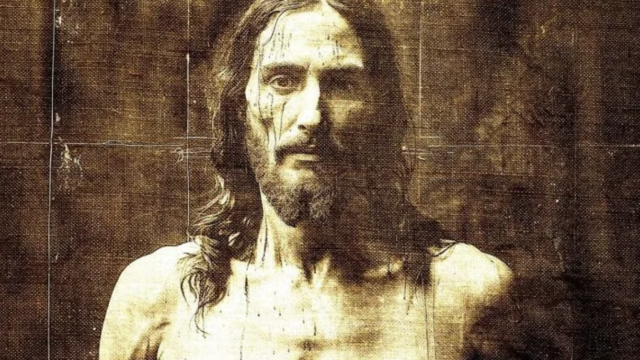
The Shroud of Turin — the burial relic in which Jesus Christ is supposed to have been wrapped after his crucifixion — has long been a source of fascination and contention. The cloth, which appears to bear the imprint of Christ’s body and is duly revered, was denounced by John Calvin as superstition during the Protestant Reformation. In the 1980s, a radiocarbon dating led to the widespread consensus that the shroud was medieval forgery.
But as of this week, Italian researchers have found using the latest technology that the cloth could in fact date from the life of Christ 2000 years ago, and could really contain a miraculous impression of his body and face. They conducted the study using a cutting-edge X-ray technique, the new imaging from which has since been reconstructed with AI to produce a highly realistic image of what Christ may have looked like.
Perhaps just as fascinating as the discovery itself is the fact that it disrupts the widely accepted narrative of technological progress: that, the more science advances, the more apparently supernatural phenomena will be explained away. In this view, technology is an inherently disenchanting force that will chase away the last fairies from the “great enchanted garden”. The revelations of Turin suggest the opposite. Instead of furthering cynicism, innovation has opened us to the possibility of miracles once again.
In one of his poems, John Keats described “unweav[ing] a rainbow”: breaking down all mysterious phenomena into rational explanations, and in doing so dispelling their magic. During the Enlightenment, this took the form of the historical-critical method, which exploited contemporary archeological and textual evidence to discredit Biblical narratives as they had been accepted in the Christian tradition. Biology and physics later became methods to cast doubt on the existence of God altogether. The conviction that all religious belief would be eliminated by scientific discovery reached its peak in the New Atheism of the 2000s, with Richard Dawkins using the phrase “unweaving the rainbow” to describe his confidence in the profaning power of science.
Continue reading at Unherd