
Long before the Gospels were written, Israel’s Scriptures spoke of a coming ruler, a
suffering servant Isaiah in a Renaissance fresco, not an ancient portrait. Source: Isaiah / Michelangelo / 1509 AD, Sistine Chapel, Vatican City
and hope reaching beyond one nation. Christians believe those promises converge in Jesus. The connections can be arresting: Isaiah in a Renaissance fresco, not an ancient portrait. Source: Isaiah / Michelangelo / 1509 AD, Sistine Chapel, Vatican CityThe suffering servant
Isaiah’s servant poem describes a rejected figure whose suffering benefits others and whose humiliation leads toward vindication. Christian interpretation identifies the servant with Jesus. Jewish and historical-critical readings also consider Israel collectively and figures within the poem’s ancient setting. The fresco illustrates the prophet Isaiah; it does not identify the servant’s historical appearance.Bethlehem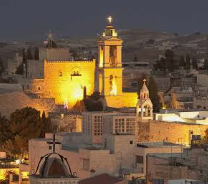 Bethlehem in a modern photograph. Source: Bethlehem at night, site media collection; photographer unrecorded
, a king riding a donkey, rejection, suffering and vindication. But what does it mean to say that Jesus fulfilled more than 300 messianic prophecies?12Bethlehem in a modern photograph. Source: Bethlehem at night, site media collection; photographer unrecordedBethlehem — David’s town
Bethlehem lies south of Jerusalem in the Judean hill country. Biblical tradition associates it with David; Matthew and Luke identify it as Jesus’ birthplace. Micah’s reference to Bethlehem Ephratah helps distinguish the Judean town from another Bethlehem in Galilee. Modern buildings and later pilgrimage traditions should not be mistaken for independent evidence identifying Jesus’ birth site.The strongest answer begins with the texts themselves. Read in context, they reveal a richer argument than a checklist: the Christian conviction that Jesus brings Israel’s long story of promise to its decisive turning point.
What Does ‘300 Prophecies’ Actually Count?
The familiar figure comes from Christian compilations of passages understood to point toward the
Messiah
. It is not a single, universally agreed inventory. Some lists count whole passages; others separate their individual details. They also combine predictions, royal promises, poetic descriptions and Messiah — The anointed one
The title comes from a Hebrew word meaning ‘anointed’; the Greek equivalent is Christos, the source of ‘Christ.’ Israel’s Scriptures describe anointed kings and priests, while later Jewish expectations took several forms. In this article, messianic interpretation concerns how Christians connect those promises and expectations with Jesus, rather than assuming every ancient reader expected precisely the same figure.typology
—earlier people or events understood as patterns fulfilled more fully in Jesus.Typology — A pattern brought to fulfillment
Typology reads earlier people, events or institutions as patterns given fuller significance in a later story. Matthew’s use of Israel’s exodus to explain Jesus’ return from Egypt is a clear example. It differs from a direct prediction: the earlier passage can concern a real past event while the later author sees that event’s pattern repeated.That distinction matters. Several details drawn from one poem are not automatically several independent predictions. A credible case identifies each passage, explains its original setting and shows exactly how the New Testament applies it. The number introduces the subject; the quality of the connections carries the argument.
Ancient Words, Not Christian Additions
The
Dead Sea Scrolls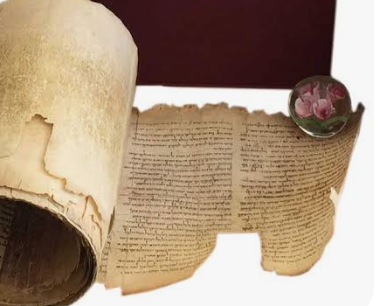 A Hebrew scroll in the site’s image collection. Source: Great Isaiah Scroll, site media collection; photographer unrecorded
, discovered in caves near A Hebrew scroll in the site’s image collection. Source: Great Isaiah Scroll, site media collection; photographer unrecordedDead Sea Scrolls — A pre-Christian textual world
These ancient Jewish manuscripts preserve biblical books alongside commentaries, community writings and other religious texts. The best-known discoveries came from caves near Qumran beginning in 1947 AD. Their dates range across the centuries around Jesus’ lifetime. They document the transmission and interpretation of Jewish Scripture; they are not Christian eyewitness accounts of Jesus.Qumran
, give the discussion a tangible starting point. The Qumran — The scrolls’ discovery landscape
Qumran is an archaeological site beside the northwestern Dead Sea, close to caves that yielded ancient Jewish manuscripts. The first discoveries in 1947 AD included the Great Isaiah Scroll. The caves, settlement and individual manuscripts must be distinguished: finding a text nearby establishes its archaeological context, not that every text originated with one community.Great Isaiah Scroll
was copied during the 2nd Century BC. Its copy of Isaiah, including the suffering-servant passage, therefore predates Jesus.34Great Isaiah Scroll — 1QIsaᵃ
This nearly complete Hebrew copy of Isaiah was discovered in Qumran Cave 1 in 1947 AD. Copied in the 2nd Century BC, it includes the servant poem now numbered Isaiah 52:13–53:12. Its antiquity establishes that the passage existed before Christianity. Identifying its servant with Jesus remains an interpretive argument rather than a conclusion supplied by the manuscript’s age alone.This establishes something important: Christians did not invent those words after the crucifixion. It does not, by itself, settle whom every passage describes. A manuscript’s age establishes that a text existed; interpretation explains its meaning. Keeping those questions distinct strengthens an honest investigation.

Bethlehem and the Unexpected King
Micah 5:2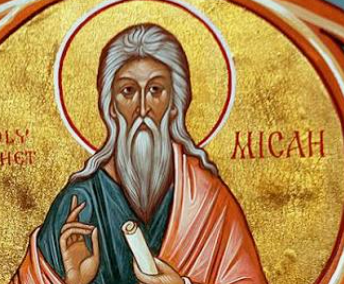 Micah in a later devotional icon. Source: Micah the Prophet, site media collection; creator and date unrecorded
Micah associates a coming ruler with Bethlehem Ephratah. Matthew applies the passage to Jesus’ birthplace. The verse’s meaning within Micah and its later Christian interpretation are related questions, but they should not be treated as identical.
locates a future ruler’s origins in Bethlehem, the town associated with Micah in a later devotional icon. Source: Micah the Prophet, site media collection; creator and date unrecordedMicah 5:2 — KJV
“2 But thou, Bethlehem Ephratah, though thou be little among the thousands of Judah, yet out of thee shall he come forth unto me that is to be ruler in Israel; whose goings forth have been from of old, from everlasting.”
Micah associates a coming ruler with Bethlehem Ephratah. Matthew applies the passage to Jesus’ birthplace. The verse’s meaning within Micah and its later Christian interpretation are related questions, but they should not be treated as identical.
David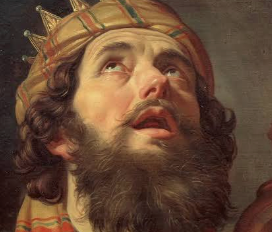 David in a later devotional painting. Source: King David, detail, site media collection; creator and date unrecorded
. David in a later devotional painting. Source: King David, detail, site media collection; creator and date unrecordedDavid — Royal ancestry and expectation
The biblical king David is associated with Bethlehem and the establishment of a dynasty in Jerusalem. Later hopes for a ruler from his line helped shape Jewish messianic expectations. Matthew and Luke connect Jesus with David through genealogies and birth narratives. Within the Gospels, this connection expresses a claim about Jesus’ identity as the promised Davidic ruler.Matthew 2:1–6 The Nativity flanked by two prophets in medieval art. Source: The Nativity with the Prophets Isaiah and Ezekiel / Duccio di Buoninsegna / 1308–1311 AD, National Gallery of Art, Washington, United States
Matthew reports Jesus’ birth in Bethlehem and tells how the chief priests and scribes answer Herod’s question by appealing to Scripture. Their quotation combines Micah’s ruler language with the imagery of governing Israel. This is Matthew’s narrative evidence for the connection, not an independent archaeological identification.
explicitly connects this passage with Jesus’ birthplace. The phrase “out of thee shall he come forth unto me” places a seemingly minor town at the center of a much larger hope.1The Nativity flanked by two prophets in medieval art. Source: The Nativity with the Prophets Isaiah and Ezekiel / Duccio di Buoninsegna / 1308–1311 AD, National Gallery of Art, Washington, United StatesMatthew 2:1–6 — KJV excerpt
“1 Now when Jesus was born in Bethlehem of Judaea in the days of Herod the king, behold, there came wise men from the east to Jerusalem,
…
5 And they said unto him, In Bethlehem of Judaea: for thus it is written by the prophet,
6 And thou Bethlehem, in the land of Juda, art not the least among the princes of Juda: for out of thee shall come a Governor, that shall rule my people Israel.”
…
5 And they said unto him, In Bethlehem of Judaea: for thus it is written by the prophet,
6 And thou Bethlehem, in the land of Juda, art not the least among the princes of Juda: for out of thee shall come a Governor, that shall rule my people Israel.”
Matthew reports Jesus’ birth in Bethlehem and tells how the chief priests and scribes answer Herod’s question by appealing to Scripture. Their quotation combines Micah’s ruler language with the imagery of governing Israel. This is Matthew’s narrative evidence for the connection, not an independent archaeological identification.
Later,
Zechariah 9:9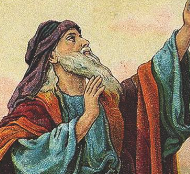 Zechariah in a later illustration. Source: Zechariah, site media collection; creator and date unrecorded
The king arrives humbly on a donkey. Matthew presents Jesus’ entry as enacting this royal image. The accompanying illustration is a later representation of the prophet, not a contemporary portrait or independent evidence for the Gospel event.
pictures Jerusalem’s king arriving humbly on a donkey. Zechariah in a later illustration. Source: Zechariah, site media collection; creator and date unrecordedZechariah 9:9 — KJV
“9 Rejoice greatly, O daughter of Zion; shout, O daughter of Jerusalem: behold, thy King cometh unto thee: he is just, and having salvation; lowly, and riding upon an ass, and upon a colt the foal of an ass.”
The king arrives humbly on a donkey. Matthew presents Jesus’ entry as enacting this royal image. The accompanying illustration is a later representation of the prophet, not a contemporary portrait or independent evidence for the Gospel event.
Matthew 21:1–9 A medieval interpretation of Jesus’ arrival in Jerusalem. Source: Entry into Jerusalem / Giotto di Bondone / circa 1303–1305 AD, Scrovegni Chapel, Padua, Italy
Matthew explicitly connects Jesus’ entry with prophetic language about a humble king. The scene communicates a royal claim through public action. Giotto’s fresco shows its medieval reception; it is not a record made by an eyewitness.
presents Jesus’ entry into Jerusalem through that lens. The description “lowly, and riding upon an ass” gives royal authority a deliberately surprising form.2A medieval interpretation of Jesus’ arrival in Jerusalem. Source: Entry into Jerusalem / Giotto di Bondone / circa 1303–1305 AD, Scrovegni Chapel, Padua, ItalyMatthew 21:1–9 — KJV excerpt
“… 4 All this was done, that it might be fulfilled which was spoken by the prophet, saying,
5 Tell ye the daughter of Sion, Behold, thy King cometh unto thee, meek, and sitting upon an ass, and a colt the foal of an ass.
…
9 And the multitudes that went before, and that followed, cried, saying, Hosanna to the son of David: Blessed is he that cometh in the name of the Lord; Hosanna in the highest.”
Matthew explicitly connects Jesus’ entry with prophetic language about a humble king. The scene communicates a royal claim through public action. Giotto’s fresco shows its medieval reception; it is not a record made by an eyewitness.
The examples also require different historical questions. The birth accounts supply the evidence for Bethlehem; Jerusalem’s entry is presented as a deliberate public action. Jesus’ conscious enactment of a prophetic image can express a messianic claim, although it has a different evidential role from circumstances beyond his control.
Isaiah 53: Suffering at the Heart of the Promise
The servant poem in
Isaiah 52:13–53:12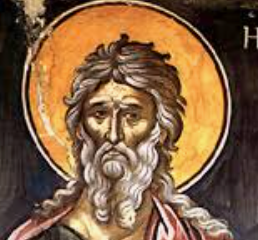 Isaiah in later devotional art. Source: Isaiah, detail, site media collection; creator and date unrecorded
These selected verses describe the servant’s exaltation and suffering on behalf of others. The gaps are marked with ellipses. Christians identify the servant with Jesus; Jewish and historical-critical interpretations differ.
brings the Christian argument into sharp focus. Its servant faces rejection, bears others’ suffering and is ultimately exalted. Its words “he was wounded for our transgressions” make the suffering personal. The startling movement is from humiliation toward vindication, with suffering understood to benefit others.Isaiah in later devotional art. Source: Isaiah, detail, site media collection; creator and date unrecordedIsaiah 52:13–53:12 — KJV excerpt
“52:13 Behold, my servant shall deal prudently, he shall be exalted and extolled, and be very high.
…
53:5 But he was wounded for our transgressions, he was bruised for our iniquities: the chastisement of our peace was upon him; and with his stripes we are healed.
53:6 All we like sheep have gone astray; we have turned every one to his own way; and the LORD hath laid on him the iniquity of us all.”
These selected verses describe the servant’s exaltation and suffering on behalf of others. The gaps are marked with ellipses. Christians identify the servant with Jesus; Jewish and historical-critical interpretations differ.
The New Testament repeatedly returns to this portrait.
Luke 22:37 Luke in a later devotional painting. Source: Luke the Evangelist / Jan Jansz. de Stomme / 17th Century AD
Luke presents Jesus applying the language of Isaiah’s servant to his coming suffering. The connection is made within the Gospel itself; it is not a modern comparison imposed on an otherwise unrelated passage.
presents Jesus applying Luke in a later devotional painting. Source: Luke the Evangelist / Jan Jansz. de Stomme / 17th Century ADLuke 22:37 — KJV
“37 For I say unto you, that this that is written must yet be accomplished in me, And he was reckoned among the transgressors: for the things concerning me have an end.”
Luke presents Jesus applying the language of Isaiah’s servant to his coming suffering. The connection is made within the Gospel itself; it is not a modern comparison imposed on an otherwise unrelated passage.
Isaiah 53:12 A later Christian representation of the crucifixion. Source: Crucifixion Diptych / Rogier van der Weyden / circa 1460 AD, Philadelphia Museum of Art, Philadelphia, United States
The servant pours out his life, bears the sins of many and intercedes for transgressors. Luke applies the language of being numbered with transgressors to Jesus. Read with the surrounding poem, the verse unites suffering, intercession and vindication.
to himself. In A later Christian representation of the crucifixion. Source: Crucifixion Diptych / Rogier van der Weyden / circa 1460 AD, Philadelphia Museum of Art, Philadelphia, United StatesIsaiah 53:12 — KJV
“12 Therefore will I divide him a portion with the great, and he shall divide the spoil with the strong; because he hath poured out his soul unto death: and he was numbered with the transgressors; and he bare the sin of many, and made intercession for the transgressors.”
The servant pours out his life, bears the sins of many and intercedes for transgressors. Luke applies the language of being numbered with transgressors to Jesus. Read with the surrounding poem, the verse unites suffering, intercession and vindication.
Acts 8:30–35 A later interpretation of Philip and the Ethiopian official. Source: The Baptism of the Eunuch / Rembrandt van Rijn / 1626 AD, Museum Catharijneconvent, Utrecht, Netherlands
The Ethiopian reader asks whom Isaiah’s servant passage describes. Philip makes that question his starting point for explaining Jesus. Acts thus preserves an explicit early Christian reading of the poem rather than merely an accidental resemblance in wording.
, A later interpretation of Philip and the Ethiopian official. Source: The Baptism of the Eunuch / Rembrandt van Rijn / 1626 AD, Museum Catharijneconvent, Utrecht, NetherlandsActs 8:30–35 — KJV excerpt
“… 32 The place of the scripture which he read was this, He was led as a sheep to the slaughter; and like a lamb dumb before his shearers, so opened he not his mouth:
…
34 And the eunuch answered Philip, and said, I pray thee, of whom speaketh the prophet this? of himself, or of some other man?
35 Then Philip opened his mouth, and began at the same scripture, and preached unto him Jesus.”
…
34 And the eunuch answered Philip, and said, I pray thee, of whom speaketh the prophet this? of himself, or of some other man?
35 Then Philip opened his mouth, and began at the same scripture, and preached unto him Jesus.”
The Ethiopian reader asks whom Isaiah’s servant passage describes. Philip makes that question his starting point for explaining Jesus. Acts thus preserves an explicit early Christian reading of the poem rather than merely an accidental resemblance in wording.
Philip
explains Jesus through the servant passage. Philip — The evangelist in Acts
Acts portrays Philip explaining Isaiah’s servant passage to an Ethiopian official. He is conventionally distinguished from Philip the apostle: Acts later identifies an evangelist named Philip as one of the Seven. The shared name does not make the two figures interchangeable. This scene emphasizes his explanation of Jesus through Scripture.1 Peter 2:21–25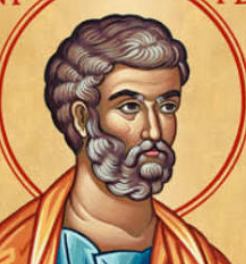 Peter in a later devotional icon. Source: Peter the Apostle, site media collection; creator and date unrecorded
First Peter draws on Isaiah’s language of sin-bearing and healing. Its immediate concern is also ethical: Christ’s response to unjust suffering becomes a pattern for believers. The passage gives the servant poem a Christ-centered interpretation rather than identifying an archaeological object.
draws on its language to describe Christ’s suffering and its meaning for believers. Zondervan Academic surveys these connections.6Peter in a later devotional icon. Source: Peter the Apostle, site media collection; creator and date unrecorded1 Peter 2:21–25 — KJV
“21 For even hereunto were ye called: because Christ also suffered for us, leaving us an example, that ye should follow his steps:
22 Who did no sin, neither was guile found in his mouth:
23 Who, when he was reviled, reviled not again; when he suffered, he threatened not; but committed himself to him that judgeth righteously:
24 Who his own self bare our sins in his own body on the tree, that we, being dead to sins, should live unto righteousness: by whose stripes ye were healed.
25 For ye were as sheep going astray; but are now returned unto the Shepherd and Bishop of your souls.”
First Peter draws on Isaiah’s language of sin-bearing and healing. Its immediate concern is also ethical: Christ’s response to unjust suffering becomes a pattern for believers. The passage gives the servant poem a Christ-centered interpretation rather than identifying an archaeological object.
New Testament scholar Darrell Bock puts the Christian reading plainly: “Jesus fits the portrait.” He emphasizes the servant’s rejection, suffering for others and subsequent exaltation. Within that reading, the cross becomes central to the Messiah’s mission, giving apparent defeat a redemptive meaning.7
Christians find the convergence compelling: the rejected figure becomes the means of reconciliation. Jewish interpretation, however, includes readings that identify the servant with Israel;
Rashi
provides an influential example. The disagreement concerns how the poem’s servant relates to its wider setting and whether Jesus supplies its fullest realization.8Rashi — A Jewish reading of Isaiah
Rashi is the traditional name of the medieval Jewish commentator Rabbi Shlomo Yitzchaki. His commentary reads Isaiah’s servant in relation to Israel and the nations’ response to Israel’s suffering. This is an influential Jewish interpretation, not the only Jewish reading of every servant passage. It differs from the Christian identification of the servant with Jesus.Psalm 22: The Prayer Heard at the Cross
The opening of
Psalm 22:1 David in a later artistic meditation on a psalm. Source: David / Frederic Leighton / 1865 AD, Cleveland Museum of Art, Cleveland, United States
The psalm opens with a sufferer’s anguished address to God. Mark records Jesus using its opening words at the crucifixion. The complete psalm later turns toward praise; quoting its first line should not erase that wider movement.
is unforgettable: “My God, my God, why hast thou forsaken me?” David in a later artistic meditation on a psalm. Source: David / Frederic Leighton / 1865 AD, Cleveland Museum of Art, Cleveland, United StatesPsalm 22:1 — KJV
“1 My God, my God, why hast thou forsaken me? why art thou so far from helping me, and from the words of my roaring?”
The psalm opens with a sufferer’s anguished address to God. Mark records Jesus using its opening words at the crucifixion. The complete psalm later turns toward praise; quoting its first line should not erase that wider movement.
Mark 15:34 A later Christian meditation on Jesus’ crucifixion. Source: Christ Crucified / Diego Velázquez / circa 1632 AD, Museo Nacional del Prado, Madrid, Spain
Mark records Jesus quoting the opening of Psalm 22 during the crucifixion and supplies a translation for the reader. The connection is explicit in the narrative. Its historical implications require assessment alongside the Gospel’s sources, setting and use of Scripture.
places those words on Jesus’ lips. The psalm also describes mockery and the division of clothing in A later Christian meditation on Jesus’ crucifixion. Source: Christ Crucified / Diego Velázquez / circa 1632 AD, Museo Nacional del Prado, Madrid, SpainMark 15:34 — KJV
“34 And at the ninth hour Jesus cried with a loud voice, saying, Eloi, Eloi, lama sabachthani? which is, being interpreted, My God, my God, why hast thou forsaken me?”
Mark records Jesus quoting the opening of Psalm 22 during the crucifixion and supplies a translation for the reader. The connection is explicit in the narrative. Its historical implications require assessment alongside the Gospel’s sources, setting and use of Scripture.
Psalm 22:18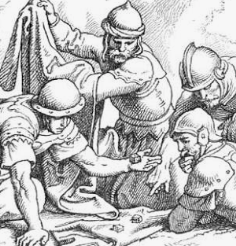 Soldiers divide clothing in a later biblical illustration. Source: Dividing the garments, site media collection; creator and date unrecorded
The speaker describes others dividing his clothing and casting lots. The Passion narratives echo this language. That literary relationship is clear; historians also ask how earlier Scripture shaped the accounts and what independent evidence supports particular details.
, details echoed in the Passion narratives.1Soldiers divide clothing in a later biblical illustration. Source: Dividing the garments, site media collection; creator and date unrecordedPsalm 22:18 — KJV
“18 They part my garments among them, and cast lots upon my vesture.”
The speaker describes others dividing his clothing and casting lots. The Passion narratives echo this language. That literary relationship is clear; historians also ask how earlier Scripture shaped the accounts and what independent evidence supports particular details.
Yet the poem moves beyond abandonment toward praise and a widening vision of worship. Christian readers hear that larger movement alongside the crucifixion: suffering does not receive the final word. Because the Gospel writers knew the psalm, historians must also consider how Scripture shaped their telling. The literary connection is clear; assessing its historical implications requires further judgment.

Reading Fulfillment as the First Christians Did
The Qumran
Testimonia
shows that gathering scriptural passages around future expectations was already part of Jewish interpretation. The University of Southern California’s West Semitic Research Project explains that this pre-Christian manuscript includes passages concerning a prophet, a royal Messiah and a priestly Messiah. Expectations were more varied than one standardized checklist.9Testimonia — Scripture gathered around expectation
The manuscript known as 4Q175 brings several scriptural passages together with interpretation. Found in Qumran Cave 4, it is a Jewish text, not a Christian report about Jesus. Its combination of prophetic, royal and priestly material illustrates the variety of expectations that circulated before Christianity. It does not establish that every Jewish group shared one messianic scheme.Matthew’s use of Scripture is equally worth slowing down for.
Hosea 11:1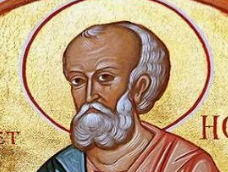 Hosea in a later devotional icon. Source: Hosea, site media collection; creator and date unrecorded
Hosea looks back to God’s love for Israel and the exodus from Egypt. In its immediate context, the son is Israel. Matthew interprets Jesus’ experience through that earlier pattern; acknowledging Hosea’s original reference makes the typological connection clearer.
recalls Israel’s exodus from Egypt; Hosea in a later devotional icon. Source: Hosea, site media collection; creator and date unrecordedHosea 11:1 — KJV
“1 When Israel was a child, then I loved him, and called my son out of Egypt.”
Hosea looks back to God’s love for Israel and the exodus from Egypt. In its immediate context, the son is Israel. Matthew interprets Jesus’ experience through that earlier pattern; acknowledging Hosea’s original reference makes the typological connection clearer.
Matthew 2:15 The Holy Family’s flight in a medieval fresco. Source: Flight into Egypt / Giotto di Bondone / circa 1303–1305 AD, Scrovegni Chapel, Padua, Italy
Matthew applies Hosea’s language about Israel to Jesus. This is a typological reading: Jesus’ return from Egypt echoes the earlier history of God’s people. The quotation does not require Hosea’s original sentence to have been only a prediction of an individual child’s journey.
applies its language to Jesus’ return from Egypt. Hosea’s words, “called my son out of Egypt”, first describe Israel. This is typology: Jesus recapitulates Israel’s story.The Holy Family’s flight in a medieval fresco. Source: Flight into Egypt / Giotto di Bondone / circa 1303–1305 AD, Scrovegni Chapel, Padua, ItalyMatthew 2:15 — KJV
“15 And was there until the death of Herod: that it might be fulfilled which was spoken of the Lord by the prophet, saying, Out of Egypt have I called my son.”
Matthew applies Hosea’s language about Israel to Jesus. This is a typological reading: Jesus’ return from Egypt echoes the earlier history of God’s people. The quotation does not require Hosea’s original sentence to have been only a prediction of an individual child’s journey.
Isaiah 7:14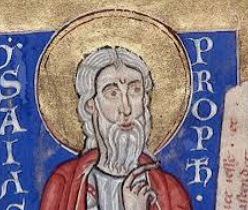 Isaiah in a later representation. Source: Isaiah, detail, site media collection; creator and date unrecorded
The KJV uses the word “virgin”; interpreting the verse also requires attention to the Hebrew word almah, its Greek translation and Isaiah’s address to Ahaz. Matthew applies the sign to Jesus’ birth; the passage’s original historical setting should remain part of the discussion.
raises a translation question. The NET Bible’s translators explain that Hebrew Isaiah in a later representation. Source: Isaiah, detail, site media collection; creator and date unrecordedIsaiah 7:14 — KJV
“14 Therefore the Lord himself shall give you a sign; Behold, a virgin shall conceive, and bear a son, and shall call his name Immanuel.”
The KJV uses the word “virgin”; interpreting the verse also requires attention to the Hebrew word almah, its Greek translation and Isaiah’s address to Ahaz. Matthew applies the sign to Jesus’ birth; the passage’s original historical setting should remain part of the discussion.
almah
means a young woman and does not inherently specify virginity. Almah — The Hebrew wording
The Hebrew noun almah means a young woman. It does not inherently specify virginity; context and translation must also be considered.Matthew 1:23Mary and Jesus in medieval devotional art. Source: Ognissanti Madonna / Giotto di Bondone / circa 1310 AD, Uffizi Galleries, Florence, Italy
Matthew quotes Isaiah while explaining Jesus’ birth and interprets Emmanuel as “God with us.” His wording reflects the Greek tradition. The quotation therefore belongs both to the Gospel’s claim about Jesus and to the history of interpreting Isaiah’s earlier sign.
follows the Greek Mary and Jesus in medieval devotional art. Source: Ognissanti Madonna / Giotto di Bondone / circa 1310 AD, Uffizi Galleries, Florence, ItalyMatthew 1:23 — KJV
“23 Behold, a virgin shall be with child, and shall bring forth a son, and they shall call his name Emmanuel, which being interpreted is, God with us.”
Matthew quotes Isaiah while explaining Jesus’ birth and interprets Emmanuel as “God with us.” His wording reflects the Greek tradition. The quotation therefore belongs both to the Gospel’s claim about Jesus and to the history of interpreting Isaiah’s earlier sign.
Septuagint
wording using Septuagint — Jewish Scripture in Greek
The Septuagint is the ancient Greek translation tradition of Jewish Scripture. Its wording underlies many New Testament quotations. Here it helps explain Matthew’s use of parthenos when citing Isaiah.parthenos
, conventionally translated ‘virgin.’ Christians read a fuller fulfillment in Jesus, while the original sign also belongs to Isaiah’s address to Parthenos — The Greek wording
Parthenos is the Greek term conventionally translated ‘virgin’ in Matthew’s quotation of Isaiah. It differs from the underlying Hebrew word almah.King Ahaz
.10Ahaz — Isaiah’s immediate audience
Ahaz was a king of Judah addressed by Isaiah during a threat to Jerusalem from rival kingdoms. The sign in Isaiah 7 belongs to that immediate crisis. Christian interpretation also relates its wording to Jesus through Matthew. Keeping the original audience in view helps distinguish a passage’s first setting from a claim about its fuller significance.Where the Evidence Leads
For Christians, these passages form a cumulative case: Davidic hope, a humble king, redemptive suffering and vindication come together in Jesus. Their force lies in the relationship between the ancient texts and the Gospel portrait, considered alongside the historical case for Jesus’ life, death and resurrection.
Turning that case into spectacular odds requires assumptions about probabilities and independence that a long list alone cannot justify. Careful reading offers firmer ground. Read the passages, follow their contexts and consider why the first Christians found Jesus there. The enduring question is whether he makes coherent sense of promises that had been waiting for an answer.
Sources
- King James Version. Biblical passages quoted in this article. Read source. ↩ ↩ ↩
- Balloon artwork and photographs. Existing site illustrations are credited to the site media collection where creator or date is unrecorded. Historical artworks and their catalogues: Michelangelo, Isaiah; Duccio, Nativity with prophets; Giotto, Entry into Jerusalem; Jan Jansz. de Stomme, Luke; Rogier van der Weyden, Crucifixion Diptych; Rembrandt, Baptism of the Eunuch; Frederic Leighton, David; Giotto, Flight into Egypt; Giotto, Ognissanti Madonna; Diego Velázquez, Christ Crucified. ↩ ↩
- Israel Antiquities Authority, Introduction to the Dead Sea Scrolls. Discovery, manuscript materials, languages and chronology. Read source. ↩
- The Schøyen Collection, MS 1926/1, The Great Isaiah Dead Sea Scroll. Description, dating and relationship to 1QIsaᵃ. Read source. ↩
- Manuscript photographs: Great Isaiah Scroll, chapter 53, Ardon Bar Hama, Israel Museum; 4Q175, source: West Semitic Research Project. Public-domain reproductions. Isaiah manuscript image; 4Q175 image. ↩ ↩
- Zondervan Academic, The Suffering Servant in Isaiah 53. Christian interpretation and New Testament connections. Read source. ↩
- Matt Smethurst, The Suffering Servant and Isaiah 53: A Conversation with Darrell Bock, The Gospel Coalition, April 5, 2012. Read source. ↩
- Rashi’s commentary on Isaiah 53, presented with the Hebrew text and English translation by Chabad.org. Read source. ↩
- University of Southern California, West Semitic Research Project, Testimonia. Interpretation and dating of 4Q175. Read source. ↩
- NET Bible, Isaiah 7:14, translator’s notes on the Hebrew wording, Greek translation and historical setting. Read source. ↩
