Passages from Isaiah 53:5 confirming the prophecy of the crucifixion of Christ 125 years before the event and Edersheim’s cataloging of 456 Old Testament passages Raddis apply to the Messiah, including Isaiah 53.
Think of the mind-bloggling chances of hundreds of prophecies of Christ coming true years, decades and centuries later. A few would be perhaps a coincidence – but 456 is overwhelmingly an open and shut case.
Isaiah 53:5 Pre-dates Christ
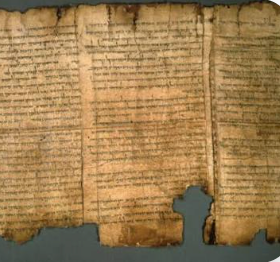
Great Isaiah Scroll (1QIsaa), Dead Sea Scrolls, ~125 BCE“He was pierced for our transgressions; he was crushed for our iniquities; upon him was the chastisement that brought us peace, and with his wounds we are healed… He was cut off out of the land of the living, stricken for the transgression of my people.”This passage (Isaiah 53:5, 8b, ESV) appears verbatim in the Great Isaiah Scroll, carbon-dated to ~125 BCE — at minimum 125 years before the crucifixion of Jesus. The scroll was discovered in Cave 1 at Qumran in 1947 and is housed at the Shrine of the Book, Jerusalem.Evidence: Archaeological (Dead Sea Scroll 1QIsaa); Carbon-14 dating by the University of Arizona and ETH Zürich. File Under: The Bible › Fulfilled Prophecies › Messianic
456 Messianic Passages Applied by Rabbis

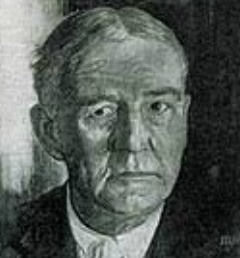
Alfred Edersheim (1825–1889) — Jewish-born Oxford scholar
“The most important point here is to ascertain what, at the time of Jesus, was the accepted Jewish interpretation [of Isaiah 53]… and this will be best learned from a reference to the Targum of Jonathan on the Prophets, and to early Rabbinic writings.”Author The Life and Times of Jesus the Messiah (1883). In his landmark Appendix IX, Edersheim catalogued 456 Old Testament passages the Rabbis had historically applied to the Messiah or to the Messianic age, including Isaiah 53.Evidence: Textual/Rabbinical (Edersheim, The Life and Times of Jesus the Messiah, 1883, Appendix IX). File Under: The Bible › Fulfilled Prophecies › Messianic
Great Isaiah Scroll Is Identical to Bible
Millar Burrows, Ph.D. (1889–1980), Yale University“It is a matter of wonder that through something like a thousand years the text of Jeremiah [and Isaiah] underwent so little alteration… The general similarity of the Isaiah scroll to the Masoretic text is remarkable.”Editor, The Dead Sea Scrolls (1955). Burrows oversaw the first scholarly examination of the Great Isaiah Scroll (1QIsaa) and compared it to the Masoretic Text used in modern translations. He found the two versions differed in only minor, non-doctrinally-significant variants across all 66 chapters — a textual gap of approximately 1,000 years. This confirmed the reliability of the Old Testament transmission. Evidence: Textual-critical analysis (Burrows, The Dead Sea Scrolls, Viking Press, 1955, pp. 301–306). [Ontology: The Bible > Fulfilled Prophecies > Messianic]

Odds of Coincidental Prophetic Fulfillment

Peter W. Stoner, Chairman, Mathematics & Astronomy
“We find that the chance that any man might have lived down to the present time and fulfilled all eight prophecies is 1 in 1017.”Stoner (1888–1980) applied principles of probability to eight specific Messianic prophecies and calculated that the probability of one person fulfilling all eight by chance is 1 in 1017. His work was reviewed by the American Scientific Affiliation and found to be sound in methodology.Evidence: Mathematical probability analysis; Peer-reviewed by ASA Executive Council (Science Speaks, Chapter 3, 1963). File Under: The Bible › Fulfilled Prophecies › Messianic
Psalm 22 — Written Before Crucifixion Existed
J. Barton Payne, professor of Old Testament, Covenant Theological Seminary“Psalm 22 presents one of the most remarkable cases of predictive prophecy in the entire Old Testament. Written approximately 1,000 years before the crucifixion, it describes death by exposure and public mockery in terms that are inexplicable apart from divine foreknowledge.”This represents Payne’s documented scholarly position in Encyclopedia of Biblical Prophecy (1973, pp. 257–264), where he catalogues 1,239 prophetic verses in the Old Testament and identifies Psalm 22 as one of the clearest Messianic fulfillments.Evidence: Textual-historical (Payne, Encyclopedia of Biblical Prophecy, 1973). File Under: The Bible › Fulfilled Prophecies › Messianic
Psalm 22:1 – “Why Have You Forsaken Me?”
Craig A. Evans, Ph.D., professor, Acadia Divinity College“When Jesus cried from the cross ‘My God, my God, why have you forsaken me?’ (Mark 15:34), he was quoting the opening verse of Psalm 22. To a Jewish audience familiar with the Psalms, this was an implicit claim that the entire Psalm — including its unexpected vindication at the close — was being enacted in his death.”Evans’s observation reflects broad scholarly consensus that Jesus’s Aramaic cry Eloi, Eloi, lama sabachthani (Mark 15:34) is a quotation of Psalm 22:1 — and that Psalm 22 functions as a “passion narrative in miniature.”Evidence: Textual (Psalm 22:1 vs. Mark 15:34); Contextual (Evans, WBC, 2001). File Under: The Bible › Fulfilled Prophecies › Messianic

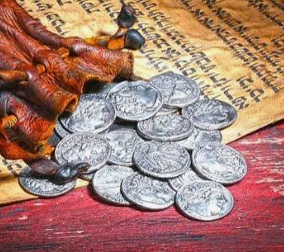
Zechariah 11:12–13 – 30 Pieces of Silver
Zechariah 11:12–13 — written c. 520–518 BCE; fulfilled in Matthew“Then I said to them, ‘If it seems good to you, give me my wages; but if not, keep them.’ And they weighed out as my wages thirty pieces of silver. Then the LORD said to me, ‘Throw it to the potter’ — the lordly price at which I was priced by them.”Matthew 26:15 records the chief priests paying Judas exactly 30 silver pieces. After Judas returned the money (Matthew 27:3–5), the priests used it to purchase a potter’s field — fulfilling Zechariah 11:13 in both the specific amount and the specific use.Evidence: Direct textual fulfillment (Zechariah 11:12–13 vs. Matthew 26:15; 27:3–10). File Under: The Bible › Fulfilled Prophecies › Messianic
Isaiah 7:14 – Born of a Virgin
The Virgin – Isaiah 7:14; fulfilled, Matthew 1:22–23“Therefore the Lord himself will give you a sign. Behold, the virgin shall conceive and bear a son, and shall call his name Immanuel.”The Hebrew word almah (young woman/virgin) was rendered as parthenos (virgin) in the Septuagint (LXX, c. 250 BCE) — before Jesus’s birth. Matthew 1:23 cites the LXX rendering explicitly. The LXX translation is significant because it was a pre-Christian Jewish decision to use the Greek word for “virgin.”Evidence: Textual (Isaiah 7:14, LXX; Matthew 1:22–23). File Under: The Bible › Fulfilled Prophecies › Messianic

Isaiah 53 Pre-dates Christ by more than a century
Great Isaiah Scroll (1QIsaa), Dead Sea Scrolls, ~125 BCE — Israel Museum, Jerusalem“He was pierced for our transgressions; he was crushed for our iniquities; upon him was the chastisement that brought us peace, and with his wounds we are healed… He was cut off out of the land of the living, stricken for the transgression of my people.” This passage (Isaiah 53:5, 8b, ESV) appears verbatim in the Great Isaiah Scroll, carbon-dated to ~125 BCE — at minimum 125 years before the crucifixion of Jesus. The scroll was discovered in Cave 1 at Qumran in 1947 and is housed at the Shrine of the Book, Jerusalem. Evidence: Archaeological (Dead Sea Scroll 1QIsaa); Carbon-14 dating by the University of Arizona and ETH Zürich. [Ontology: The Bible > Fulfilled Prophecies > Messianic]
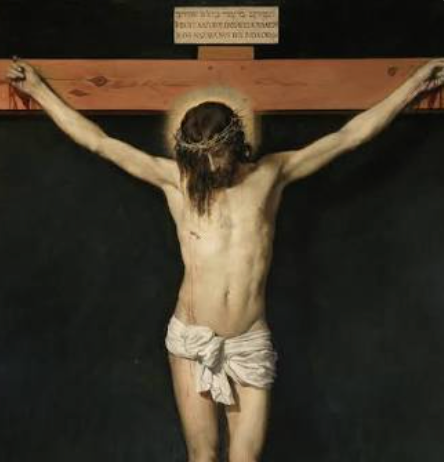
Psalm 22:16 – ‘They Have Pierced My Hands and Feet’
Psalm 22:16b — c. 1000 BCE; fulfilled Luke 23:33; John 20:24–28“For dogs encompass me; a company of evildoers encircles me; they have pierced my hands and feet — I can count all my bones — they stare and gloat over me.”The Hebrew of Psalm 22:16 reads ka’aru (“pierced/dug through”) in the Dead Sea Scroll version (Psalms Scroll, 11QPsa) and is rendered “pierced” in the Septuagint (LXX) — both pre-dating the crucifixion. The Masoretic text reads ka’ari (“like a lion”), a textual variant that is contested; the Qumran reading supports “pierced.” John 20:25–27 records Thomas handling the nail wounds. Evidence: Textual (Psalm 22:16; Dead Sea Scrolls 11QPsa; LXX; fulfilled: Luke 23:33; John 20:25–27); Archaeological (Jehohanan crucifixion victim’s heel bone with nail, Giv’at HaMivtar, 1968). [Ontology: The Bible > Fulfilled Prophecies > Messianic]

Zechariah 12:10 – ‘Whom They Have Pierced’
Zechariah 12:10 — c. 520 BCE; fulfilled John 19:34, 37 (c. 30 AD)“And I will pour out on the house of David and the inhabitants of Jerusalem a spirit of grace and pleas for mercy, so that, when they look on me, on him whom they have pierced.”Zechariah 12:10 uses the first person divine voice (“they have pierced me“) — a theologically extraordinary statement. John 19:34 records the Roman soldier piercing Jesus’s side with a spear, and John 19:37 explicitly cites Zechariah 12:10 as fulfilled. The verse also appears in Revelation 1:7 as a future eschatological fulfillment. Evidence: Direct textual (Zechariah 12:10 vs. John 19:34–37); John’s own fulfillment citation; corroborated by Revelation 1:7. [Ontology: The Bible > Fulfilled Prophecies > Messianic]

Psalm 22:16-18 – SUFFERING, PIERCING, AND DIVIDED GARMENTS
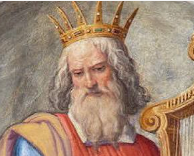
David, king of Israel and traditional psalmist“They pierced my hands and my feet. I may tell all my bones: they look and stare upon me. They part my garments among them, and cast lots upon my vesture.”Christians see Psalm 22 as one of the strongest passion-text connections because the Gospels describe Jesus’ public suffering, His garments being divided, and lots cast for His clothing. Claimed fulfillment: Matthew 27:35; John 19:23–24. OT source: Psalm 22:16–18. The wording of verse 16 has an important Hebrew textual-translation debate, though “they pierced” is supported by ancient textual traditions. [Ontology: The Bible > Fulfilled Prophecies > Messiah: Suffering and Crucifixion]
1 / 20