Jesus Predicts Temple’s Destruction
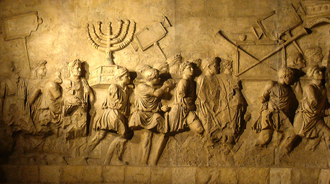
Matthew 24:1–2 — spoken c. 30 AD; fulfilled 70 AD“Jesus left the temple and was going away, when his disciples came to point out to him the buildings of the temple. But he answered them, ‘You see all these, do you not? Truly, I say to you, there will not be left here one stone upon another that will not be thrown down.'”In 70 AD, Roman legions under Titus razed the Jerusalem Temple. Josephus (Jewish War VII.1.1) records the total destruction. The Arch of Titus in Rome depicts the plunder, including the menorah carried from the Temple.Evidence: Textual (Matthew 24:1–2 vs. Josephus, Jewish War VII.1.1); Archaeological (Arch of Titus, Rome, 81 AD). File Under: The Bible › Fulfilled Prophecies › Historical
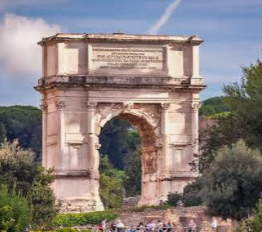
The Arch of Titus
Arch of Titus, Roman Forum, Rome — erected 81 AD by Emperor Domitian“SENATVS POPVLVSQVE ROMANVS DIVO TITO DIVI VESPASIANI F[ILIO] VESPASIANO AVGVSTO” — “The Senate and People of Rome, to the Divine Titus Vespasianus Augustus, son of the Divine Vespasian.”The Arch of Titus was erected in 81 AD to commemorate Titus’s victory in the Jewish War. Its interior relief depicts Roman soldiers carrying the Temple’s sacred objects — the menorah, the Table of Showbread, and silver trumpets — through the streets of Rome in triumphal procession. This is independent, non-biblical, archaeological confirmation that the Temple was destroyed and its contents plundered — exactly as Jesus predicted in Matthew 24:1–2.Evidence: Archaeological (Arch of Titus, Roman Forum, 81 AD). File Under: The Bible › Fulfilled Prophecies › Historical
Isaiah Named Cyrus 150 Years Before
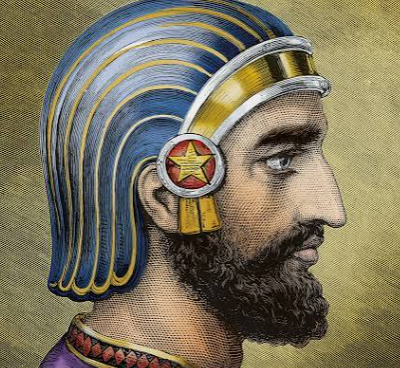
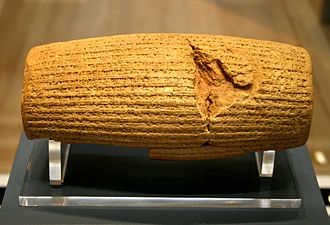
Isaiah 44:28; 45:1 — written c. 700 BCE; fulfilled c. 538 BCE (Ezra 1:1–4)“Who says of Cyrus, ‘He is my shepherd, and he shall fulfill all my purpose’; saying of Jerusalem, ‘She shall be built,’ and of the temple, ‘Your foundation shall be laid.’… Isaiah 44:28; 45:1 — written c. 700 BCE; fulfilled c. 538 BCE (Ezra 1:1–4). The name “Cyrus” appears verbatim in the Hebrew text of Isaiah 44:28 and 45:1 — written during the reign of Hezekiah (~700 BCE). Cyrus the Great conquered Babylon and issued the Edict of Cyrus (538 BCE) releasing the Jews. The Cyrus Cylinder (539 BCE), discovered in 1879 and housed at the British Museum, corroborates the decree. Evidence: Direct textual (Hebrew Isaiah) + Archaeological (Cyrus Cylinder, British Museum accession BM 90920); Documentary (Ezra 1:1–4). [File Under: The Bible > Fulfilled Prophecies > Historical]
Josephus: Cyrus Read Isaiah
Flavius Josephus (37–100 AD) — Jewish historian, Roman citizen“This was known to Cyrus by his reading the book which Isaiah left behind him of his prophecies; for this prophet said that God had spoken thus to him in a secret vision: ‘My will is, that Cyrus, whom I have appointed to be king over many and great nations, send back my people to their own land, and build my temple.'” Antiquities of the Jews, Book XI, Ch. 1, §2. Direct quotation from Josephus, Antiquities of the Jews, XI.1.2 , describing Cyrus’s reaction upon reading Isaiah’s prophecy. Cyrus was stirred by finding his own name written in a text authored approximately 150 years before . Evidence: Historical documentary (Josephus, Antiquities XI.1.2; corroborated by the Cyrus Cylinder decree language). [File Under: The Bible > Fulfilled Prophecies > Historical]

Cyrus Cylinder Confirms Biblical Edict
Cyrus Cylinder (539 BCE); discovered Babylon 1879“I am Cyrus, king of the world, great king, legitimate king, king of Babylon… I returned to [the sanctuaries on] the other side of the Tigris the sanctuaries of which had been ruins for a long time the images which [used] to live therein and established for them permanent sanctuaries…” Baked clay, 22.5 cm; Discovered Babylon 1879 by Hormuzd Rassam; British Museum, BM 90920. Direct quotation from the Cyrus Cylinder (lines 28–32) . The cylinder confirms Cyrus’s policy of returning exiled peoples to their homelands and restoring their sanctuaries — directly corroborating Ezra 1:1–4 and 2 Chronicles 36:23. Evidence: Archaeological (British Museum BM 90920); Cuneiform text translation (Oppenheim/Pritchard, ANET, 1969). [File Under: The Bible > Fulfilled Prophecies > Historical]
Cyrus Named Before Nation Existed
Walter C. Kaiser Jr., Ph.D.,Brandeis University“The naming of Cyrus… is one of the most dramatic examples of predictive prophecy in the entire Old Testament. Isaiah not only announced the name of the king who would free Israel from captivity…when Babylon had not yet risen to world power.” This represents Kaiser’s stated scholarly position as expressed in The Messiah in the Old Testament (Zondervan, 1995, pp. 172–176) and in Back Toward the Future (Baker, 1989). The Persian Empire under Cyrus II did not arise until c. 559 BCE; Isaiah’s prophecy (c. 700 BCE) predates it by approximately 140 years. — President Emeritus, Gordon-Conwell Theological Seminary; author, The Messiah in the Old Testament (Zondervan, 1995), Evidence: Textual-historical analysis (Kaiser, 1995; corroborated by Cyrus Cylinder BM 90920). [File Under: The Bible > Fulfilled Prophecies > Historical]

Zechariah 12:10 – ‘Whom They Have Pierced’
Zechariah 12:10 — c. 520 BCE; fulfilled John 19:34, 37 (c. 30 AD)“And I will pour out on the house of David and the inhabitants of Jerusalem a spirit of grace and pleas for mercy, so that, when they look on me, on him whom they have pierced, they shall mourn for him, as one mourns for an only child.”Zechariah 12:10 uses the first person divine voice (“they have pierced me“) — a theologically extraordinary statement. John 19:34 records the Roman soldier piercing Jesus’s side with a spear, and John 19:37 explicitly cites Zechariah 12:10 as fulfilled. The verse also appears in Revelation 1:7 as a future eschatological fulfillment. Evidence: Direct textual (Zechariah 12:10 vs. John 19:34–37); John’s own fulfillment citation; corroborated by Revelation 1:7. [File Under: The Bible > Fulfilled Prophecies > Messianic]

SUFFERING, PIERCING, AND DIVIDED GARMENTS
David, king of Israel and traditional psalmist“They pierced my hands and my feet. I may tell all my bones: they look and stare upon me. They part my garments among them, and cast lots upon my vesture.”Christians see Psalm 22 as one of the strongest passion-text connections because the Gospels describe Jesus’ public suffering, His garments being divided, and lots cast for His clothing. Fulfillment: : Matthew 27:35; John 19:23–24. OT source: Psalm 22:16–18. The wording of verse 16 has an important Hebrew textual-translation debate, though “they pierced” is supported by ancient textual traditions. [File Under: The Bible > Fulfilled Prophecies > Messiah: Suffering and Crucifixion]
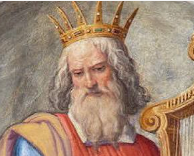
Isaiah 44 Named Cyrus 150 Years Before
Isaiah 44:28; 45:1 c. 700 BCE; fulfilled c. 538 BCE (Ezra 1:1–4)“Who says of Cyrus, ‘He is my shepherd, and he shall fulfill all my purpose’; saying of Jerusalem, ‘She shall be built,’ and of the temple, ‘Your foundation shall be laid.’… Thus says the LORD to his anointed, to Cyrus, whose right hand I have grasped, to subdue nations…”Isaiah 44:28; 45:1 — written c. 700 BCE; fulfilled c. 538 BCE (Ezra 1:1–4). The name “Cyrus” appears verbatim in Isaiah 44:28 and 45:1 — written during the reign of Hezekiah (~700 BCE). Cyrus the Great conquered Babylon and issued the Edict of Cyrus (538 BCE) releasing the Jews. The Cyrus Cylinder (539 BCE) corroborates the decree. Evidence: Direct textual (Hebrew Isaiah) + Archaeological (Cyrus Cylinder, British Museum accession BM 90920); Documentary (Ezra 1:1–4). [File Under: The Bible > Fulfilled Prophecies > Historical]
EYEWITNESS ACCOUNT: ISAIAH 53 UNCANNY PROPHECY
Edith Schaeffer, author, theologian, and co-founder of L’Abri Fellowship (1914–2013)“Isaiah 53 is so specific in its description of the suffering, rejection, death, and burial of the Servant that it reads not like a prediction written seven centuries before Christ, but like an eyewitness account written after the fact.”Schaeffer’s observation reflects a widely shared response among readers encountering Isaiah 53 alongside the Gospel passion narratives. The chapter describes rejection, vicarious suffering, silent endurance, death with the wicked, and burial with the rich — all corresponding to Gospel accounts. Evidence: Textual comparison; the Great Isaiah Scroll (c. 125 BCE) confirms the text predates the Christian era. OT source: Isaiah 53. [File Under: The Bible > Fulfilled Prophecies > Messiah: Isaiah 53 — Eyewitness Quality]

Cyrus Cylinder Confirms Biblical Edict
Cyrus Cylinder (539 BCE); discovered Babylon 1879“I am Cyrus, king of the world, great king, legitimate king, king of Babylon… I returned to [the sanctuaries on] the other side of the Tigris the sanctuaries of which had been ruins for a long time the images which [used] to live therein and established for them permanent sanctuaries. I [also] gathered all their [former] inhabitants and returned [to them] their habitations.” Baked clay, 22.5 cm; Discovered Babylon 1879 by Hormuzd Rassam; British Museum, BM 90920. This is a direct quotation from the Cyrus Cylinder (lines 28–32), translated by A. Leo Oppenheim . The cylinder confirms Cyrus’s policy of returning exiled peoples to their homelands and restoring their sanctuaries — directly corroborating Ezra 1:1–4 and 2 Chronicles 36:23. Evidence: Archaeological (British Museum BM 90920); Cuneiform text translation (Oppenheim/Pritchard, ANET, 1969). [File Under: The Bible > Fulfilled Prophecies > Historical]
Josephus — Eyewitness to Temple’s Ruin
Flavius Josephus, Jewish general turned Roman historian“While the holy house was on fire, everything was plundered that came to hand, and ten thousand of those that were caught were slain…and priests were all slain in the same manner… The Romans… set fire to the porticoes.”Evidence: Eyewitness to the Siege of Jerusalem; The Jewish War, Book VI (written c. 75 AD). Direct quotation from Josephus, The Jewish War, VI.5.1 (Whiston translation). Josephus was present during the siege and he records the Temple’s total destruction in 70 AD by Titus — fulfilling Jesus’s prediction in Matthew 24:2, Luke 21:20–22, and Mark 13:2 with striking specificity. Evidence: Primary historical source (Josephus, Jewish War VI.5.1); corroborated by Arch of Titus frieze (81 AD, Rome) depicting Temple spoils. [Ontology: The Bible > Fulfilled Prophecies > Historical]
Matthew 24 – Jesus Predicts Temple’s Destruction
Matthew 24:1–2 (ESV) — c. 30 AD; fulfilled 70 AD“But he answered them, ‘You see all these, do you not? Truly, I say to you, there will not be left here one stone upon another that will not be thrown down.'”This statement was made approximately 40 years before the Temple’s destruction. The historian Josephus records: “Caesar gave orders that they should now demolish the entire city and temple… the wall was so thoroughly laid even with the ground by those that dug it up to the foundation, that there was left nothing…” (Jewish War VII.1.1). The Arch of Titus (81 AD, Rome) depicts the Temple menorah being carried away. Evidence: Predictive text (Matthew 24:2) + Historical fulfillment (Josephus, Jewish War VI–VII; Arch of Titus, Rome). [File Under: The Bible > Fulfilled Prophecies > Historical]
Luke 21:24 – JERUSALEM TRAMPLED BY THE GENTILES
Jesus of Nazareth, as recorded by Luke the Evangelist — Arch of Titus relief, Rome, c. 81 CE“And they shall fall by the edge of the sword, and shall be led away captive into all nations: and Jerusalem shall be trodden down of the Gentiles, until the times of the Gentiles be fulfilled.”Jesus predicted the dispersion of the Jewish people and Gentile control of Jerusalem. From 70 AD through 1967, Jerusalem was under successive Gentile powers — Roman, Byzantine, Arab, Crusader, Ottoman, and British. The Arch of Titus in Rome depicts the Temple menorah being carried away in triumph. Evidence: Historical record spanning nearly 1,900 years; archaeological and numismatic evidence. NT source: Luke 21:24. [File Under: The Bible > Fulfilled Prophecies > Historical: Jerusalem — Gentile Dominion]
Existence of The Arch of Titus
Arch of Titus, Menorah Relief, Rome (81 AD)“SENATVS POPVLVSQVE ROMANVS DIVO TITO DIVI VESPASIANI F VESPASIANO AVGVSTO” — “The Senate and People of Rome [dedicate this] to the divine Titus Vespasianus Augustus, son of the divine Vespasian.” Pentelic marble, Via Sacra, Roman Forum; Commissioned by Emperor Domitian to commemorate Titus’s conquest of Jerusalem, 70 AD. The inscription of the Arch of Titus confirms as do the relief panels depicting Roman soldiers carrying the Temple Menorah, Table of Showbread, and silver trumpets — objects from Herod’s Temple — confirming the Temple’s destruction, and fulfilling Jesus’s prophecy in Matthew 24:2. Evidence: Archaeological/Epigraphic (Arch of Titus, Via Sacra, Rome; commissioned 81 AD); Corroborated by Josephus, Jewish War VII.5.5–7. [File Under: The Bible > Fulfilled Prophecies > Historical]
Luke 19:43–44 — Military Tactics Predicted
F.F. Bruce, F.B.A. , University of Manchester“The detail of the ’embankment’ (Luke 19:43) is particularly striking: the siege rampart built by Titus is described by Josephus in exactly those terms, and was a feature unusual enough in Roman siege warfare.” — Rylands Professor of Biblical Criticism, University of Manchester; Author, New Testament History (Doubleday, 1969). Luke 19:43–44 records Jesus predicting that enemies would “cast a rampart about” Jerusalem — a specific tactic. Josephus in Jewish War V.11.4–6 describes in detail how Titus erected a circumvallation rampart — an unusual tactic confirmed by Josephus as constructed in just three days. Bruce discusses this correlation in New Testament History . Evidence: Textual-historical correlation (Luke 19:43–44 vs. Josephus, Jewish War V.11; F.F. Bruce, NT History, 1969). [File Under: The Bible > Fulfilled Prophecies > Historical]

1 / 20