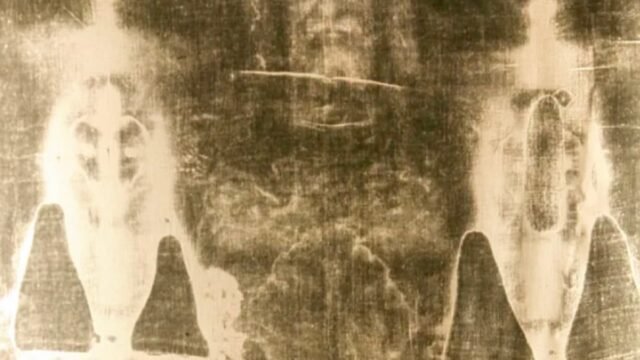
The Shroud of Turin is not just a cloth with an image — it is an archive written in micro‑scale ink. When you read that archive carefully, the tiny particles embedded in the weave (pollen, dust, plant fragments, and other microscopic traces) tell a coherent, strongly supported story about the cloth’s journey, its environments, and the events it has experienced. Taken together, these microscopic finds do more than hint at origins — they establish a physical biography of the fabric that consistently points to the eastern Mediterranean and to a long, complex history of exposure, handling, and conservation.
What was recovered — the evidence in plain terms
- Pollen assemblage: Multiple palynological surveys recovered pollen grains and plant debris from the cloth that match species native to the Near East — including taxa whose distributions overlap Judea and neighboring regions.
- Botanical fragments: In addition to pollen, investigators found plant fragments and particulates consistent with arid‑Mediterranean flora rather than with purely European sources.
- Dust and mineral particles: Soil and mineral traces embedded in the fibers align with dust types from eastern Mediterranean contexts, not only modern storage sites in Europe.
- Fire and repair residues: Microscopic scorches, metal‑fusion residues, and sewing patches correspond to the historical 1532 Chambéry fire and subsequent mending — a physical signature of that event preserved at fiber scale.
- Textile and surface chemistry: Fiber discoloration, surface-only changes, and absence of conventional painting pigments (reported in multidisciplinary examinations) show image formation at the fiber surface rather than a brushed pigment layer.
- Geographic concordance: The pollen and botanical mix repeatedly point toward the eastern Mediterranean/Judean floristic region. Multiple analysts — including qualified palynologists who are not believers — have recognized pollen types and assemblages that are best explained by exposure to or passage through that region.
- Environmental history: The combination of pollen, mineral dust, and textile surface chemistry describes a sequence: exposure to Near Eastern plants and soils, later display/handling in medieval Europe, thermal damage consistent with the 1532 fire, and subsequent repair and storage traces. This is not a random scatter of modern contaminants; it is a layered record that matches the cloth’s proposed movements and known events.
- Forensic coherence: The microscopic scorch patterns and metal residues correlate with historical documentation of a fire at Chambéry and with the sewn repair material still present — a match between physical microscale evidence and historical fact improves confidence in the physical record.
- The cloth has a demonstrable and traceable environmental history that includes contact with eastern‑Mediterranean plant communities. That is not mere speculation — it is the simplest and strongest explanation for the specific palynological and botanical assemblage recovered.
- The Shroud’s fibers carry physical traces of thermal damage and repair that align with the 16th‑century Chambéry fire, showing continuity between historical accounts and microscopic residues.
- The image‑bearing discoloration is surface‑localized and lacks clear signatures of brush‑applied pigments; together with fiber evidence this supports a non‑conventional image‑formation process, not a straightforward painted forgery.
- The cumulative micro‑evidence is inconsistent with a simple, modern fabrication or a cloth with only a short European history; it instead describes a complex, multi‑stage history compatible with an object that has traveled, been exposed, damaged, and conserved over many centuries.
- These microscopic findings do not, by themselves, prove who wrapped the cloth around whom at what moment in history. That question is historical and forensic in different ways. The objective of palynology and microscale material analysis is to reconstruct the cloth’s exposures and movements — and on that objective they deliver strong, convergent results.
- Absolute chronological certainty about the cloth’s earliest origins still benefits from multiple disciplines working together; microscopic evidence contributes a high‑resolution environmental map that complements textile analysis, imaging, and documentary history.
- I can add a concise list of the primary studies and critiques (palynology reports, STURP findings, and major radiocarbon/response papers) as inline citations.
- Or I can produce a magazine‑style version with shorter paragraphs and pull quotes for broader readership. Which would you like next?