Do ancient Chinese sky-records indicate corroboration of Biblical accounts?
bible-ancient-china
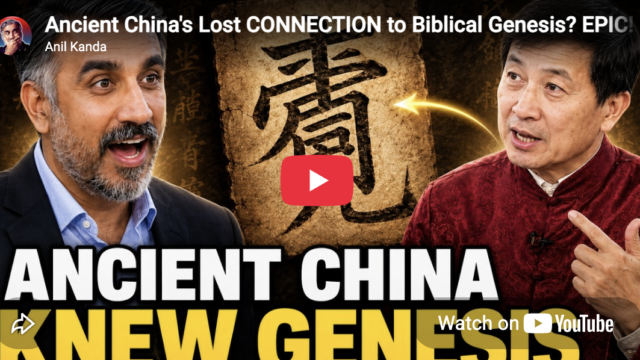
For centuries the Bible’s opening chapters and the star of Bethlehem have invited questions: could events recorded in Genesis, the flood narratives, and the celestial sign at Jesus’ birth have left traces beyond the Near East? Recently a number of scholars and independent researchers — including Samuel Wang and Tim Risenberger among others — have argued that ancient Chinese records and other East Asian sources preserve echoes of those same events. Below is a clear, measured look at that idea: what proponents claim, the kinds of evidence they use, and sensible reasons both to be curious and to remain cautious. Ancient Chinese texts about Jesus primarily include the Jingjiao Documents (the Jesus Sutras) from the Tang Dynasty, alongside modern internet claims regarding Han Dynasty astronomical records. The Jingjiao Documents (The Jesus Sutras) • What they are: Christian manuscripts written in Chinese by the Church of the East (Nestorian Christians) starting around 635 AD. • Where found: Discovered in the Mogao Caves near Dunhuang in the early 20th century. • Content: They describe Jesus (referred to as the “Cool Wind” or Messiah) and use Buddhist and Taoist terms to explain Christian teachings, karma, and the trinity. Han Dynasty Astronomy Claims • The claim: Viral internet discussions suggest official imperial texts like the Han Shu (Book of Han) or later chronicles recorded the Star of Bethlehem or the solar eclipse and darkness that occurred during Jesus’ crucifixion. • The reality: While Chinese astronomers did meticulously record comets, novae, and eclipses (such as a guest star in 5 BC), mainstream historians and astronomers note that connecting these specific celestial logs to biblical events is a later apologetic interpretation rather than a direct textual record of Jesus. At the heart of these proposals is the idea that major, unusual events — bright comets or novae, catastrophic floods, or migrating peoples — create memories that can travel along trade routes and across cultures. Samuel Wang has highlighted references in ancient Chinese astronomical and court records that some read as descriptions of a spectacular celestial object around the time of Jesus’ birth. Tim Risenberger and like-minded researchers examine classical Chinese chronicles and local gazetteers for descriptions of prolonged rains, unusual stars, or marine debris that, they argue, could correspond to stories found in Genesis or to the global impact of a major flood event. The evidence types often cited
  • Astronomical records. Ancient China kept meticulous sky-observation logs. Proponents point to entries describing “guest stars,” comets, or lights that appeared for days or weeks. Because Chinese court astronomers recorded exact months and sometimes city names, these entries are sometimes cross-referenced with astronomical reconstructions to estimate timing and visibility.
  • Natural‑phenomena chronicles. Local histories and imperial annals sometimes report multi-year weather anomalies, river course changes, and mass migrations — facts that can be compared to geological and paleoclimatic data.
  • Shared motifs in oral and literary tradition. Flood stories and portentous stars show up in varied cultures. Scholars who draw parallels argue that similar motifs across vast distances merit attention: are they independent inventions, archetypal metaphors, or memories of shared events transmitted across time?
  • Correlative science. Some researchers pair textual clues with dendrochronology (tree‑ring data), sediment studies, and ice‑core records to see if physical disruptions line up with when texts claim something extraordinary occurred.
Why ancient Chinese records matter Chinese annals are valued because of their continuity and bureaucratic rigor. Where other cultures lost sustained astronomical logs, imperial China often preserved them. That makes Chinese texts attractive sources if one hopes to find a contemporaneous external reference to, say, a bright star seen in the west or to climate stress consistent with a large-scale flood event. Where the strongest cases come from The most credible work combines philology, chronology, and independent physical data. For instance, an entry noting irregular celestial light in a specific lunar month can be cross-checked with modern astronomical models to see whether a nova, comet, or supernova could have been visible from East Asia at that time. Similarly, a spike in flood deposits dated by radiocarbon or tree rings strengthens a textual claim that a region experienced exceptional inundation. Reasonable cautions and limits There are good reasons to be skeptical of sweeping conclusions. First, ancient terminology is not always precise: words translated as “guest star” could indicate different phenomena depending on era and scribe. Second, dates are often recorded using regnal years, intercalary months, or lunisolar notations that need careful conversion to the modern calendar — and small errors can shift an event by years. Third, similar stories appearing across cultures do not automatically mean a single historical origin; humans generate and transmit archetypal narratives that help societies explain cosmic and environmental outrage. Scholarly reception and debate Mainstream historians and astronomers generally welcome careful cross-disciplinary work but resist overconfident linkage. Where compelling, peer-reviewed studies combine clear philological arguments, rigorous calendar conversions, and independent environmental proxies. Where proponents go too far — relying on loose translations, uncertain datings, or single-source sleights — critics rightly push back. What a balanced reading looks like A balanced approach treats ancient Chinese records as valuable pieces in a larger puzzle. They can corroborate a hypothesis (for example, that a remarkable astronomical event was widely observed) but they rarely provide a smoking-gun connection to theological narratives by themselves. The most fruitful research asks: do multiple, independent strands (texts from various cultures, geological markers, and astronomical reconstructions) converge on the same time and signature? If so, the hypothesis grows stronger. If not, the resemblance may reflect common literary forms or later interpretive overlays. Why this matters for those exploring faith and history For readers of faith, the possibility that non‑Biblical sources caught glimpses of events described in Scripture can feel like confirmation that entire regions recorded meaningful phenomena at similar times. For skeptics, these parallels are an invitation to test claims more carefully — demanding the same standards of evidence that any historical claim deserves. In both cases, the best work is transparent about uncertainty, rigorous in cross-checking, and modest in its claims. Further reading on this site Explore more context and resources here: Cross-cultural detective work is both exciting and arduous. When careful historians, astronomers, and geoscientists collaborate, ancient Chinese records can illuminate the reach and reception of extraordinary events. But even when parallels are suggestive rather than conclusive, they encourage a disciplined curiosity: test claims, check calendars, and let multiple lines of evidence speak before drawing big historical conclusions. The aim here is not to draw a conclusion for you; just to present the fascinating considerations that exist in preserved ancient history.

Leave a Reply

Your email address will not be published. Required fields are marked *