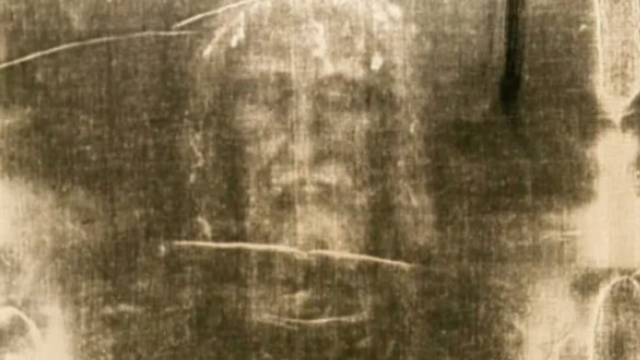
Traditional claim: burial of Jesus
Believers connect the linen with Gospel accounts of Jesus’ burial. Matthew records: “As evening approached, there came a rich man from Arimathea, named Joseph… Joseph took the body, wrapped it in a clean linen cloth, and placed it in his own new tomb…” (Matthew 27:57–61).Early iconography & texts (disputed)
Scholars point to a few early images and texts—such as traditions of the Image of Edessa—as possible antecedents. Direct continuity to the Turin cloth is debated and not established. 944 ADImage of Edessa in Constantinople
Accounts place a revered image (the Mandylion or Image of Edessa) in Constantinople. Some researchers propose a link between this tradition and later Shroud narratives, but documentary gaps leave this speculative 1354–1357First well-documented European exhibition (Lirey)
Geoffrey de Charny publicly displayed a large linen cloth in Lirey, France—the earliest securely recorded appearance of an image-bearing shroud in Western Europe. Church records from this period mark the start of an authenticated documentary trail. Late 1300s–1500sSavoy custody; fire damage & repairs (1532)
The House of Savoy became custodians. A 1532 chapel fire produced molten-reliquary damage; visible burn holes were later patched and a backing (Holland cloth) attached—important for later conservation and sampling debates. 1578Transfer to Turin
The relic was moved to Turin, where it would remain the primary public home and focal point for subsequent exhibitions and scientific access. 1898Secondo Pia photograph (negative effect)
Scientific turning point: Amateur photographer Secondo Pia’s glass-plate negatives revealed a clear positive image when inverted—an observation that transformed public and scientific attention and launched modern study. 1931–1970sPhotographic studies & growing interest
Professional photographers and scholars produced higher-quality images and catalogs; the cloth became a subject of interdisciplinary curiosity—textile scholars, artists, historians and devotional pilgrims alike studied it. 1973–1978STURP — multidisciplinary examination (1978)
The Shroud of Turin Research Project (STURP) performed comprehensive non-destructive tests—photography, spectroscopy and microscopy—and reported that no conventional pigments fully explain the image; they noted surface-level fiber discoloration and three-dimensional information encoded in image shading. 1978Max Frei palynology sampling
Swiss criminologist Max Frei lifted dust and pollen from fibers. Subsequent analyses (e.g., Avinoam Danin, Uri Baruch) identified pollen and floral markers some researchers say correspond to eastern Mediterranean species blooming in spring—consistent with plants native to areas around Jerusalem. 1988Radiocarbon dating — medieval result
Three labs (Oxford, Zurich, Tucson) dated a sample to about 1260–1390 AD. The result strongly suggested a medieval origin. Critics later raised concerns about contamination, sample selection and whether the sampled area included later repairs. 1990s–2000sRenewed digital and analytical work
High-resolution imaging, spectral analysis, and renewed botanical/palynological study continued. Debates about contamination, image-formation hypotheses, and interpretation of forensic markers remained active. 2010s–2020sNon-destructive imaging & public exhibitions
Multispectral photography and digital projects increased public access to detailed imagery. Controlled public exhibitions continued; conservation practices and digital archiving improved scholarly access without invasive sampling.Ongoing research & enduring debate
The Shroud remains under ecclesiastical custody in Turin, studied through non-invasive methods. Lines of evidence—textile analysis, pollen studies, forensic interpretation and image-formation models—continue to be discussed; no single consensus has replaced the major contested results such as the 1988 radiocarbon dating.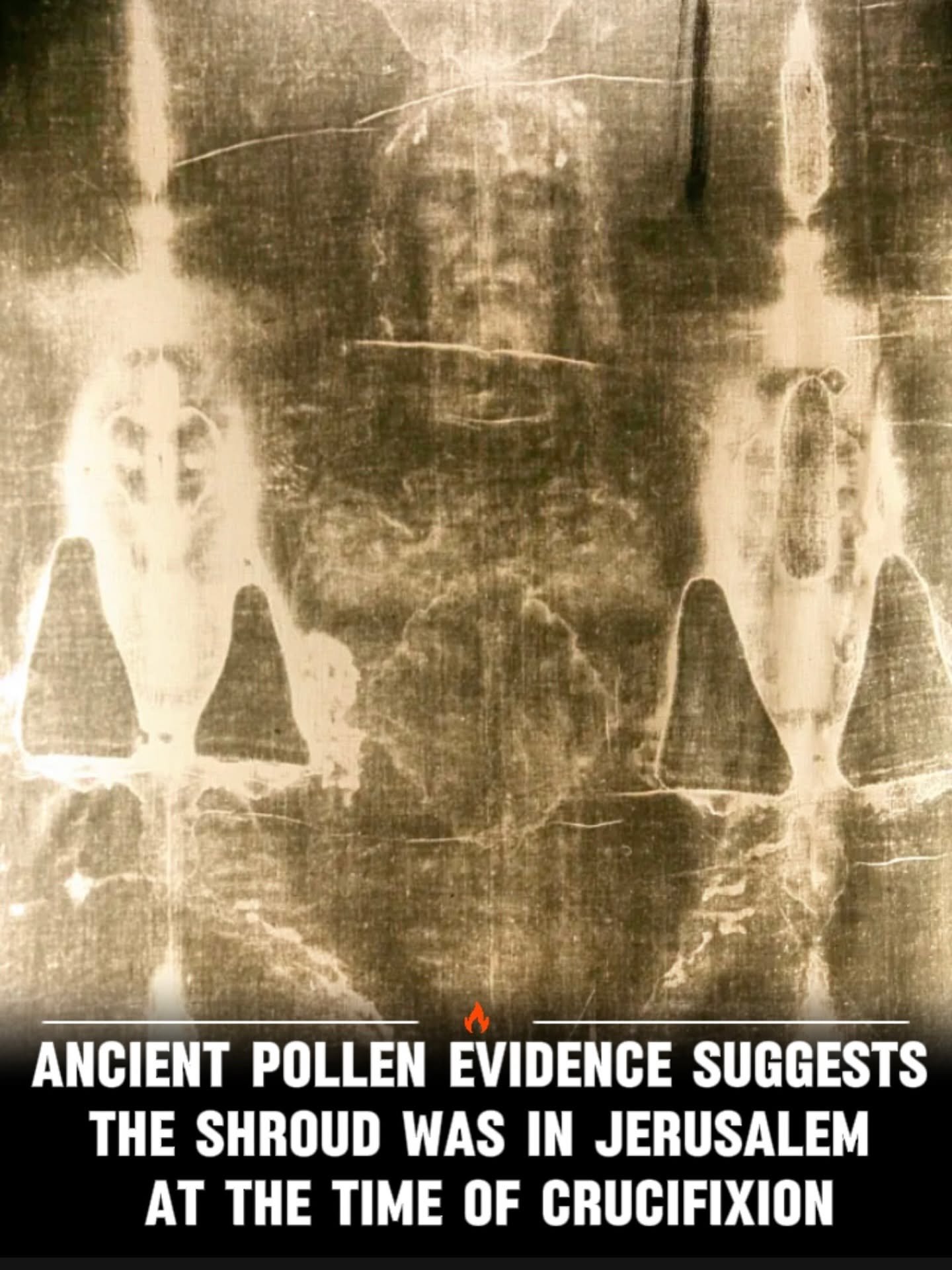 Throughout the twentieth century, scientists, forensic specialists and historians examined the Shroud using ever more sophisticated techniques. Views differ sharply. Some researchers argue the evidence points to an authentic first-century burial shroud bearing an imprint formed at the moment of death; others maintain the cloth is a skillful medieval fabrication.
One strand of research centers on microscopic particulates and biological traces trapped in the fibers. In 1978 Swiss criminologist Dr. Max Frei used adhesive tape to lift dust and pollen from the Shroud. Some of the pollen types and floral images identified in later analyses were characteristic of plants native to the eastern Mediterranean rather than to Europe. Israeli botanist Avinoam Danin and palynologist Dr. Uri Baruch examined floral impressions and pollen finds and reported that a substantial portion of identified plant species are native to the region between Jerusalem and Jericho. Danin argued that certain groupings of plant imagery and pollen — including Gundelia tournefortii and Zygophyllum dumosum — are consistent with flora that bloom in the spring around Jerusalem, roughly the season when the Gospels place the crucifixion.
Proponents point out two contextual details they consider noteworthy. First, Jewish burial practices of the first century often included flowers placed near the head and chest of the deceased; several of the floral markers on the Shroud cluster near those areas. Second, many of the identified plants flower in March and April, the time of Passover when the Gospel narratives place Jesus’ death (see Matthew 26:12; Mark 14:1; Luke 22:1,7; John 18:28).
Supporters also emphasize forensic and anatomical observations: the distribution of apparent wounds and blood-flow patterns on the cloth have been read by some forensic pathologists as matching injuries described in the Gospel accounts—scourge marks consistent with flagellation, puncture wounds in the wrists and feet suggestive of nail wounds, and a wound in the side. High-resolution photography and image enhancement have revealed three-dimensional information encoded in the image’s shading, a property uncommon in medieval artwork but characteristic of a physical imprint with subtle intensity variations across the surface.
Skeptics counter that many of these findings are ambiguous. Pollen transfer over centuries could occur through trade, pilgrimage or later contamination. Critics also have raised questions about some of the methods and chain-of-custody issues associated with sampling. Most famously, radiocarbon dating performed in three laboratories in 1988 dated the linen to the medieval period (approximately 1260–1390), a result that, if accurate, would point to a later origin. Defenders of the Shroud have challenged those results on grounds including sample contamination, the possibility that the tested fragment came from a repaired patch rather than the original cloth, or that the surface chemistry was altered by centuries of handling, soot and past restorations.
Advocates cite additional threads of evidence that seem to complicate a simple medieval-forgery explanation: historical references and textile comparisons, for instance. Some researchers point to early texts and icons that they interpret as possible references to a burial cloth with a portrait-like imprint. Textile experts have observed that the herringbone twill weave and linen preparation techniques are not incompatible with first-century Mediterranean practices, though such weave types were also known later in history.
The debate has attracted experts from many disciplines: chemistry, botany, forensic pathology, textile conservation, and art history. Teams such as the Shroud of Turin Research Project (STURP) in 1978 applied multi-disciplinary testing—photography, spectroscopy, microscopy and chemical analysis—and concluded that the image was not painted on in any recognizable pigment, and that the discoloration was limited to the very surface of the fibers. STURP reported no detectable vegetable or animal-based dye that would explain the image, and noted features they interpreted as consistent with a burial imprint or rapid superficial oxidation. Others have critiqued STURP’s conclusions or argued that they do not exclude a sophisticated artistic technique.
Whether one approaches the Shroud as a devotional relic, a historical mystery, or a forensic puzzle, the object remains a focal point where faith, history and science intersect. For believers it can be a powerful tangible connection to the Gospel narrative; for scientists it is an intriguing artifact that resists simple categorization; for historians it presents a problem of provenance and textual correlation.
The Shroud’s public exhibitions continue to draw intense interest, and research continues as new methods—improved microscopy, non-destructive spectroscopy and digital imaging—offer additional ways to study the cloth. Opinions among scholars and scientists differ, and a definitive, universally accepted conclusion remains elusive. What the Shroud of Turin most clearly demonstrates is how a single artifact can generate rigorous scientific inquiry, inspire deep devotion, and provoke enduring debate about history, authenticity and meaning.
Selected references and suggested further reading (journalistic, non-technical):
Throughout the twentieth century, scientists, forensic specialists and historians examined the Shroud using ever more sophisticated techniques. Views differ sharply. Some researchers argue the evidence points to an authentic first-century burial shroud bearing an imprint formed at the moment of death; others maintain the cloth is a skillful medieval fabrication.
One strand of research centers on microscopic particulates and biological traces trapped in the fibers. In 1978 Swiss criminologist Dr. Max Frei used adhesive tape to lift dust and pollen from the Shroud. Some of the pollen types and floral images identified in later analyses were characteristic of plants native to the eastern Mediterranean rather than to Europe. Israeli botanist Avinoam Danin and palynologist Dr. Uri Baruch examined floral impressions and pollen finds and reported that a substantial portion of identified plant species are native to the region between Jerusalem and Jericho. Danin argued that certain groupings of plant imagery and pollen — including Gundelia tournefortii and Zygophyllum dumosum — are consistent with flora that bloom in the spring around Jerusalem, roughly the season when the Gospels place the crucifixion.
Proponents point out two contextual details they consider noteworthy. First, Jewish burial practices of the first century often included flowers placed near the head and chest of the deceased; several of the floral markers on the Shroud cluster near those areas. Second, many of the identified plants flower in March and April, the time of Passover when the Gospel narratives place Jesus’ death (see Matthew 26:12; Mark 14:1; Luke 22:1,7; John 18:28).
Supporters also emphasize forensic and anatomical observations: the distribution of apparent wounds and blood-flow patterns on the cloth have been read by some forensic pathologists as matching injuries described in the Gospel accounts—scourge marks consistent with flagellation, puncture wounds in the wrists and feet suggestive of nail wounds, and a wound in the side. High-resolution photography and image enhancement have revealed three-dimensional information encoded in the image’s shading, a property uncommon in medieval artwork but characteristic of a physical imprint with subtle intensity variations across the surface.
Skeptics counter that many of these findings are ambiguous. Pollen transfer over centuries could occur through trade, pilgrimage or later contamination. Critics also have raised questions about some of the methods and chain-of-custody issues associated with sampling. Most famously, radiocarbon dating performed in three laboratories in 1988 dated the linen to the medieval period (approximately 1260–1390), a result that, if accurate, would point to a later origin. Defenders of the Shroud have challenged those results on grounds including sample contamination, the possibility that the tested fragment came from a repaired patch rather than the original cloth, or that the surface chemistry was altered by centuries of handling, soot and past restorations.
Advocates cite additional threads of evidence that seem to complicate a simple medieval-forgery explanation: historical references and textile comparisons, for instance. Some researchers point to early texts and icons that they interpret as possible references to a burial cloth with a portrait-like imprint. Textile experts have observed that the herringbone twill weave and linen preparation techniques are not incompatible with first-century Mediterranean practices, though such weave types were also known later in history.
The debate has attracted experts from many disciplines: chemistry, botany, forensic pathology, textile conservation, and art history. Teams such as the Shroud of Turin Research Project (STURP) in 1978 applied multi-disciplinary testing—photography, spectroscopy, microscopy and chemical analysis—and concluded that the image was not painted on in any recognizable pigment, and that the discoloration was limited to the very surface of the fibers. STURP reported no detectable vegetable or animal-based dye that would explain the image, and noted features they interpreted as consistent with a burial imprint or rapid superficial oxidation. Others have critiqued STURP’s conclusions or argued that they do not exclude a sophisticated artistic technique.
Whether one approaches the Shroud as a devotional relic, a historical mystery, or a forensic puzzle, the object remains a focal point where faith, history and science intersect. For believers it can be a powerful tangible connection to the Gospel narrative; for scientists it is an intriguing artifact that resists simple categorization; for historians it presents a problem of provenance and textual correlation.
The Shroud’s public exhibitions continue to draw intense interest, and research continues as new methods—improved microscopy, non-destructive spectroscopy and digital imaging—offer additional ways to study the cloth. Opinions among scholars and scientists differ, and a definitive, universally accepted conclusion remains elusive. What the Shroud of Turin most clearly demonstrates is how a single artifact can generate rigorous scientific inquiry, inspire deep devotion, and provoke enduring debate about history, authenticity and meaning.
Selected references and suggested further reading (journalistic, non-technical):
- Secondo Pia’s 1898 photographs and contemporary discussions of his discovery.
- The STURP reports (1978) summarizing multidisciplinary testing results.
- Avinoam Danin and Uri Baruch’s botanical and palynological studies on floral and pollen evidence.
- The 1988 radiocarbon dating publications and the subsequent critiques responding to them.
Source list (web-style with clickable URLs)
-
Secondo Pia’s 1898 account and photographs — “Secondo Pia and the Photographs of the Shroud,” background and images: https://www.shroud.com/pia.htm (Secondo Pia material and historical notes)
-
STURP (Shroud of Turin Research Project) 1978 reports — multidisciplinary testing summary and findings (STURP archive): https://www.shroud.com/sturpnotes.htm
-
1988 Radiocarbon Dating Papers — Oxford, Zurich, and Tucson laboratory reports and results (overview and scientific papers): https://www.shroud.com/chron.htm#radiocarbon
-
Max Frei palynology notes and later analyses — summaries of pollen sampling and critiques: https://www.shroud.com/frei.htm
-
Avinoam Danin — botanical analyses relating plant images/pollen to eastern Mediterranean flora: https://www.shroud.com/papers2.htm#danin
-
Conservation history and 1532 Chambéry fire (contemporary records and conservation notes): https://www.shroud.com/faq.htm#fire
-
General, balanced overviews and continuing research updates (Turin custodians, exhibitions, digitization): https://www.sindonology.org/ and https://www.shroud.com/
-
Radiocarbon critiques and alternative analyses — post-1988 papers and debates about contamination and sampling: https://www.shroud.com/pdfs/radiocarbon.pdf
THE LANCE WOUND AND THE BLOOD-WATER DISCHARGE
Dr. Antony Sava, physician & medical researcher specializing in the physiology of the crucifixion“The Gospel of John records that when the soldier pierced Jesus’ side, blood and water flowed out. This is medically precise: a lance thrust into the right side at the angle described would penetrate the pericardial sac — releasing watery pericardial fluid — and the right atrium of the heart, releasing blood. This is not a theological symbol. It is an accurate eyewitness medical observation.” The medical precision of John’s blood-and-water detail — unknown to ancient writers as a physiological phenomenon — is one of the strongest arguments for eyewitness authorship of the Fourth Gospel. Evidence: Clinical medical analysis of pericardial effusion and cardiac anatomy consistent with a right-side lance wound at the described angle. [Ontology: Jesus > Sacred Relics & Venerated Objects]+ Read More
File Under: The Crucifixion > Anatomy & Methods
Cross Reference: Shroud & Burial Relics